


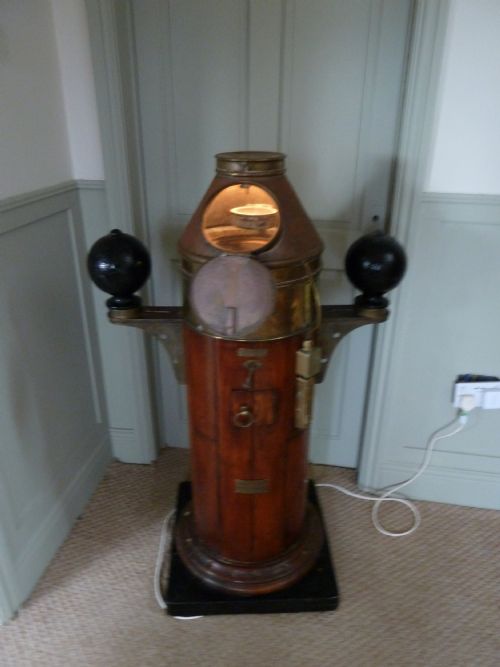


Antique Floor Pedestals
Antique floor pedestals elevate busts, lamps and urns, bringing vertical presence and period character into a room.
Antique Floor Pedestals
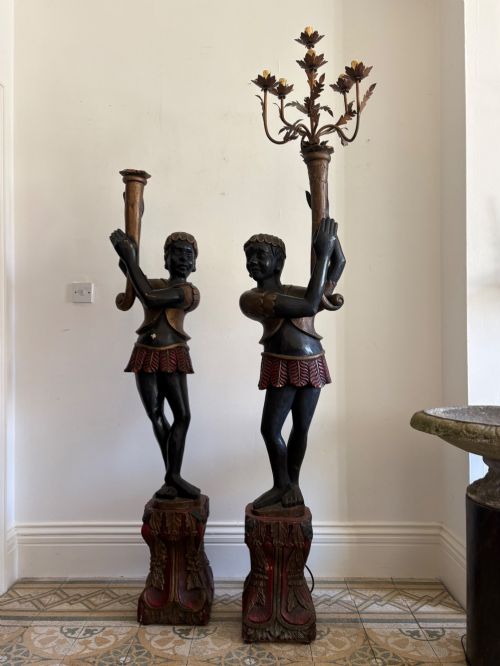
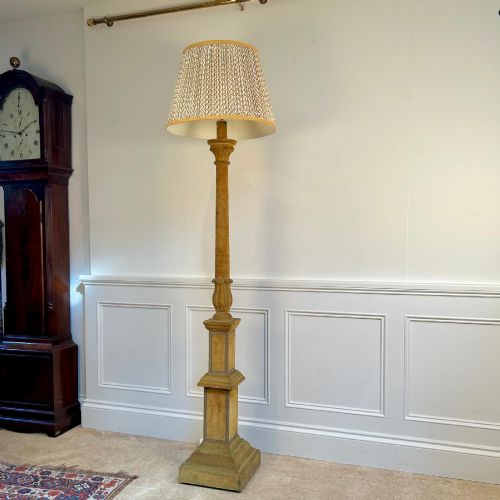
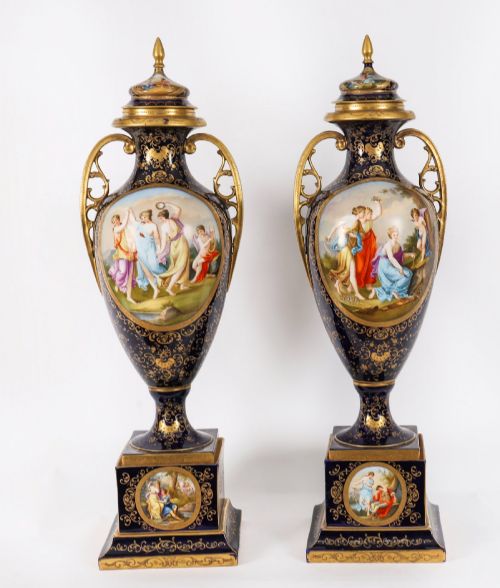
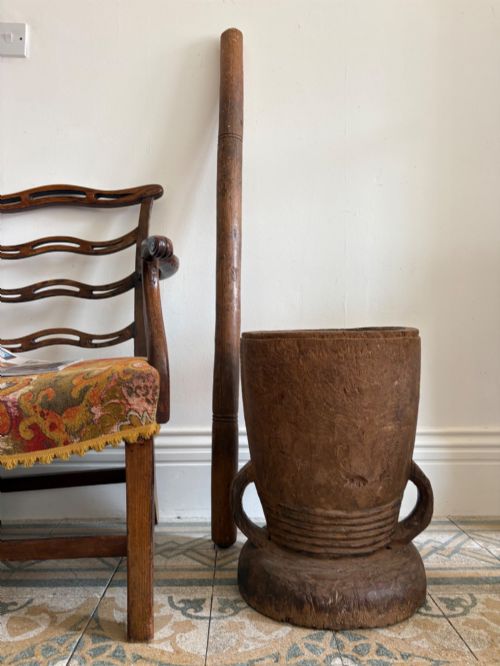
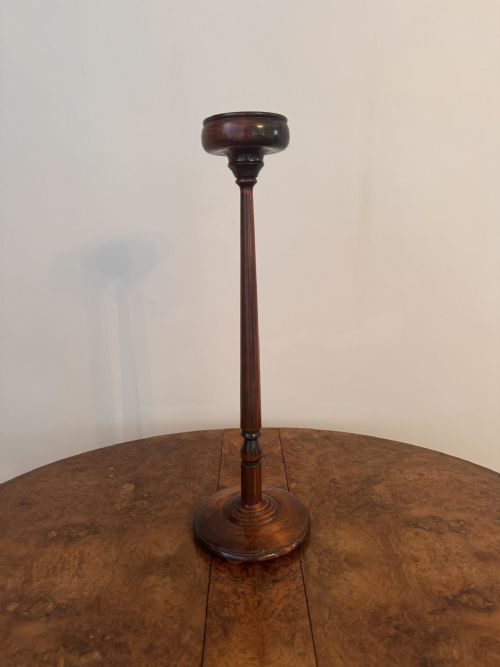
When searching for antique floor pedestals, you encounter tall supports designed to elevate sculptures, vases or lighting. The selection on this page ranges from simple wooden columns to elaborate torcheres and stands.
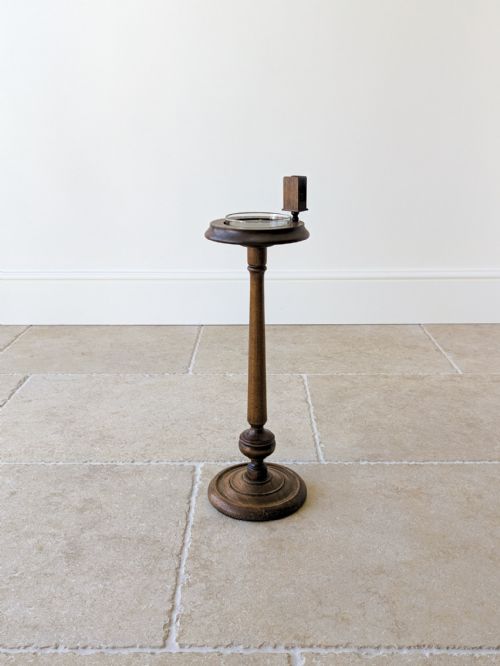
Many examples double as functional pieces like smoking stands, music stands and plant stands. The forms draw on nineteenth century revival styles, Edwardian utility and Art Deco design.
Materials span carved wood, ebonised timber, mahogany, brass and marble. The physical evidence shows sturdy construction intended to bear significant weight safely.
How they were made
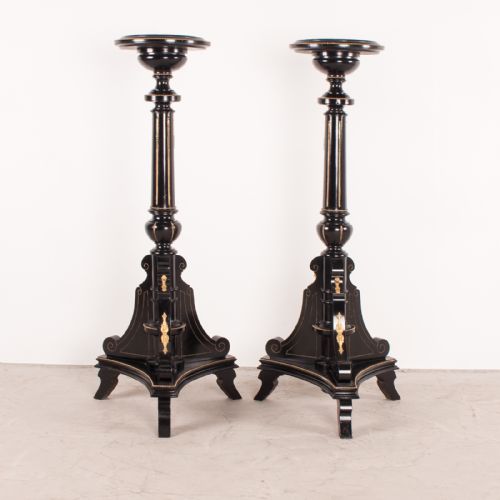
Makers utilised solid timbers such as mahogany and ebonised wood, often carved by hand or finished with painted details. Brass, ormolu and bronze elements provide structural support and decorative contrast.
Stone materials like marble and alabaster appear in columns and busts, requiring precise cutting and polishing. Joinery methods of the period ensure stability in tall, slender forms.
Several pedestals double as smoking stands, proving that Victorian household comfort required a dedicated mahogany perch for ash.
What varies in quality
The standard of carving and surface finish defines the upper tier of these pieces. Crisp detail in wooden acanthus leaves or cast bronze figures indicates superior craftsmanship.
Originality of components, such as matching torchiere hardware or integrated lamps, separates standard items from exceptional examples.
F. De Luca·François-Christophe-Armand Toussaint·WMF
The Antique Floor Pedestals Glossary
- Torchere
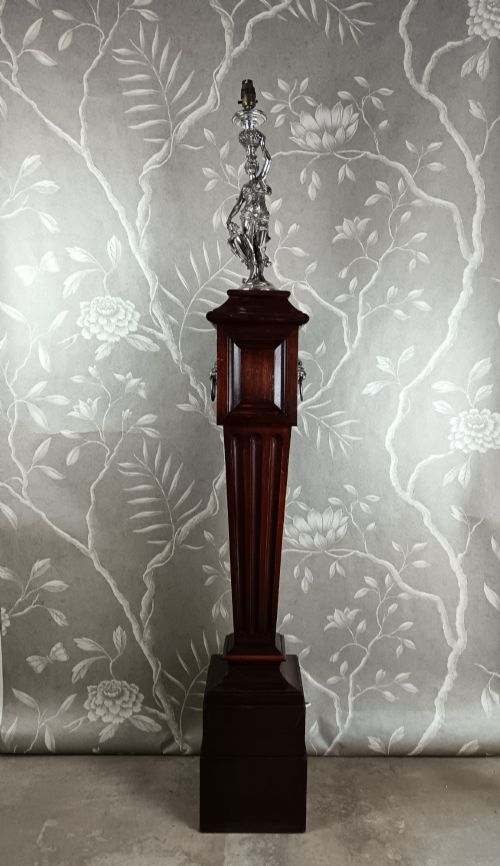
- A tall stand or floor lamp designed to hold a light source or decorative object. They often feature carved wooden columns or figural bronze shafts.
- Ebonised
- Wood treated with a dark stain or finish to imitate ebony. This technique was popular for nineteenth century decorative furniture.
- Ormolu
- Gilded bronze mounts applied to furniture and pedestals. The technique adds metallic lustre and decorative relief.
- Jardiniere
- An ornamental pot or stand for plants. They appear in brass and ceramic across various revival styles.
Antique Floor Pedestals: Frequently Asked Questions
What were antique floor pedestals used for?
These tall stands served to display art objects, vases and lighting at eye level within grand interiors. They provided a stable platform for heavy items while adding architectural height to a room.
Over time, specific variants emerged for domestic utility, including plant stands, music stands and smoking stands. Their placement usually emphasised focal points in principal reception rooms.
How do I style a pedestal at home?
Place a solid wood or marble column in a corner or empty hallway to anchor the vertical space. Top the surface with a compatible bronze sculpture, porcelain vase or table lamp.
Ensure the weight of the object matches the load capacity of the stand. Keep surrounding furniture low to let the height of the pedestal stand out.
How can I tell the period of a pedestal?
Examine the wood species, joinery methods and decorative motifs to determine the era. Mahogany and heavy brass often point to Victorian production, while clean lines suggest later Edwardian or Art Deco dates.
Revival styles draw heavily on classical forms, so look at secondary details like surface patination and casting marks for clues.
Are torcheres the same as pedestals?
Torcheres are a specific subset of floor pedestals originally built to carry candles or oil lamps. Many antique examples incorporate lighting fixtures directly into the standing structure.
Standard pedestals focus entirely on supporting a separate bust, urn or plant. Both types share a tall, slender profile designed to lift objects off the floor.