


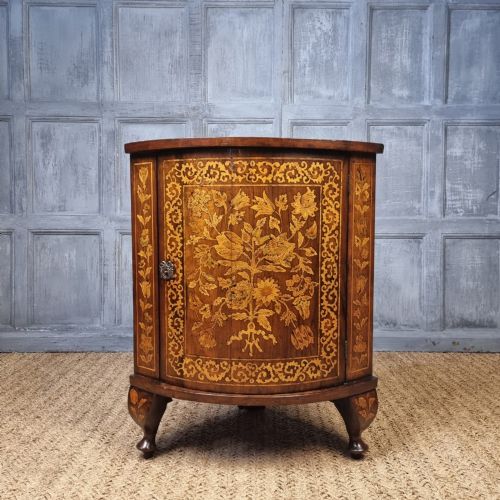


Antique Floor Cupboard
An antique floor cupboard occupies an awkward room corner while providing substantial upright storage in oak or mahogany.
Antique Floor Cupboard
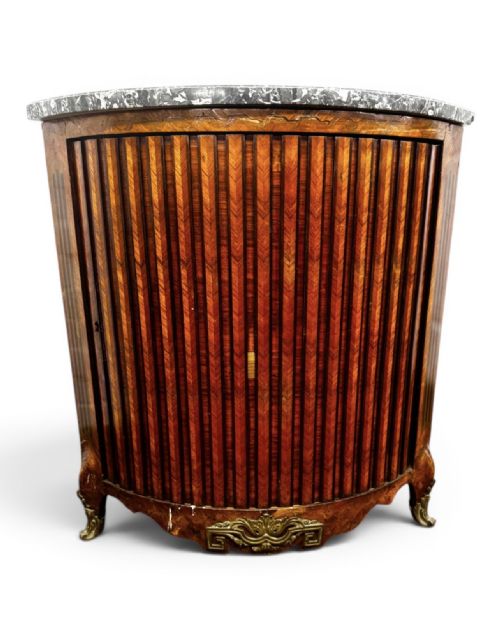
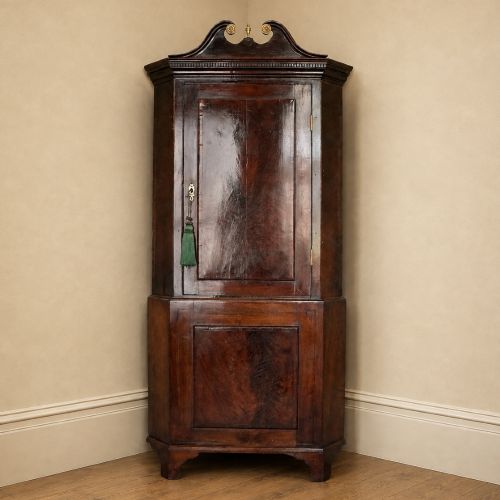
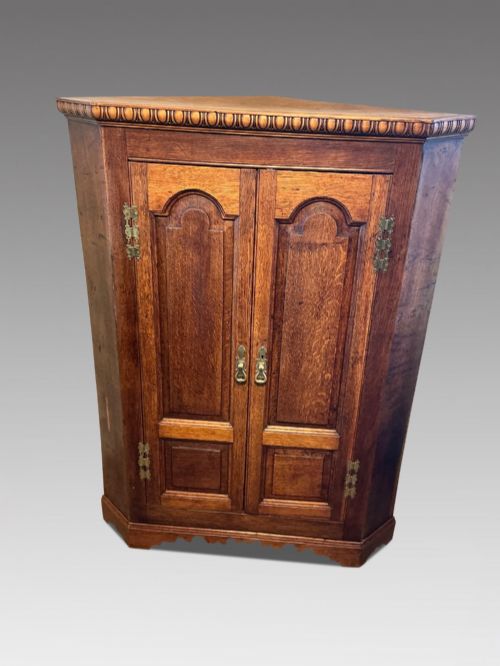
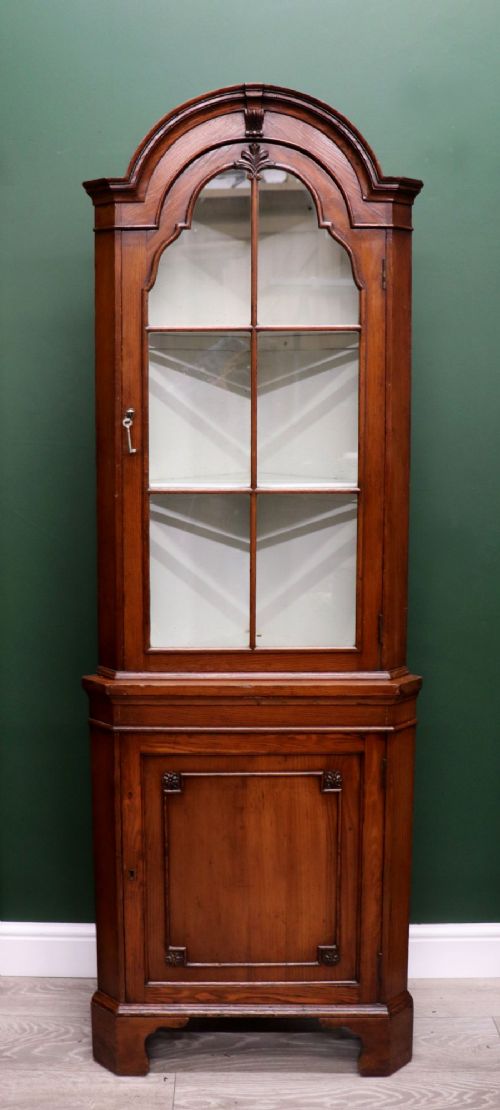
An antique floor cupboard is typically designed to fit a 90-degree corner, turning dead space into functional furniture. The forms seen here range from Georgian oak and mahogany standing cupboards to Edwardian display cabinets and early Victorian book presses.
Most examples are tall standing pieces built in single sections or constructed in two parts to aid movement and placement. The dominant styles reflect Georgian, Victorian, and Edwardian periods, utilising both domestic timbers and imported hardwoods.
Buyers will most frequently encounter corner cupboards and cabinets featuring panelled wooden doors or glazed upper sections. These pieces serve to house china, books, or provisions while anchoring the corner of a period room.
Materials and Construction
The primary structural timbers recorded in these pieces are oak and mahogany, complemented by secondary woods such as walnut, fruitwood, and satinwood. Cabinetmakers employed solid construction for carcases and doors, utilising brass for hinges, escutcheons, and keyhole surrounds.
Decorative surface techniques include marquetry inlay using boxwood and various contrasting veneers to form floral or geometric patterns. Two-part construction allows taller standing cupboards to be transported and assembled on site securely.
Antique Floor Cupboard Retail Price Guide 2026
Typical asking prices for floor cupboard among the pieces listed under this phrase on Sellingantiques today, from the lower quarter to the upper quarter. They describe what is for sale here now, not the wider market.
Some industrious ancestors decided their dining room needed both a corner snack stash and a heavy-duty book press.
Assessing Quality and Build
Quality in these floor cupboards is determined by the selection of timber grain and the precision of the joinery in the carcase and cornices. Finer examples display meticulous attention to inlaid marquetry details and original brass hardware.
Proportion and the handling of panelled doors or glazed sections set superior cabinet work apart from utilitarian workshop pieces. The integration of period architectural details, such as break-arch pediments or fielded panels, indicates higher craftsmanship.
The Antique Floor Cupboard Glossary
- Corner cupboard
- A cabinet specifically constructed with a triangular plan to fit into the corner of a room. These floor-standing versions rise directly from the floor rather than hanging on a wall.
- Marquetry
- The art and craft of applying pieces of veneer to a structure to form decorative patterns and pictures. This technique often incorporates contrasting woods like satinwood and boxwood.
- Book press
- A heavy press mechanism incorporated into furniture for flattening paper or binding books. The examples here combine this mechanical function with standing cabinet storage.
- Fielded panel
- A wooden panel with bevelled edges that fit into a groove within a frame. This traditional method allows the wood to expand and contract with humidity changes.
- Escutcheon
- A flat plate of brass or other metal surrounding a keyhole. It protects the surrounding wood from damage by the key.
Antique Floor Cupboard: Frequently Asked Questions
What is an antique floor cupboard used for?
These tall corner pieces provide enclosed shelving designed to utilise dead space in room angles.
They traditionally hold glassware, china, or books behind panelled or glazed doors while standing directly on the floor.
How do I tell Georgian from Victorian pieces?
Georgian cupboards often feature architectural cornices, fielded panels, and rich mahogany or dense oak timbers.
Victorian and Edwardian variants frequently introduce glazed display doors, lighter satinwood stringing, or alternative configurations like book presses.
Are these cupboards built in one piece?
Many taller floor cupboards are constructed in two separate upper and lower sections to make transport manageable.
Simpler or more compact models are built as a single rigid unit designed to stand firmly in position.
How do I place one in a modern room?
The triangular footprint allows the furniture to nestle cleanly into any standard ninety-degree room corner.
They work effectively to break up plain wall lines and provide vertical display space without projecting far into the floor area.