




Antique Flatware Service
An antique flatware service brings a set of coordinated tableware to the dining table, offering fitted silver and steel pieces for everyday meals and large gatherings.
Antique Flatware Service
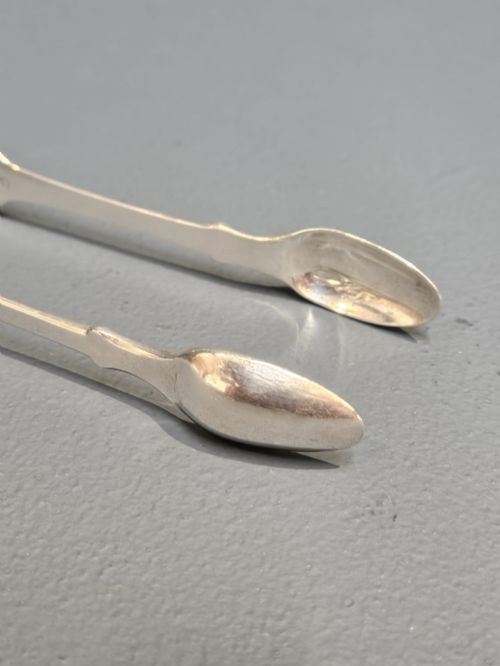
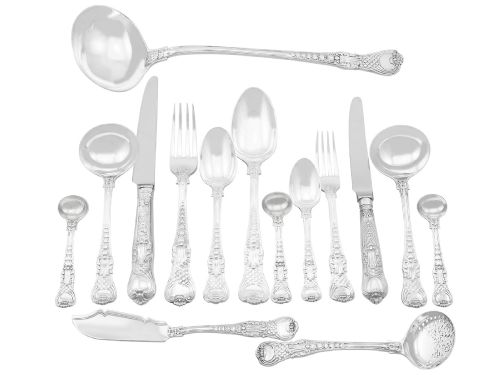
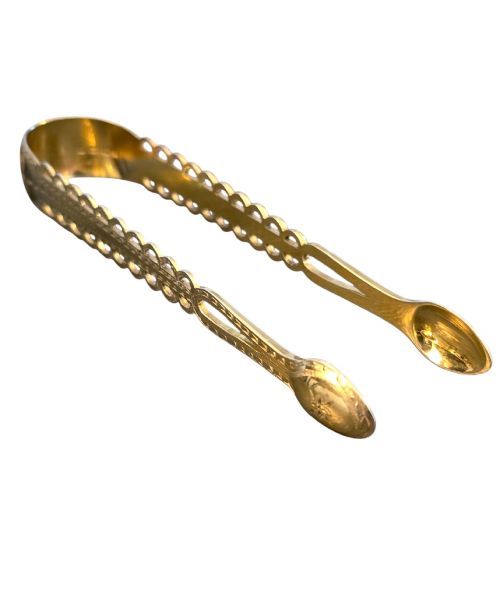
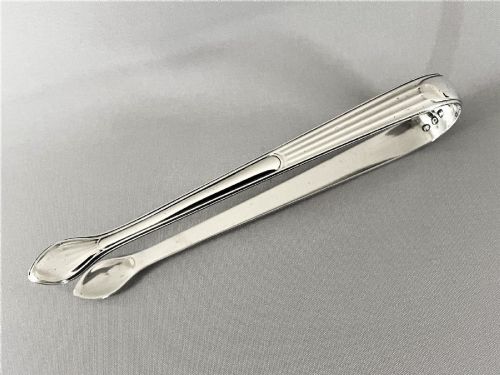
When you search for an antique flatware service, you encounter complete dining sets, canteens, and specialised cutlery configurations spanning the Victorian, Edwardian, Georgian, Regency, and Art Deco periods. These listings include large settings housed in fitted wooden cases alongside smaller collections of spoons, sugar tongs, and serving sets.
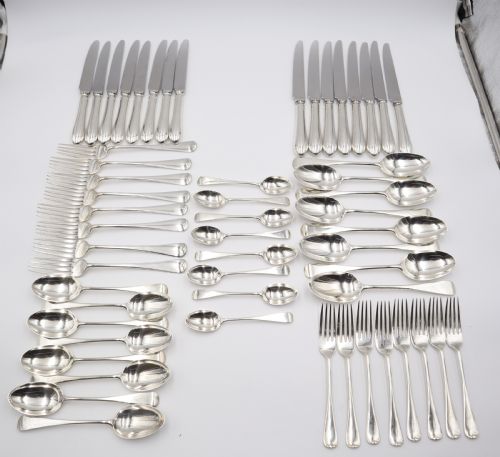
The most common forms on this page range from multi-person canteens intended for eight, twelve, or thirty diners down to specific groupings like fish cutlery and fruit and nut serving sets. Materials vary from sterling silver and silver plate to steel blades, complemented by velvet, satin, wood, and mother of pearl elements.
Regional origins and specific maker attributions surface across various centuries, connecting pieces to London, Newcastle, Chester, and Scottish workshops. Buyers find matching Fiddle pattern sets, elaborate Rococo Revival designs, and clean Art Deco lines within these grouped services.
Materials and construction
Makers shaped these sets from sterling silver and heavy silver plate, pairing metal spoons and forks with steel for cutting edges on knives and specialised fish pieces. Handles incorporated natural materials such as mother of pearl alongside precious metals.
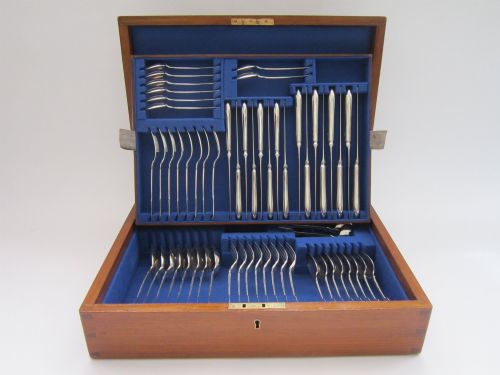
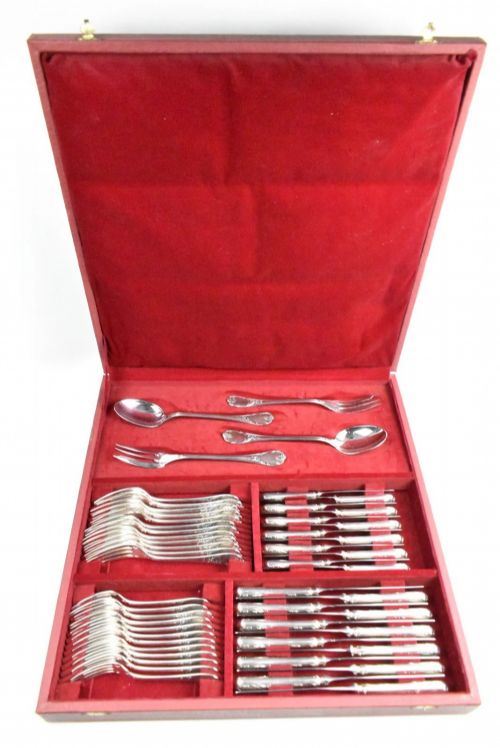
Canteens and storage boxes utilised sturdy woods like oak, lined internally with velvet or satin to protect each individual slot and recess for the cutlery.
Antique Flatware Service Retail Price Guide 2026
Typical asking prices for flatware service among the pieces listed under this phrase on Sellingantiques today, from the lower quarter to the upper quarter. They describe what is for sale here now, not the wider market.
Some Victorian households required specialised cutlery for every conceivable food item, ensuring you might need a dedicated tool just to serve fruit and nuts.
Evaluating craftsmanship and completeness
The integrity of a fitted wooden canteen and the preservation of its interior lining contribute significantly to the standing of a service, alongside whether the collection retains its full, original complement of matching pieces without later replacements.
George William Adams·Chawner and Co·Bateman Family·John Walton·Tiffany
The Antique Flatware Service Glossary
- Sterling silver
- A silver alloy containing 92.5 percent pure silver by mass, widely used across British flatware production for durability and finish. Marked with standard assay office symbols.
- Canteen
- A fitted wooden box or chest designed specifically to store a complete set of cutlery in dedicated slots. These cases often feature multiple tiers or drawers lined in velvet.
- Fiddle pattern
- A traditional nineteenth-century flatware handle design characterised by a narrow stem that broadens into an upturned, fiddle-shaped end. It appears frequently on Victorian services.
- Silver plate
- A base metal coated with a thin layer of silver, utilised in larger services to provide the appearance of solid silver at a different scale. Christofle Marly sets exemplify this technique.
Antique Flatware Service: Frequently Asked Questions
How many place settings do these services usually include?
Listings on this page range from intimate serving sets up to extensive canteens designed for eight, twelve, or thirty persons.
Buyers should check individual item descriptions to confirm the exact piece count and verify whether the setting suits a small household or large dining occasions.
What is the difference between sterling silver and silver plate?
Sterling silver consists of solid precious metal throughout, marked with official assay office hallmarks indicating its purity. Silver plate applies a layer of silver over a different base metal.
Both materials appear across different periods and price points, offering distinct weights and care requirements for daily use.
How do I store an antique flatware service?
Many sets come in dedicated oak canteens lined with fitted velvet or satin to prevent the pieces from rubbing together during storage. Keeping the cutlery in these original fitted cases minimises tarnish and physical wear.
If a set lacks a fitted box, individual felt rolls provide similar protection against scratching in a drawer.
Can I use antique flatware every day?
Sterling silver and heavy silver plate flatware services were built for practical dining and handle regular use well when washed by hand. Avoiding harsh abrasives and dishwashers preserves the finish and any mother of pearl handles.
Storing pieces clean and dry ensures they remain ready for both daily meals and formal table settings.