

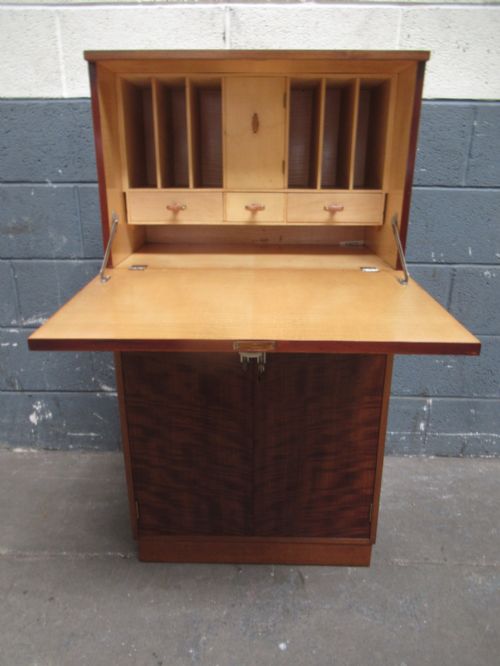


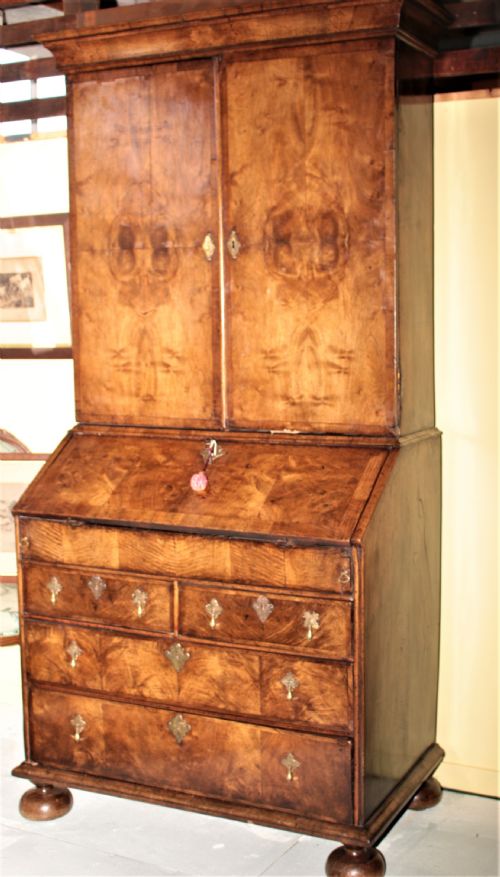


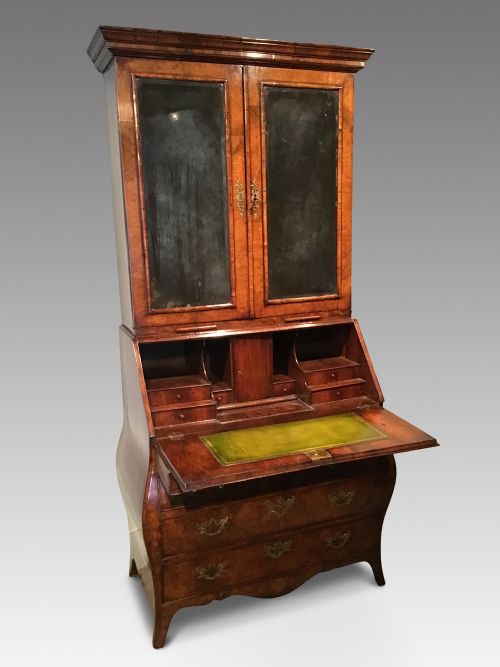
Antique Flap Front Bureau
An antique flap front bureau is a practical writing cabinet with a sloping fall-front that opens to reveal fitted compartments.
Antique Flap Front Bureau
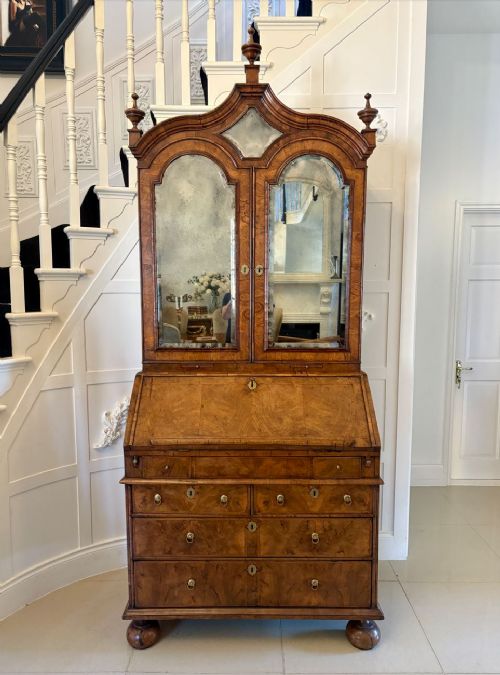
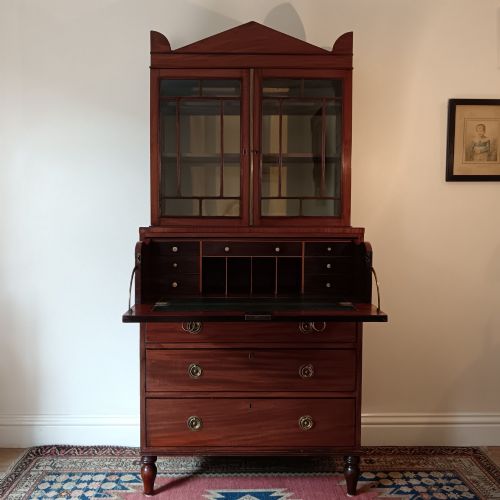
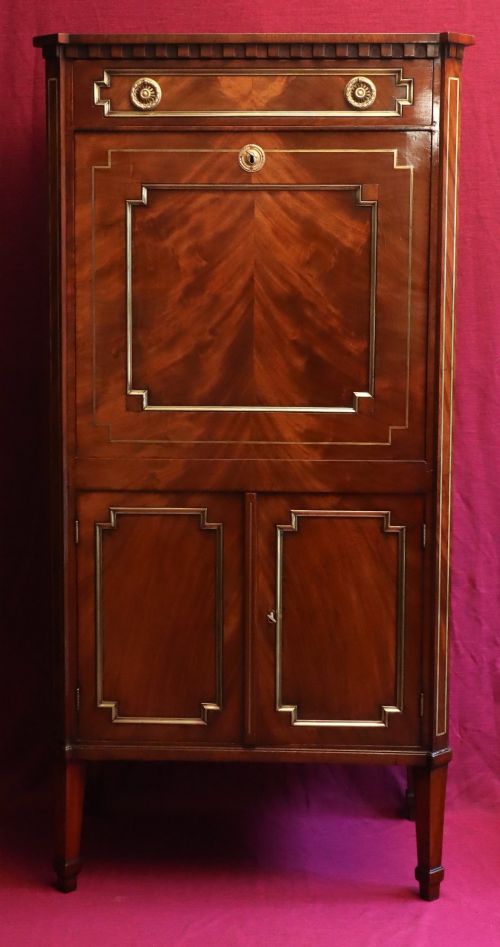
When you search for an antique flap front bureau, you find fitted writing furniture originating from periods spanning the late seventeenth century through the twentieth century. These pieces combine a workspace with concealed pigeonholes and drawers behind a hinged writing flap.
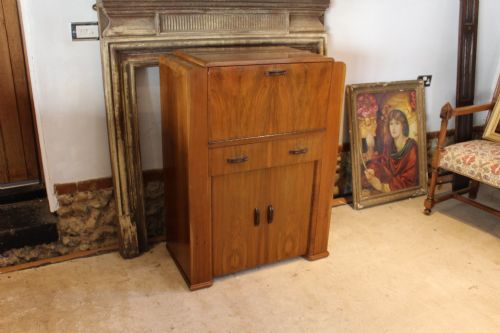
The versions you are most likely to meet on this page include Georgian walnut examples, Edwardian oak writing desks, and twentieth century Art Deco designs. Cabinetmakers produced these in forms ranging from compact writing bureaus to large bureau bookcases.
Makers utilised various timber finishes, including burr walnut, mahogany, and rosewood, often pairing the desk section with drawers or upper shelving units. Each piece reflects the domestic workspace requirements of its respective period.
How they were made
Cabinetmakers constructed these pieces primarily using solid timbers and veneers such as walnut, mahogany, oak, and satinwood. They frequently employed figure-selected woods like burr walnut and applied decorative techniques including featherbanding.
Hardware elements incorporate brass for handles, escutcheons, and keyplates, while writing surfaces occasionally feature inset leather. Interior compartments utilise fine-grained secondary woods for internal small drawers and pigeonhole dividers.
Antique Flap Front Bureau Retail Price Guide 2026
Typical asking prices for flap front bureau among the pieces listed under this phrase on Sellingantiques today, from the lower quarter to the upper quarter. They describe what is for sale here now, not the wider market.
Several pieces include hidden compartments behind the pigeonholes, designed for keeping secret notes safe from curious household guests.
What varies in quality
The selection of timber grain and veneer matching defines the visual caliber of the cabinet exterior. Finer pieces display continuous figure across the fall-front and drawer fascias, alongside meticulous inlay work such as featherbanding.
Internal complexity and secondary wood selection separate standard production from superior examples. Elaborate pigeonhole arrangements, secret compartments, and clean internal drawer construction indicate higher workshop standards.
George Oakley·F.H. Marshall and Co
The Antique Flap Front Bureau Glossary
- Bureau
- A desk featuring a sloping hinged lid that drops down to form a writing surface. It typically encloses a series of small drawers and pigeonholes.
- Escritoire
- A writing cabinet or chest fitted with a fall-front writing surface and internal compartments. This term often applies to continental and earlier British forms.
- Secretaire Abattant
- A vertical cabinet with a drop-front writing flap, associated with nineteenth-century continental and Empire styles. It provides concealed desk space within a tall case structure.
- Featherbanding
- A form of banding used as stringing decoration on cabinet furniture, made by cutting veneers diagonally to create a herringbone pattern. It frames drawer fronts and writing flaps on walnut pieces.
- Pigeonhole
- A small, open compartment within a desk interior designed for sorting letters and documents. These form part of the fitted interior revealed when the fall-front opens.
Antique Flap Front Bureau: Frequently Asked Questions
What is an antique flap front bureau?
An antique flap front bureau is a desk with a hinged sloping panel that drops down to create a writing surface. Inside, it contains small drawers and pigeonholes for correspondence and documents.
These pieces range from compact Edwardian writing desks to tall Georgian and William and Mary bureau bookcases. They combine enclosed storage with a dedicated workspace.
How do you use a bureau?
You unlock the fall-front flap and lower it to a horizontal position, where supporting brackets or internal lopers hold it steady. This creates a flat surface for writing while keeping stationery organised in the compartments behind.
When you finish writing, you gather your papers, return them to the internal drawers, and raise the flap back to its vertical position, securing it with a key.
How do you tell Georgian bureaus apart?
Georgian bureaus typically feature solid proportions, bracket feet, and cabinetwork in mahogany or figured walnut. Earlier examples from the period often incorporate featherbanding and stepped interior compartments.
Later nineteenth-century and Edwardian pieces show different joinery methods, lighter secondary timbers, and simpler internal layouts compared to eighteenth-century models.
What woods were used for bureaus?
Cabinetmakers used walnut, mahogany, oak, and rosewood for the primary exterior surfaces of these desks. Burr walnut and satinwood appear on decorative facades, while oak and pine served as secondary woods for internal framing and drawer linings.
Brass hardware and leather writing inserts complement these timber constructions across different periods and styles.