



Antique Fish Picture
An antique fish picture brings the riverbank, the harbour and the catch onto the wall with the quiet brushwork of the nineteenth and early twentieth centuries.
Antique Fish Picture
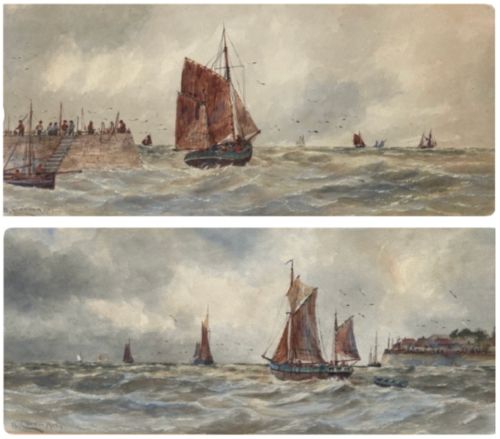
When you search for an antique fish picture, you are looking at original paintings, watercolours, prints and marquetry panels that record fish, anglers, fishing boats and coastal harbours. The material evidence spans the nineteenth century, the Victorian period, and into the mid-twentieth century.
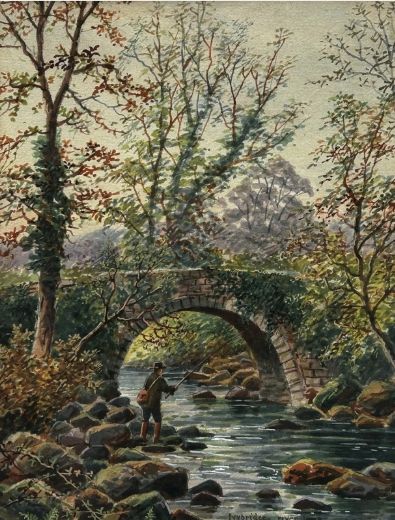
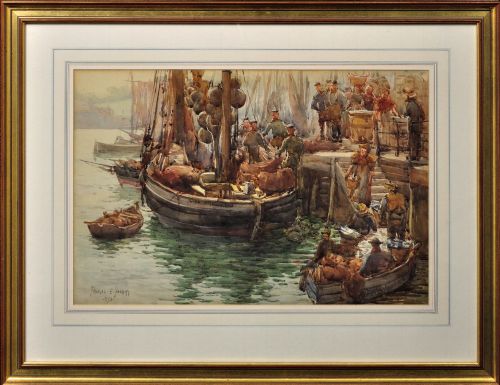
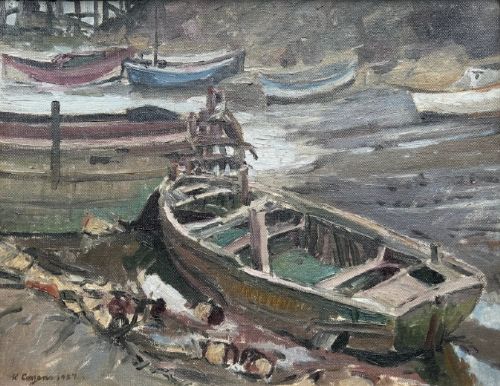
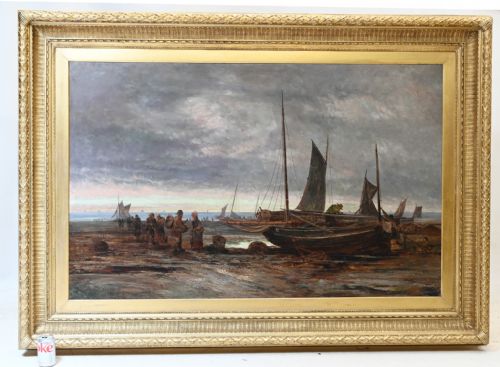
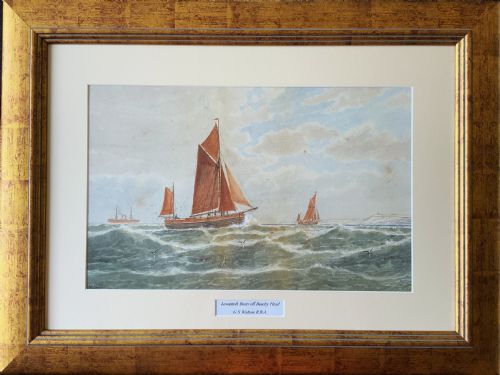
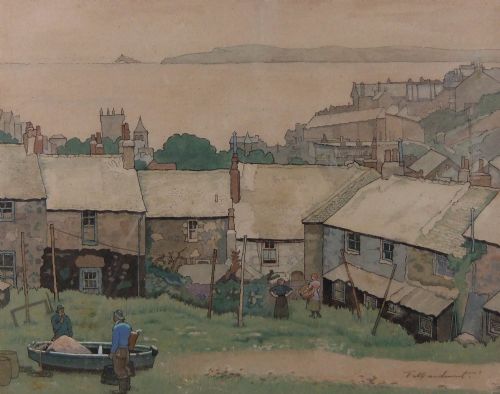
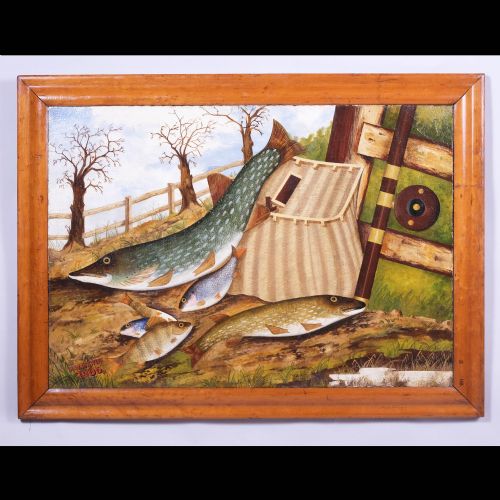
You are most likely to meet watercolours on paper and oil paintings on canvas depicting coastal scenes, river landscapes, and specific catches such as trout and pike. These works range from small framed studies to large oil paintings housed in period frames.
The subjects divide between maritime scenes with fishing vessels and intimate depictions of fish, anglers preparing tackle, and river views. Each piece reflects the enduring British and European fascination with maritime life and inland angling.
How they were made
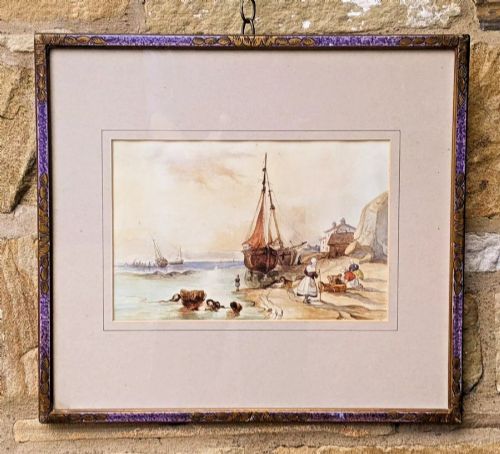
Artists worked primarily with watercolour pigment on paper or oil paint on canvas, occasionally employing gouache, pastel, pencil, or etching techniques. Canvas supports were stretched over wooden frames, while works on paper were protected behind glass within wooden or giltwood frames.
The physical construction includes traditional framing methods using giltwood, moulded wood, and glass to preserve delicate watercolours and pastel drawings. Marquetry panels utilise inlaid natural woods to depict subjects such as leaping salmon with textural grain.
Antique Fish Picture Retail Price Guide 2026
Typical asking prices for fish picture among the pieces listed under this phrase on Sellingantiques today, from the lower quarter to the upper quarter. They describe what is for sale here now, not the wider market.
A monk pauses from his devotions to admire a freshly caught fish.
What varies in quality
Quality rests in the sureness of the draftsmanship and the artist's command of light upon water, skin and scales. A strong work captures movement and atmosphere with economy, whereas a weaker one relies on formulaic composition.
The preservation of the medium marks another division, separating works with vibrant, unfaded pigments and clean paper from those marred by foxing, damp staining or heavy retouching. Original period framing also elevates the integrity of the piece.
William Cannon·Thomas Maidment·George Stanfield Walters·Alfred George Morgan·Charles Napier Hemy·William Lee Hankey·Gustave De Bréanski·T.S. Wallis·Frank Hyde·Frederick William Hattersley·Kate E Booth·Ernest F. Hill·George Henry Knight·Paul H Ellis·Willem E. Roelofs jr.·John Arthur Lomax·Snaffles·James Russell·Norman Janes·Benjamin Callow·Robert Leslie Howey·Thomas Bush Hardy
The Antique Fish Picture Glossary
- Watercolour
- A paint consisting of a pigment suspended in a water-soluble binder, widely used on paper for coastal and river scenes.
- Oil on canvas
- Pigment mixed with drying oil applied to a stretched woven fabric surface, allowing for rich texture and deep colouration.
- Giltwood
- Wood carved and coated with gold leaf or a gold-coloured finish, commonly used for traditional picture frames.
- Marquetry
- The art and craft of applying pieces of veneer to a structure to form decorative patterns, such as fish and wildlife scenes.
- Gouache
- A water-soluble paint type that includes an added inert white pigment to make it opaque, adding solid highlights to works on paper.
Antique Fish Picture: Frequently Asked Questions
What periods do these artworks come from?
The works span from the nineteenth century through the Victorian and Edwardian eras up to the mid-twentieth century. Most examples date from the Victorian period and the early decades of the nineteen hundreds.
Artists during these times produced both detailed coastal watercolours and expressive oil paintings recording fishing life and river landscapes.
How should I frame and display them?
Works on paper require conservation mounting and glass to protect them from moisture and direct sunlight. Oil paintings on canvas benefit from stable indoor humidity and gentle dusting.
Many retain their original giltwood or wooden frames, which should be kept intact where possible to preserve the historical character of the piece.
How do I distinguish watercolours from oil paintings?
Watercolours are painted on paper, often showing the texture of the sheet beneath translucent washes of pigment, and are displayed under glass. Oil paintings use thick or layered paint on stretched canvas or board and have a distinct textured surface.
Oils are heavier and usually do not require glass for protection, whereas watercolours must be kept sealed away from damp environments.
What subjects are most common?
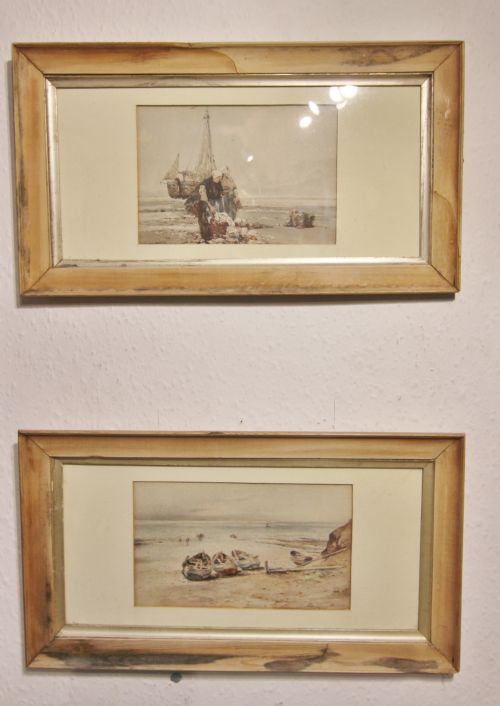
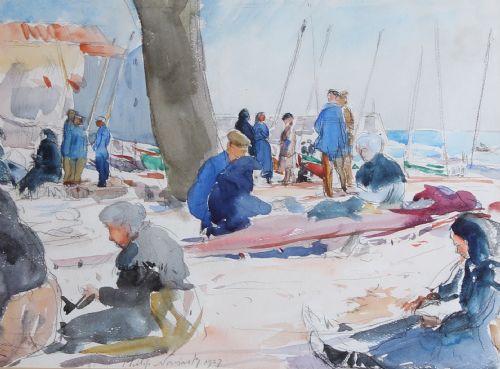
Common subjects include beached fishing boats, harbour docks, coastal cliffs, and men working with nets or tackle. Other pieces focus specifically on river landscapes, anglers by streams, and individual fish.
These themes reflect a strong Victorian and Edwardian preoccupation with maritime industries and the tranquil pursuit of fishing.