





Antique Fish Knife Set
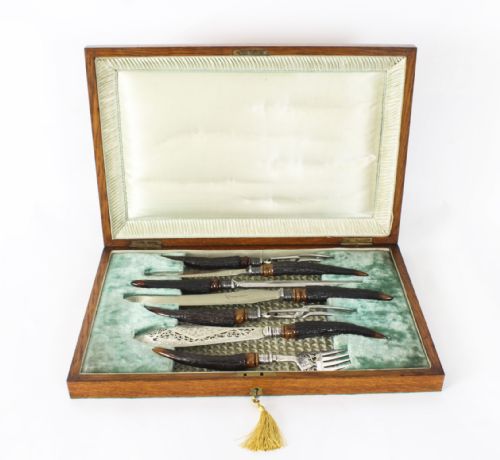
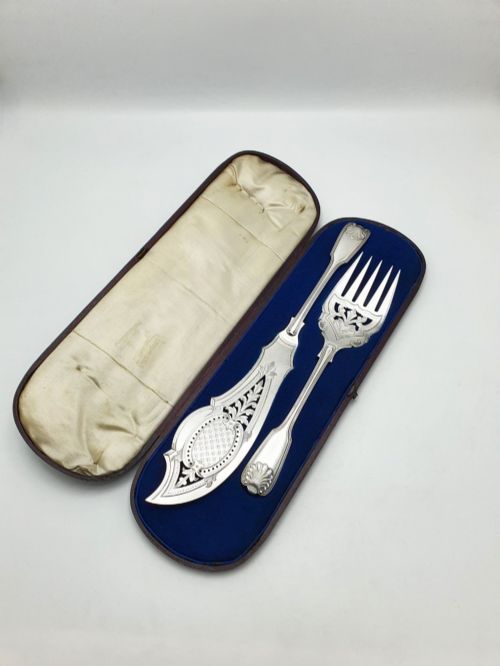
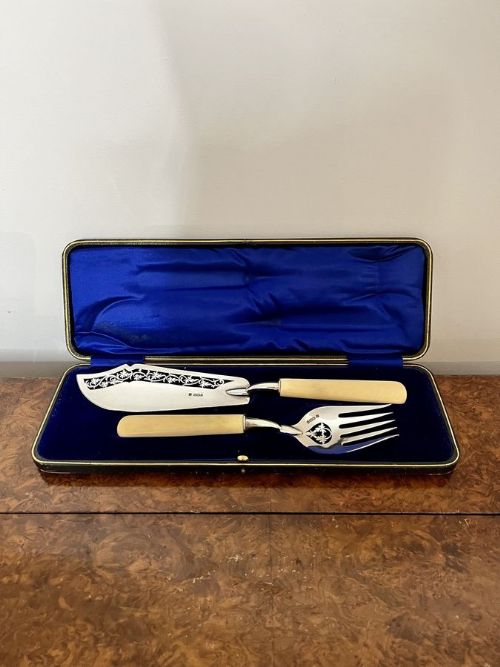
These antique fish knife sets are silver and silver-plated dining implements designed for the fish course, housed in fitted boxes with antler, bone, mother of pearl, or wood handles.
Antique Fish Knife Set
An antique fish knife set comprises specialised cutlery designed for the formal dining table, spanning the Victorian and Edwardian periods. These sets appear as paired servers, cased pairs, or larger multi-piece canteens intended for serving fish courses.
The most common forms on this page include silver-plated and sterling silver servers paired with natural handles such as stag antler, horn, and bone. Pieces frequently date from the late nineteenth century, reflecting the elaborate dining customs of the era.
Makers and manufacturers of the period produced these sets in fitted oak or velvet-lined boxes to protect the delicate engraving and specialised blade shapes. Buyers encounter both individual service sets and larger family dining collections.
How they were made
Silversmiths formed the blades from sterling silver or applied a heavy silver plate over a base metal, frequently employing detailed engraving depicting hunting or dog motifs. These blades join handles fashioned from organic materials including stag antler, horn, bone, and mother of pearl.
Craftsmen secured the handles using pins or collars, attaching them firmly to the metal tangs to withstand the rigours of formal dining. Fitted presentation cases utilise wood such as oak, lined with velvet to house the cutlery securely.
Antique Fish Knife Set Retail Price Guide 2026
Typical asking prices for fish knife set among the pieces listed under this phrase on Sellingantiques today, from the lower quarter to the upper quarter. They describe what is for sale here now, not the wider market.
Some Victorian fish servers feature finely engraved hunting dogs, ensuring your dinner guests are watched over by canine companions from the eighteen-nineties.
What varies in quality
Quality in an antique fish knife set rests upon the depth and crispness of the blade engraving and the choice of handle material. Sterling silver commands higher regard than silver plate, while matched sets housed in original fitted oak or velvet cases show superior original commissioning.
The selection of organic handle materials also dictates distinction, with well-figured mother of pearl or substantial stag antler demonstrating finer craftsmanship than plain bone or simpler wood alternatives.
Waring & Gillows
The Antique Fish Knife Set Glossary
- Silver Plate
- A layer of silver bonded to a base metal substrate. This technique provided the appearance of solid silver at a more accessible cost for dining services.
- Sterling Silver
- An alloy containing ninety-two point five percent silver by mass, with the remainder being copper. It represents the standard for high-quality British table silver.
- Stag Antler
- The shed horn of a deer used as a natural handle material. It offers a textured, tactile grip prized in nineteenth-century dining implements.
- Mother of Pearl
- The iridescent inner layer of mollusc shells used for decorative knife handles. Its natural shimmer added luxury to Victorian and Edwardian cutlery.
- Queens Pattern
- A traditional decorative silverware pattern featuring a shell and scroll motif along the handle border. It appears frequently on formal Victorian dining flatware.
Antique Fish Knife Set: Frequently Asked Questions
What is an antique fish knife set used for?
These sets were created for the specific task of serving and consuming fish during formal multi-course Victorian and Edwardian dinners. The broad blades and notched edges allowed diners to separate fish flesh from bones without damaging the delicate meat.
Today, collectors use them for special dining occasions or display them within their original fitted wooden boxes. They represent the specialised dining culture of the late nineteenth and early twentieth centuries.
How do I care for silver plated fish knives?
Silver and silver-plated cutlery requires gentle hand washing with mild soap and warm water rather than mechanical dishwashing. Drying them immediately with a soft cloth prevents water spots and tarnishing.
Store the pieces in their original velvet-lined oak cases or anti-tarnish rolls to protect the delicate engravings and natural handles. Regular, gentle polishing maintains the bright finish without wearing away the silver plating.
How can I tell Victorian sets from Edwardian ones?
Victorian fish knife sets often feature heavy hand engraving, elaborate scrollwork, and natural materials like stag antler or horn. The styling tends to be ornate, reflecting the decorative tastes of the nineteenth century.
Edwardian sets often display slightly cleaner lines and lighter forms, aligning with early twentieth-century design shifts. Cased canteens and fitted oak boxes also became more standardised during the Edwardian era.
Are these knife sets safe to use for dining?
Most antique fish knife sets remain fully functional for modern dining provided the silver plating and handle attachments are secure. Hand washing ensures the antique materials and engraved blades are preserved during use.
Buyers should check that handles remain firmly fixed to the blades before use at the dining table. The organic materials like bone and antler respond best to gentle handling and avoidance of soaking.