


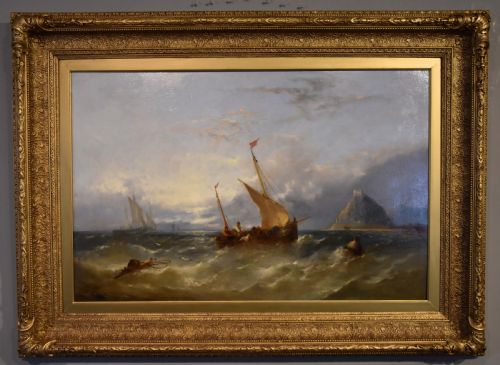
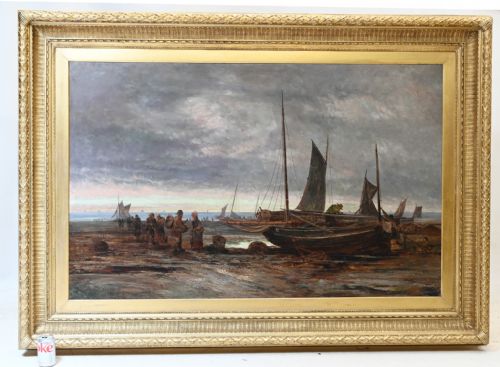
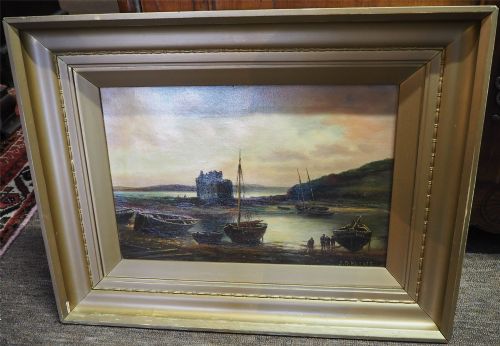


Antique Fish Canvas
These antique fish canvas works bring maritime scenes, coastal harbours and anglers into rooms through oil paint on woven supports.
Antique Fish Canvas
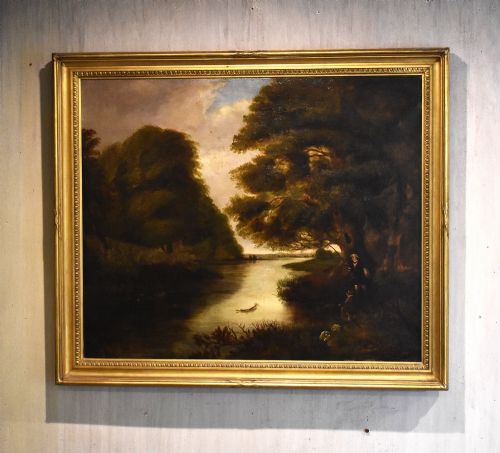
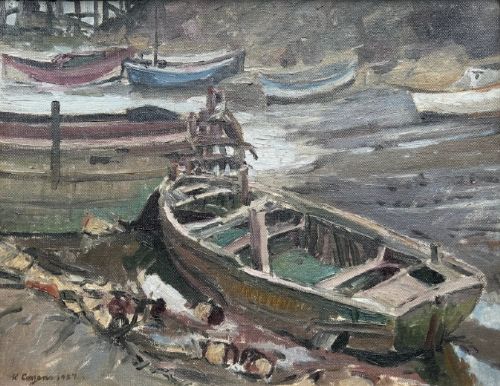
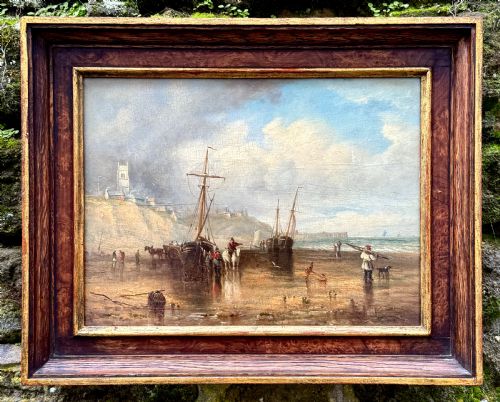
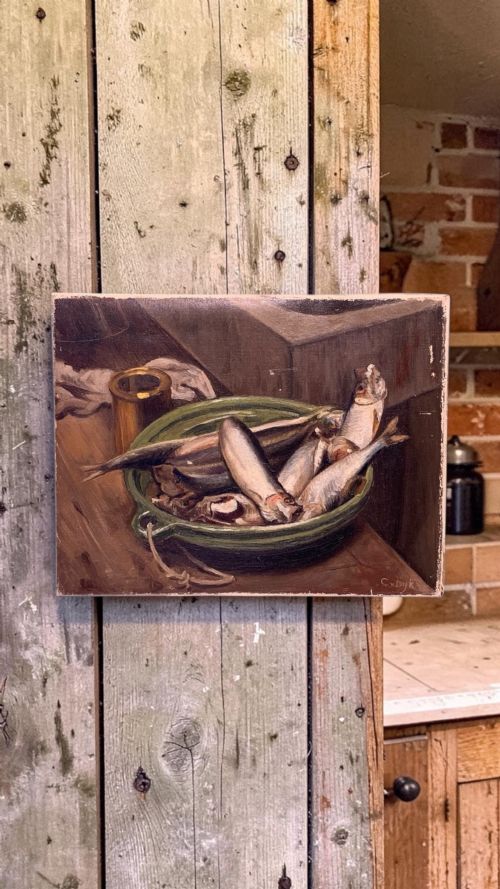
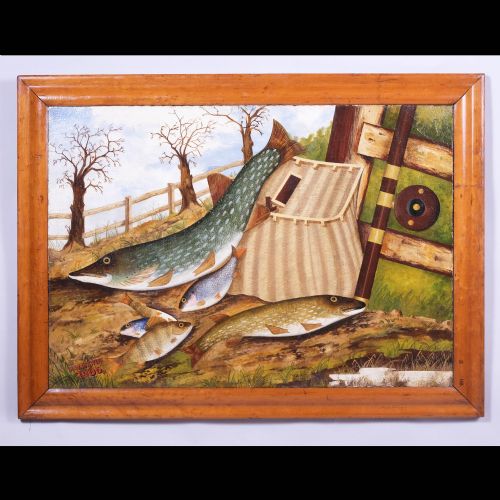
When you search for antique fish canvas, you encounter oil paintings on woven fabric substrates depicting marine subjects, coastal harbours, and angling scenes. The inventory spans the Victorian period through the mid-twentieth century, capturing British, French, and Dutch coastal life.
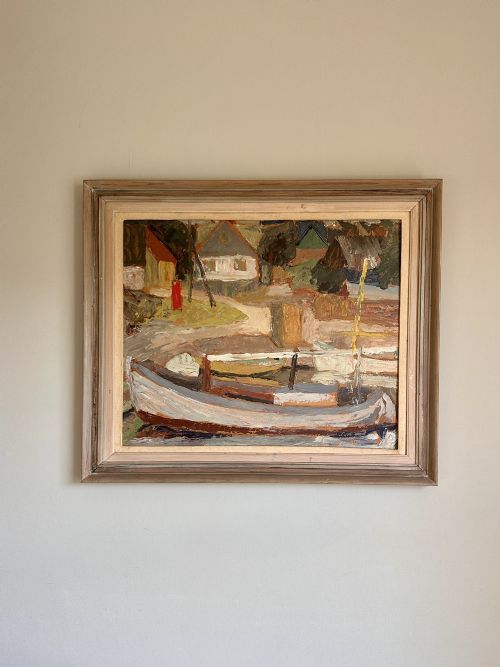
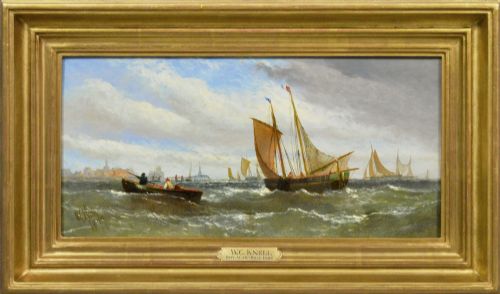
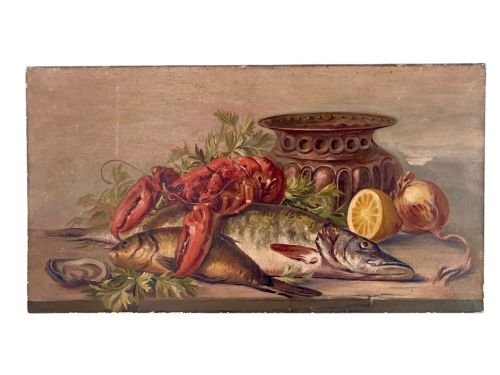
Most pieces show maritime vessels, fishing boats at sea, or river landscapes with fishermen rather than biological specimens. Painters recorded working vessels, harbours from Cornwall to France, and quiet moments by water using oil paint on stretched canvas.
The aesthetic bridges traditional marine art and Impressionist or Post-Impressionist interpretations. Works range from modest depictions of anglers to expansive seascapes framed in wood and gold leaf.
Materials and construction
Artists painted primarily with oil pigments applied to woven canvas supports stretched over wooden frames. The interaction between oil paint and textile yields textured surfaces that retain brushstrokes and impasto detail.
Many works retain their period frames constructed from wood, often finished with giltwood or gold leaf enhancements. These frames complement the maritime subjects and protect the edges of the canvas support.
Antique Fish Canvas Retail Price Guide 2026
Typical asking prices for fish canvas among the pieces listed under this phrase on Sellingantiques today, from the lower quarter to the upper quarter. They describe what is for sale here now, not the wider market.
Listings feature works spanning the eighteenth, nineteenth, and twentieth centuries, utilising oil on canvas alongside giltwood frames.
Distinctions in quality
Quality rests in the handling of light, water, and atmosphere by the painter rather than the subject matter alone. Masterful brushwork captures the movement of waves, the reflection on water, and the bustle of harbour scenes with precision.
The integrity of the canvas and the preservation of the original oil paint layer dictate the standing of a piece. Works retaining their period wooden or gilt frames without extensive overpaint represent the higher tier of surviving examples.
Thomas Creswick·William Henry Williamson·John Holland·Edward Matthew Elliott·Charles Napier Hemy·Gustave De Bréanski·George Gregory·George Morland·Frank Hyde·Horatio Henry Couldery
The Antique Fish Canvas Glossary
- Canvas
- A heavy woven fabric used as a support for oil paintings. It is typically stretched tightly over a wooden frame before painting.
- Giltwood
- Wood that has been coated with gold leaf or gold paint. Frames of this description often accompany Victorian and Georgian maritime paintings.
- Impasto
- Paint applied in thick layers that stand out from the canvas surface. This technique adds texture to depictions of rough seas and clouds.
- Seascape
- A type of artwork depicting the sea, coastal views, or maritime activities. These form a major portion of the paintings found in this category.
- Provenance
- The documented history of ownership of an artwork. It provides a reliable record of the piece's origin and past exhibitions.
Antique Fish Canvas: Frequently Asked Questions
How should I hang these paintings at home?
Position works away from direct sunlight and strong heat sources to protect the canvas and oil pigments. Stable indoor humidity prevents the wooden stretchers and fabric from warping.
Use secure picture hooks rated for the weight of the frame and canvas. Ensure the wall anchors match your wall type for safe display.
Are original frames important?
Period frames, particularly giltwood examples matching the age of the canvas, enhance the historical context and visual appeal. They were often chosen by the artist or first owner.
While replacement frames can protect the artwork, matching period frames hold greater interest for collectors. Check the corners and moulding for signs of original craftsmanship.
How do I date a canvas painting?
Examine the style of the brushwork, the subject matter, and the clothing or boats depicted. Signatures, dates inscribed on the reverse, and biographical details of the artist offer precise clues.
The weave of the canvas, the type of wooden stretcher, and the construction of the frame also help determine the period. Early works often show hand-hammered tacks and older linen weaves.