
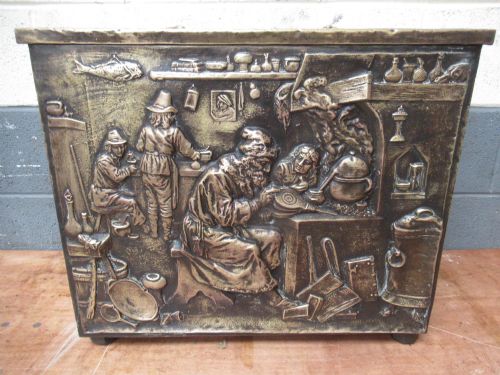


Antique Fireside Fuel Holder
An antique fireside fuel holder is a sturdy vessel built to store and carry coal or logs beside the hearth.
Antique Fireside Fuel Holder
An antique fireside fuel holder serves as a practical hearth accessory designed to keep coal or logs close at hand for the fire. When you search for an antique fireside fuel holder, you encounter a variety of forms ranging from traditional buckets and bins to scuttles and purdoniums.
The pieces seen on this page date predominantly from the Victorian era, spanning the nineteenth century up to around nineteen hundred. They originate from English and French workshops, utilising robust construction to endure daily hearth use.
Common forms include the classic coal bucket, the helmet scuttle, and the purdonium, alongside dedicated log boxes and carriers. Each design addresses the domestic need to store fuel cleanly and handle it efficiently beside an open fire.
How they were made
Metal vessels rely heavily on sheet brass and copper, frequently joined with visible rivets that provide both structural strength and decorative character. Artisans shaped these metals into bins and buckets, sometimes pairing copper bodies with brass mounts or handles.
Wooden examples incorporate timber such as oak, mahogany, and walnut veneer, occasionally enhanced with cast or chased ormolu mountings. Wrought iron and plain iron also appear in the evidence, providing rigid durability for heavier log keepers and baskets.
What varies in quality
Quality in these pieces rests upon the heaviness of the gauge of metal and the crispness of any embossed or applied decoration. A thicker gauge of copper or brass prevents denting and ensures the container bears the weight of heavy fuel without buckling.
The integrity of the construction also marks the difference between standard production and finer work, visible in the neatness of the riveting and the security of the handles. Details like ormolu mounts or specific maker attributions elevate certain pieces above everyday utility items.
Petrus Ramus·Liberty London
The Antique Fireside Fuel Holder Glossary
- Coal purdonium
- A specialised box for storing coal, typically featuring a sloping hinged lid and a drop-down front for easy access with a shovel. This form became particularly popular in Victorian parlours for keeping coal tidy.
- Helmet scuttle
- A traditional metal bucket with a flared rim and a pivoting handle, shaped vaguely like a classical helmet to direct coal smoothly onto the fire. It usually rests on a small foot or base.
- Ormolu
- Gilded bronze or brass applied as decorative mounts to furniture and metalware during the nineteenth century. It adds a polished, golden contrast to darker woods and patinated metals.
- Riveted
- Joined together using metal pins that are hammered flat at the ends, creating a strong mechanical bond. This technique is common in heavy copper and brass fuel buckets.
- Arts and Crafts
- A design movement emphasising handcraftsmanship and simple forms over mass production. Pieces from this style often display honest construction and hammered metal surfaces.
Antique Fireside Fuel Holder: Frequently Asked Questions
What is a fuel purdonium?
A purdonium is a dedicated box designed to hold coal near the fireplace, usually featuring a hinged lid and an internal metal liner to contain dust. It allowed homeowners to store fuel neatly in the sitting room.
These containers often sat beside the fireplace as a piece of formal furniture rather than a mere utility bucket, matching the interior decor of the period.
How do I clean antique brass?
Cleaning antique brass depends entirely on the desired level of shine and the preservation of the original surface patina. Many collectors prefer to leave a mellow, aged finish rather than polishing the metal to a bright gleam.
If cleaning is necessary, use a mild, non-abrasive cleaner formulated for antiques and avoid harsh commercial chemicals that strip away centuries of historical wear.
Are these holders safe for logs?
Most antique holders constructed from copper, brass, or iron handle heavy logs without issue, provided the base and handles remain secure. Iron and wrought iron versions offer exceptional strength for large pieces of firewood.
Wooden log boxes often include metal linings to prevent moisture and bark from staining or damaging the timber interior over years of use.
How do I date a copper bucket?
Dating copper fuel containers involves examining the manufacturing techniques, such as the use of hand-beating versus machine rolling, and the style of the riveted joints. Victorian examples frequently display specific handle attachments and decorative embossing typical of the nineteenth century.
Design motifs also offer clues, with Arts and Crafts pieces showing characteristic hand-hammered surfaces that differ from earlier Rococo Revival ornamentation.