


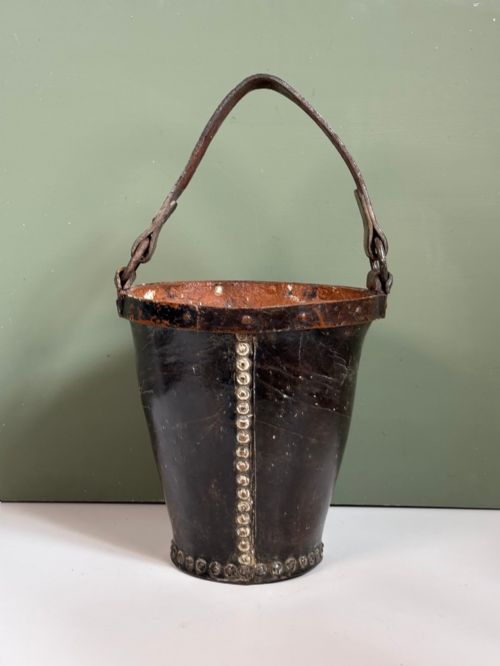
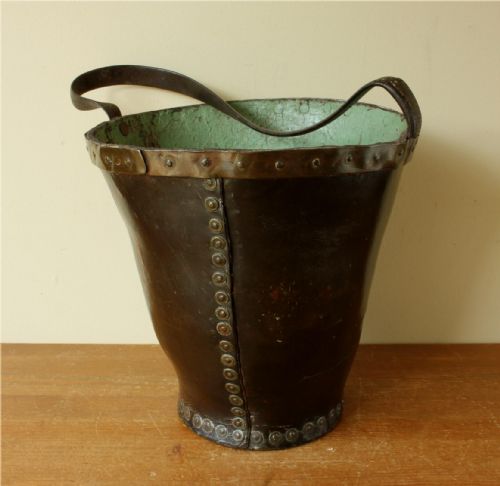


Antique Fire Bucket
An antique fire bucket brings substantial industrial strength and rich heritage to a hearth, offering a practical vessel for fuel or kindling.
Antique Fire Bucket
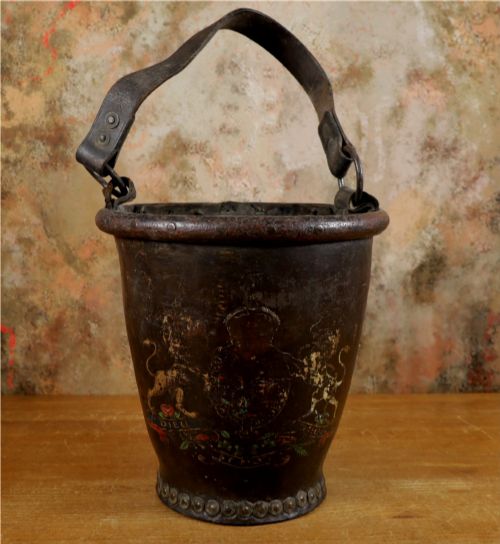
When you search for an antique fire bucket, you encounter sturdy utilitarian vessels spanning the Georgian and Victorian eras through to the Arts and Crafts movement. These items primarily manifest as leather water buckets bearing coats of arms or armorial crests, alongside metal iterations fashioned from copper, brass, and iron.
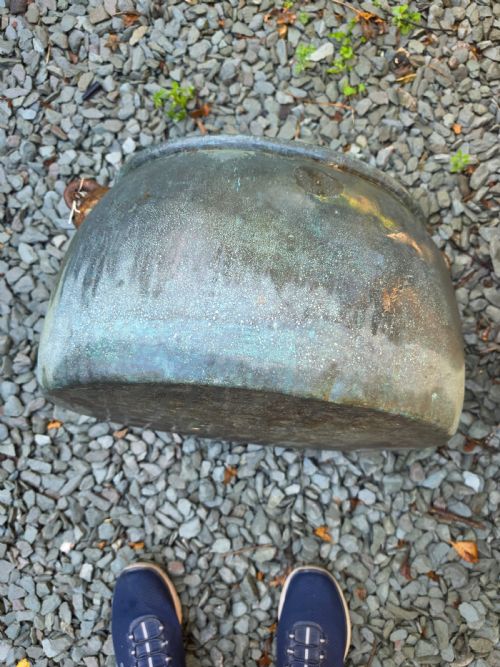
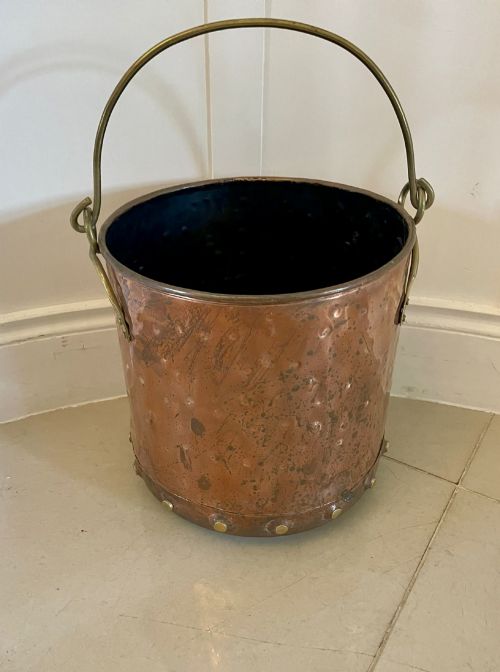
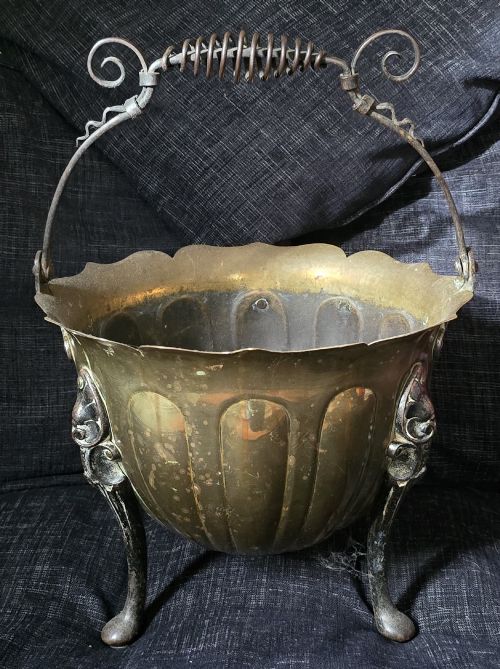
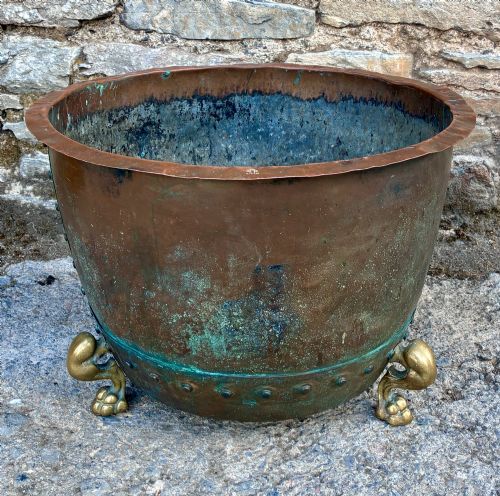
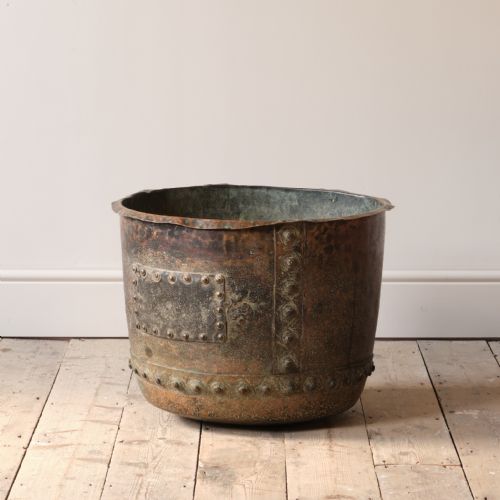
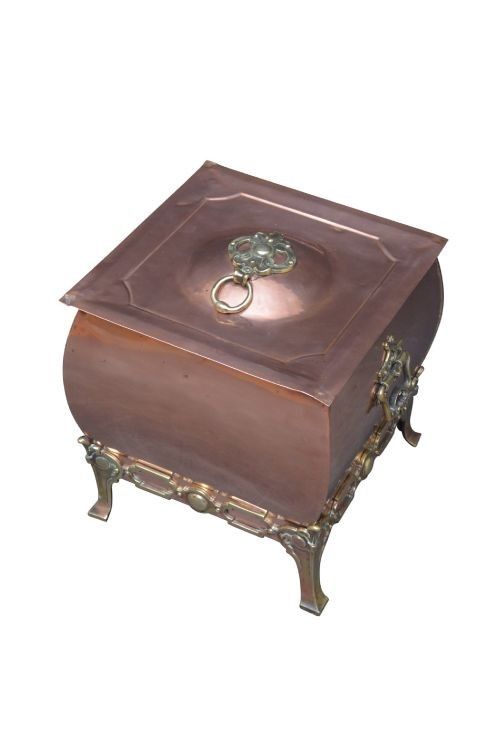
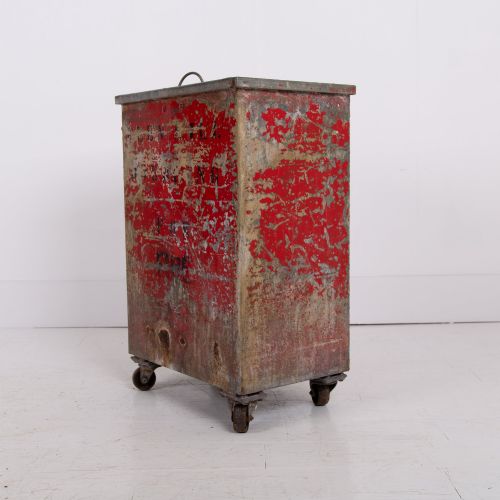
The domestic adaptations on this page include log bins, coal scuttles, and fireside stores. Leather examples frequently utilise boiled leather construction with soft leather coverings, while metal versions often take the form of riveted boilers, cauldrons, and ferrats utilised across country houses and industrial sites.
Materials and construction
Makers constructed leather fire buckets using thick hides shaped and sometimes boiled to retain rigidity, reinforced with copper studs and iron bands to withstand heavy emergency use. Handles typically comprise sturdy iron swing bails or leather straps secured with heavy riveting.
Metal vessels rely on heavy sheet copper and brass joined by hand-hammered rivets, often paired with cast iron or wrought iron handles. Wooden iterations utilise coopered oak or mahogany staves bound with brass or iron hoops, creating watertight or robust dry storage containers.
Antique Fire Bucket Retail Price Guide 2026
Typical asking prices for fire bucket among the pieces listed under this phrase on Sellingantiques today, from the lower quarter to the upper quarter. They describe what is for sale here now, not the wider market.
Several leather buckets proudly display hand-painted lions and unicorns alongside family coats of arms, ready for a seventeenth-century domestic crisis.
Craftsmanship and condition
Quality rests in the integrity of the original construction, seen in the regularity of hand-driven copper studs on leather bodies and the density of riveted seams on metal vessels. Superior pieces retain crisp armorial hand-painting or legible crests rather than heavily worn surfaces.
The calibre of metal thickness and the survival of original swing handles and mounting hardware dictate desirability. Pieces showing honest patination from decades of hearth service outrank those with over-polished or stripped surfaces.
Henry Loveridge
The Antique Fire Bucket Glossary
- Boiled leather
- Leather treated by heating in water or wax to harden it into a rigid, durable shape suitable for holding water.
- Armorial crest
- A design derived from a coat of arms, often painted or stamped onto leather fire buckets to denote ownership by a landed estate or naval vessel.
- Coopered
- Built from vertical wooden staves fitted together and bound with metal hoops, much like a traditional barrel.
- Ferrat
- A metal vessel or bucket style frequently associated with Arts and Crafts copperwork and utilitarian hearth storage.
- Purdonium
- A specialised domestic box or scuttle designed specifically for holding and dispensing coal beside a fireplace.
Antique Fire Bucket: Frequently Asked Questions
What is an antique fire bucket?
An antique fire bucket is a sturdy container originally kept filled with water in large houses and institutions to douse small blazes before they spread.
Today, these robust leather and metal vessels serve widely as decorative log bins, coal scuttles, and umbrella stands beside the hearth.
How do I clean a copper fire bucket?
Cleaning depends entirely on the level of patination you wish to preserve on the metal surface.
Most collectors prefer to leave the aged verdigris and dark oxidation undisturbed, applying only a light wax to protect the copper and brass components.
Are leather fire buckets waterproof?
Historical leather fire buckets were treated with wax or boiled to hold water during emergencies.
Over the centuries, the leather dries out, so modern owners generally line them with a discreet inner container if using them for fresh flowers or wet umbrellas.
How do I date a leather fire bucket?
Dating relies on examining the construction methods, the style of any painted armorial crest, and the type of metal studs used.
Georgian examples often feature hand-painted coats of arms and heavy brass studding, while later Victorian and Arts and Crafts versions display simpler riveted metalwork.