



Antique Figural Chairs
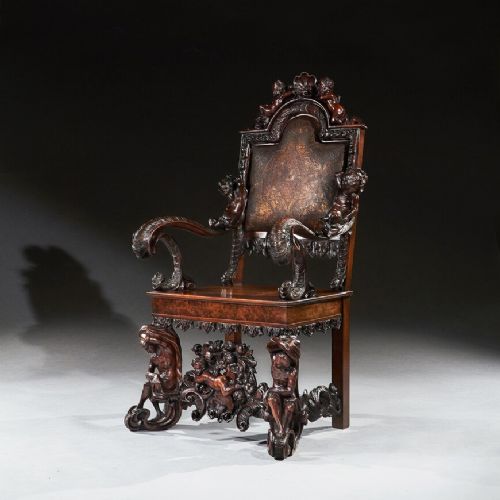
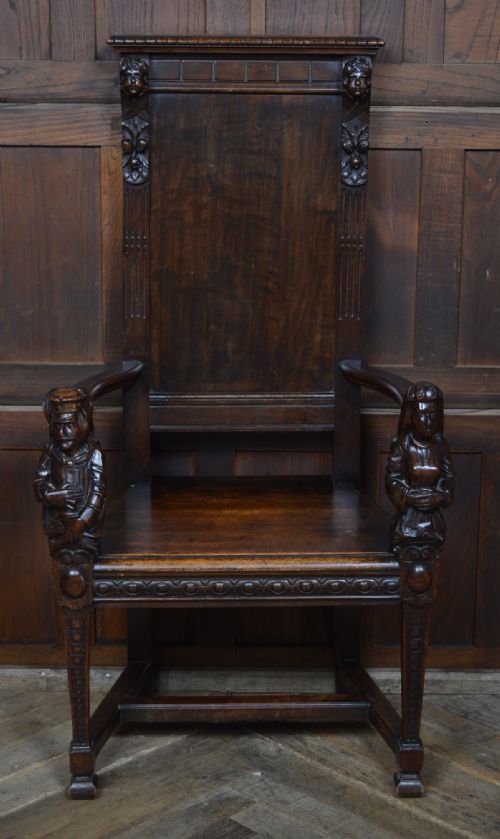
Antique figural chairs bring carved human and animal forms straight into the room, offering heavy timber construction and distinct historical character.
Antique Figural Chairs
When searching for antique figural chairs, you encounter seating featuring carved human figures, mythical creatures, eagles, and detailed motifs integrated directly into the wooden frame. These pieces span from the mid-nineteenth century onwards, drawing on established revival movements rather than a single unified era.
The selections on this page lean heavily toward nineteenth century craftsmanship, including Victorian and continental European revivals alongside Anglo-Indian and Chinese pieces. Armchairs dominate the offerings, accompanied by hall chairs and side chairs built from sturdy timbers.
Makers drew inspiration from Italian Baroque, French Breton, Renaissance, and Gothic vocabularies to create sculptural seating. These chairs function as statement pieces in a room, combining practical seating with expressive carved wooden sculpture.
How they were made
Carpenters and carvers shaped these frames from dense hardwoods such as walnut, oak, fruitwood, rosewood, and solid wood. Artisans worked these materials using hand-carving techniques to produce deep relief work, figural supports, and ornate crests.
Upholstered versions incorporate traditional textiles including leather, wool, and needlepoint secured to the wooden frames. Structural joinery relies on pegged or doweled joints suited to supporting the heavy carved elements.
Antique Figural Chairs Retail Price Guide 2026
Typical asking prices for figural chairs among the pieces listed under this phrase on Sellingantiques today, from the lower quarter to the upper quarter. They describe what is for sale here now, not the wider market.
Listings feature walnut, oak, rosewood, fruitwood, and leather across nineteenth-century styles.
What varies in quality
The depth and clarity of the hand-carved detail separate ordinary production from exceptional work. Sharp undercut carving on walnut or fruitwood displays a master carver's hand compared to softer, shallower moulding on simpler frames.
Integration of the figural elements into the structural design dictates overall success. Chairs where figures, arms, and legs form a cohesive architectural composition command greater attention than pieces where carvings appear tacked onto a standard frame.
Andrea Brustolon
The Antique Figural Chairs Glossary
- Figural chair
- A chair incorporating carved human figures, animals, or mythical beasts into its structural framework. These elements often form the arms, legs, or back splats.
- Italian Baroque Revival
- A nineteenth-century style reviving the dramatic, ornate forms of the seventeenth-century Italian Baroque period. It utilises deep walnut carving and elaborate scrolls.
- Needlepoint
- Stitched canvas work utilised as upholstery on period seat pads and backs. This textile technique often employs wool threads in geometric or floral patterns.
- Fruitwood
- Dense timber harvested from fruit-bearing trees, favoured by nineteenth-century makers for detailed carving. It provides a smooth grain and warm tone.
Antique Figural Chairs: Frequently Asked Questions
Where should I place an antique figural chair?
These sculptural seats work best in spaces where they can be viewed from multiple angles, such as a hallway, study, or drawing room corner. Because the carved details demand attention, they function well away from cluttered walls.
Pair them with simpler furniture to let the carved timber and figural elements stand out without overwhelming the room's proportions.
How do I clean carved wooden frames?
Dust the deep recesses of the carving regularly using a soft-bristled brush to prevent dirt accumulation in the grain. Avoid heavy liquid polishes that build up in the carved crevices over time.
Feed the timber occasionally with a traditional wax polish applied sparingly and buffed gently with a clean cloth to preserve the finish.
How can I tell the period of a figural chair?
Examine the timber species, tool marks left by the carver, and the style of revival ornament applied to the frame. Nineteenth-century makers frequently reinterpreted Baroque, Renaissance, or Gothic motifs using contemporary joinery.
Compare the upholstery technique and secondary woods inside the construction to standard nineteenth-century workshop practices.
Can I use these chairs for daily seating?
Most antique figural chairs are sturdy enough for regular use provided the joints remain tight and the timber is sound. Heavy carved armchairs and hall chairs were built from dense hardwoods designed for practical seating.
Check the stability of the arms and legs periodically, especially on pieces featuring complex figural supports that bear weight.