



Antique Fiddle Pattern
Antique fiddle pattern flatware brings the distinctive, elegant shoulder shape of the nineteenth century straight to your dining table.
Antique Fiddle Pattern
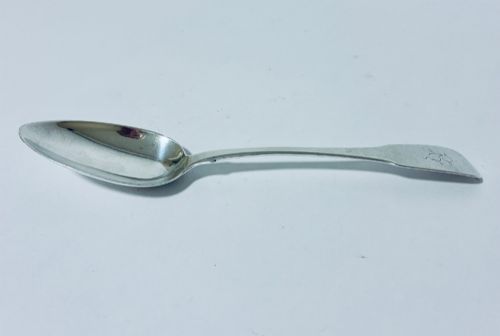
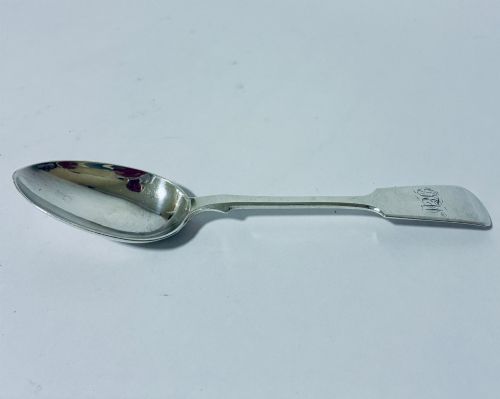
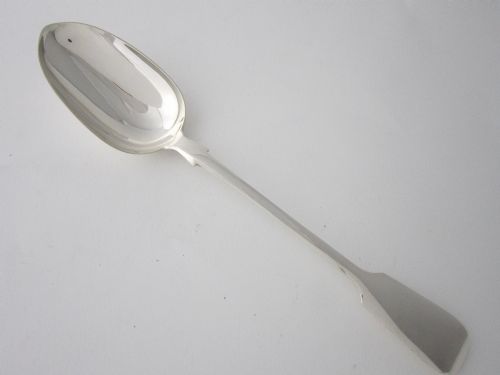
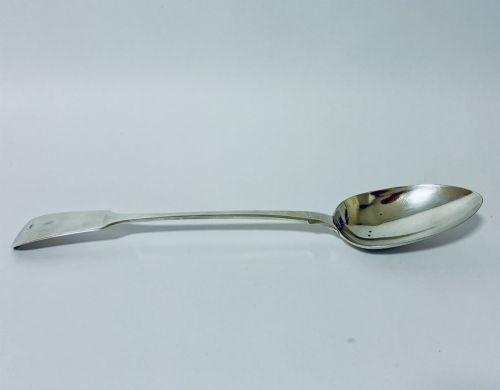
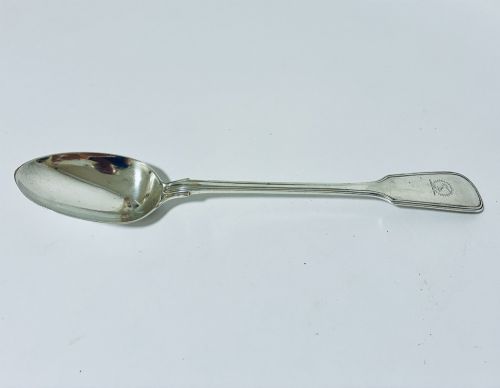
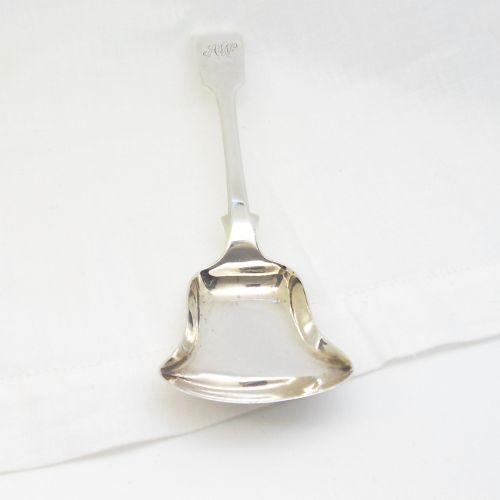
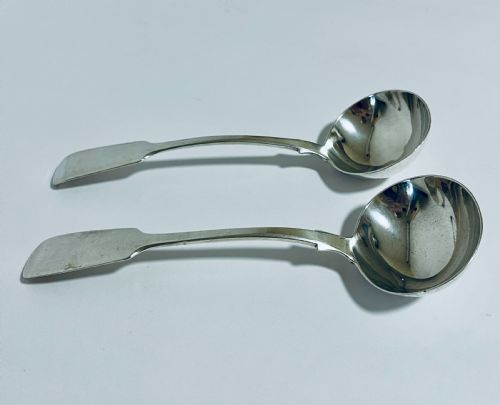
When you search for antique fiddle pattern, you encounter a distinct form of silverware characterised by the subtle broadening of the stem near the terminal, resembling the body of a violin. The pieces available here span both the Georgian and Victorian periods, taking the shape of everyday cutlery, substantial serving spoons, and delicate teaspoons.
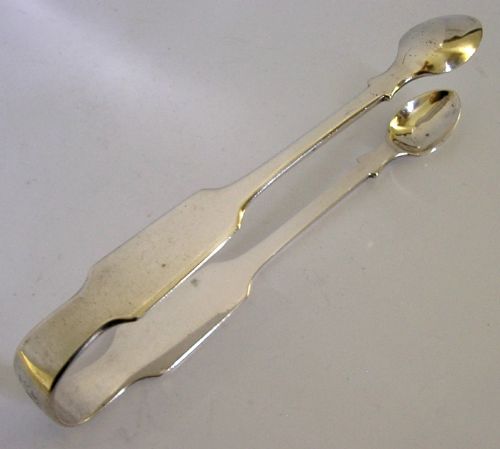
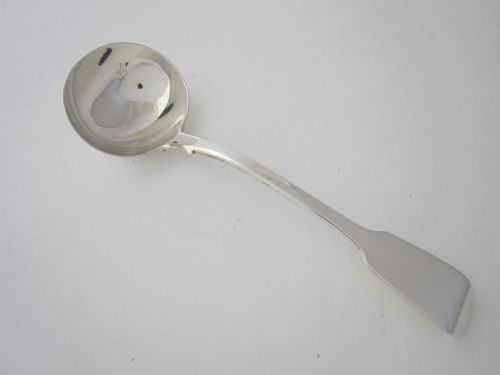
The flatware you meet most frequently on this page includes tablespoons, dessert spoons, and sugar tongs, alongside larger serving utensils like soup ladles, fish slices, and basting spoons. These items originate from workshops across England, Ireland, Scotland, and specific provincial assay offices.
Makers produced these utilitarian and decorative items in solid sterling silver, occasionally incorporating wood or velvet into fitted canteens or presentation cases. The style bridges simple earlier eighteenth-century flatware and the ornate designs of the later Victorian era.
Materials and construction
Silversmiths formed these implements primarily from solid sterling silver, hammering and shaping the metal before stamping hallmarks to record the standard, assay office, and year. Certain larger serving items demonstrate double striking to crisp up the decorative outlines on both sides of the stem.
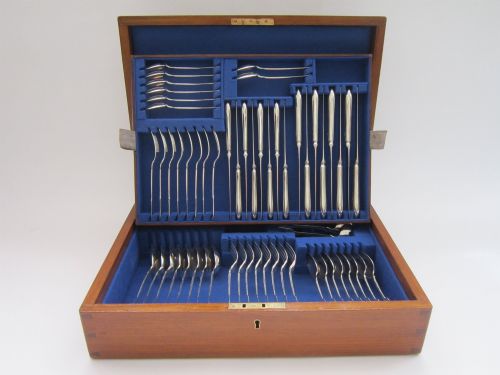
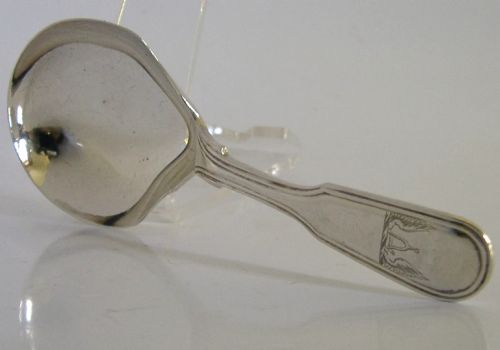
Handles and stems often display engraved family crests or initials added by hand after initial production, whilst specialised pieces like fish slices incorporate pierced blades to drain liquids. Fitted wooden boxes lined with velvet occasionally house complete canteens of cutlery for multiple persons.
Antique Fiddle Pattern Retail Price Guide 2026
Typical asking prices for fiddle pattern among the pieces listed under this phrase on Sellingantiques today, from the lower quarter to the upper quarter. They describe what is for sale here now, not the wider market.
Some heavier sugar tongs recorded here tip the scales at over sixty grams.
Assessing quality and craftsmanship
Quality in these silver pieces rests on the weight of the metal and the crispness of the fiddle shoulder profile, as thinner examples suffer from excessive wear at the heel of the bowl over decades of use. Substantial gauge silver provides a reassuring balance in the hand and ensures durability during service.
Provenance and regional manufacture elevate certain items, with provincial assay marks from towns like Exeter, York, Newcastle, or Inverness commanding particular interest among collectors. Preserved family crests and complete matching sets also distinguish superior examples from assembled collections.
John Walton·Jamieson and Naughton·George Adams
The Antique Fiddle Pattern Glossary
- Fiddle pattern
- A nineteenth-century flatware style defined by shoulders narrowing sharply just above the stem before flaring out to a flat, squared terminal.
- Assay office
- An official body that tested precious metals and stamped items with a hallmark to guarantee the silver standard.
- Provincial mark
- A town mark struck outside London, indicating origin from regional silversmiths in places such as Dublin, Edinburgh, or York.
- Fish slice
- A large serving implement with a broad, flat, and frequently pierced blade designed for lifting portions of fish at the table.
- Caddy spoon
- A small specialised spoon used for measuring loose tea leaves from a caddy into the pot.
- Double struck
- A manufacturing process where dies hit the silver blank from both sides to impart deeper definition to the pattern.
Antique Fiddle Pattern: Frequently Asked Questions
How do I clean antique silver?
Clean your sterling silver gently with a soft microfibre cloth and a specialist silver polish specifically formulated for antiques. Avoid abrasive materials that can wear away crisp hallmarks and delicate engraved crests over time.
Store pieces in tarnish-resistant cloth or dry environments away from direct sunlight and rubber materials. Regular, gentle use prevents heavy tarnish build-up and maintains a natural, warm glow.
Can I use these spoons daily?
Solid sterling silver flatware from the nineteenth century is robust enough for regular dining and handling. Hand washing in warm, soapy water immediately after use keeps the silver in excellent condition.
Put away silver items rather than running them through modern mechanical dishwashers, which use harsh detergents and high temperatures that ruin antique finishes.
What is a provincial mark?
A provincial mark indicates that a piece of silver was assayed and retailed outside of London in regional centres such as Exeter, York, or Newcastle. These regional towns often produced smaller quantities than the capital.
Collectors prize provincial silver for its scarcity and the distinct regional variations found in the maker marks and town stamps of the period.
How do I date my silver?
Dating antique silver relies on the set of stamped hallmarks, which typically include a maker mark, a standard mark for sterling silver, a town mark, and a date letter specific to that assay office. Reference tables match each letter to a precise year of assay.
Stylistic cues like the shape of the fiddle shoulder and engraved crests offer secondary clues when date letters are rubbed or missing entirely.