



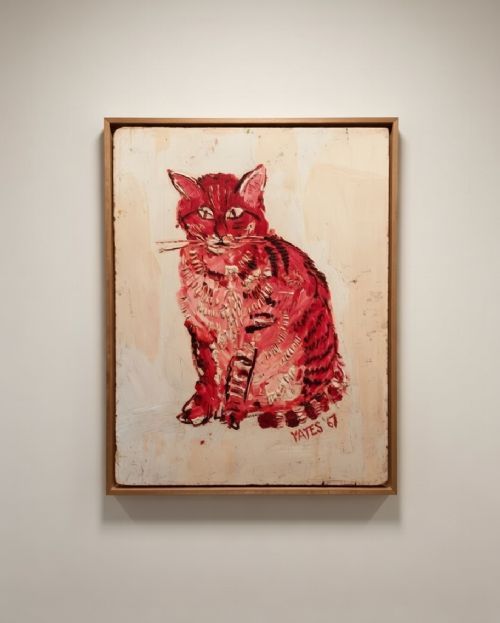


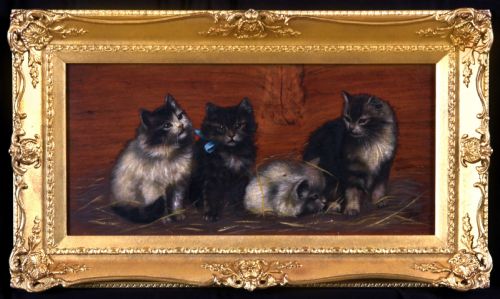
Antique Feline Portrait
An antique feline portrait captures the enduring character of cats through traditional painting and drawing, offering a charming piece of domestic history for any room.
Antique Feline Portrait
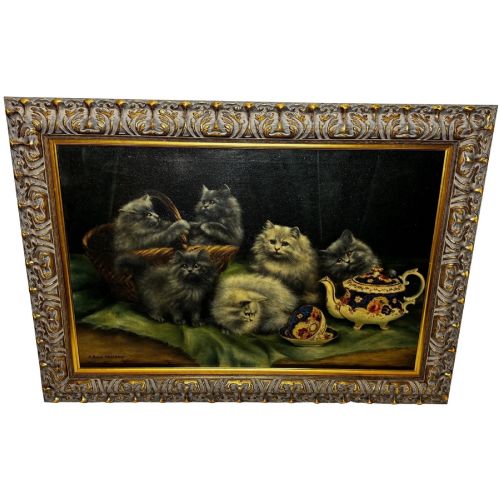
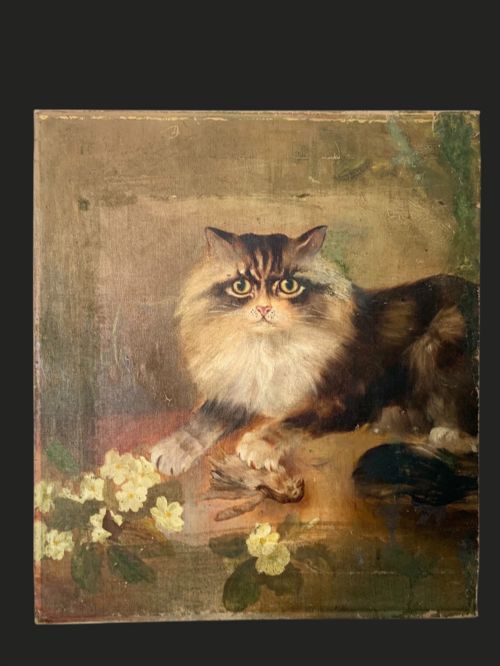
An antique feline portrait typically takes the form of an oil painting on canvas, panel, or board, alongside pencil and pastel drawings on paper. These works capture cats and kittens in realistic or naive styles that reflect the domestic tastes of their era.
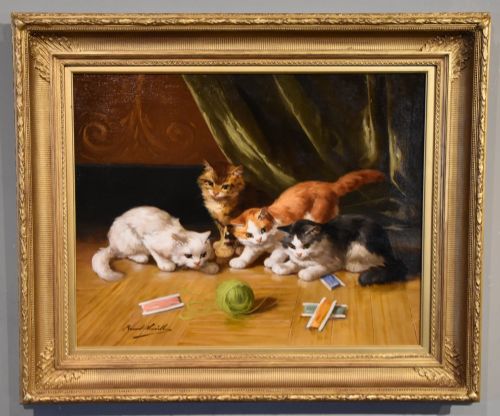
The examples gathered here span the nineteenth century up to mid-century modern interpretations. Buyers frequently encounter Victorian depictions of kittens at play, alongside works by known animal painters of the period.
Framed artwork dominates the selection, preserving domestic scenes that range from traditional realism to the distinct charm of the nineteenth-century naive school. Each piece presents a different facet of feline companionship recorded through historic artistic media.
Materials and construction methods
Artists relied primarily on oil paint applied to canvas, wood panel, or board, building up textures to render soft fur and lively expressions. Gilt wood and gesso frames frequently complement these oil paintings, providing a traditional decorative border.
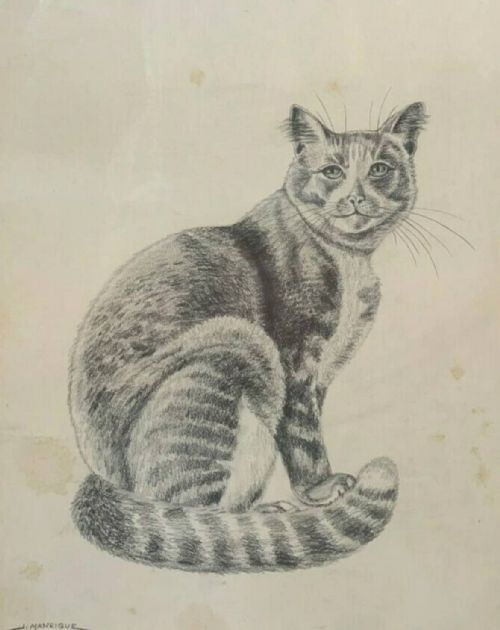
Works on paper utilise pencil or pastel mediums to achieve finer lines and softer shading. These drawings rely on quality paper supports, often preserved behind glass within wooden frames.
Antique Feline Portrait Retail Price Guide 2026
Typical asking prices for feline portrait among the pieces listed under this phrase on Sellingantiques today, from the lower quarter to the upper quarter. They describe what is for sale here now, not the wider market.
Materials across these listings include oil paint, canvas, wood panels, gesso, paper, and gilt wood frames from the nineteenth century to nineteen fifty.
Assessing quality in feline artwork
Quality rests upon the artist's ability to render the anatomy, texture, and individual expression of the cat with anatomical conviction and psychological presence. Superior works demonstrate careful brushwork or precise pencil control, moving beyond rigid representation to capture genuine feline movement.
The integrity of the original support and framing materials also distinguishes the pieces. Well-preserved oil on canvas or panel works retain vibrant pigment layers, while drawings on paper require clean preservation without excessive fading or discoloration.
Agnes Augusta Talboys·Alfred Arthur Brunel de Neuville·J Manrique·Horatio Henry Couldery·Bessie Bamber
The Antique Feline Portrait Glossary
- Oil on Canvas
- Pigments bound in a drying oil applied to a woven fabric stretched across a wooden frame. This medium allows for rich colour blending and layered textures.
- Wood Panel
- A solid wooden board utilised as a rigid painting surface before the widespread adoption of stretched canvas. Artists valued its stability for detailed work.
- Gesso
- A plaster-like mixture applied to wood frames or panels to prepare a smooth surface for painting or gilding. It provides a durable base for decorative elements.
- Naive School
- An art movement characterised by a childlike simplicity in perspective and proportion. Works in this style often display direct charm and unacademic execution.
- Pastel
- A dry drawing medium consisting of powdered pigment and a binder formed into sticks. It produces velvety colours with a soft texture.
Antique Feline Portrait: Frequently Asked Questions
What periods do these portraits cover?
The pieces span from the nineteenth century through to mid-century examples from nineteen fifty. This encompasses Victorian animalier works alongside later traditional realism.
Buyers will find that Victorian pieces often showcase detailed oil techniques, whereas mid-century examples sometimes incorporate softer pastel and pencil mediums.
How were these artworks framed?
Many oil paintings retain their original gilt wood and gesso frames, which reflect the decorative styles of their respective periods. These frames were designed to complement the artwork and provide structural support.
Drawings on paper are typically mounted under glass with wooden surrounds to protect the delicate medium from environmental damage.
What subjects are most common?
Kittens at play and domestic cats accompanied by fish or other kittens form the primary subjects of these works. Artists frequently observed domestic pets in natural, active poses.
Both individual portraits and group scenes appear across the selection, highlighting different aspects of historic pet ownership.
How do I distinguish naive school pieces?
Nineteenth-century naive school portraits feature a flat perspective and simplified proportions that depart from strict academic realism. These works possess a direct and unpretentious charm.
They rely on honest observation rather than formal artistic conventions, making them distinct from traditional realist paintings of the same era.