




Antique Feline Art
Antique feline art brings the unmistakable character of cats into your interior through centuries of skilled observation.
Antique Feline Art
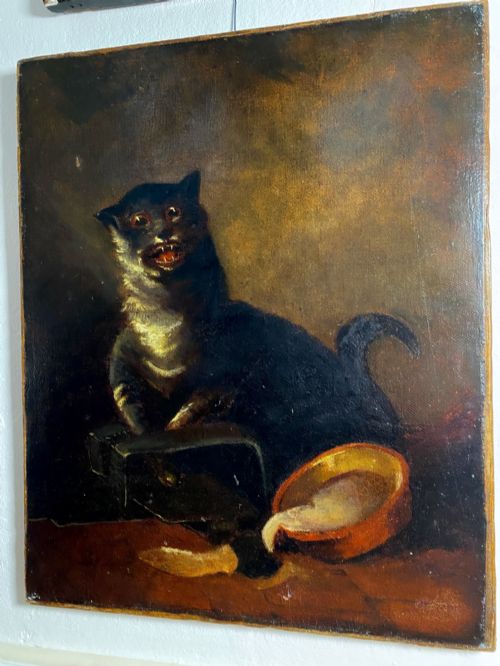
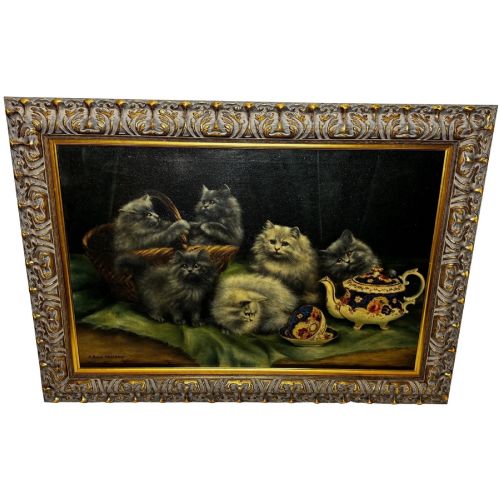
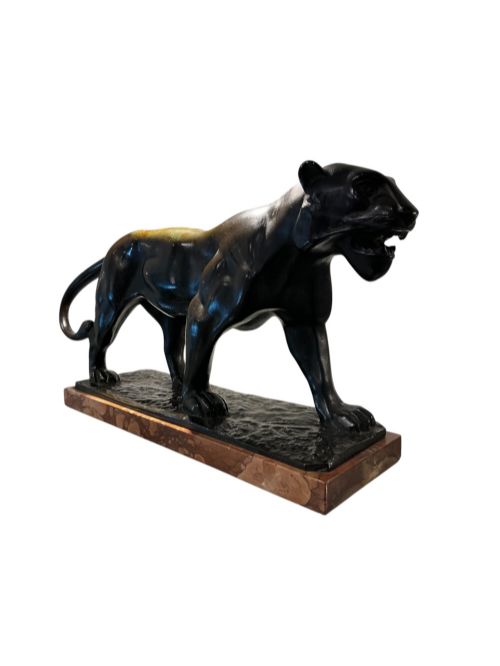
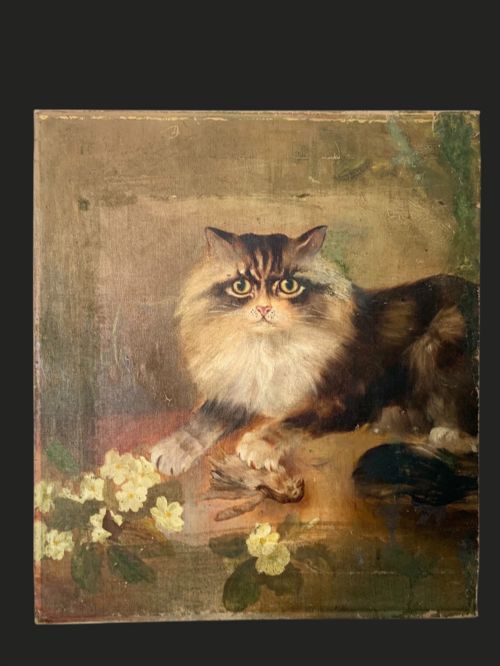
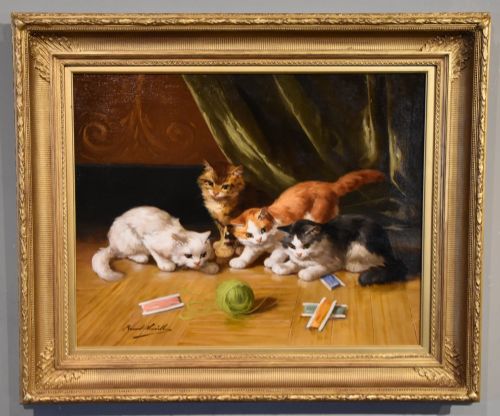
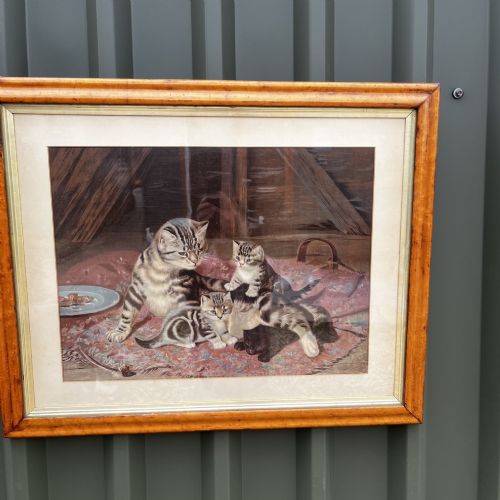
Antique feline art encompasses a wide range of depictions capturing cats, big and small, through painting, sculpture, and print. When exploring antique feline art, you will frequently encounter charming nineteenth-century oil paintings of playful kittens alongside striking twentieth-century Art Deco sculptures of big cats.
The selection ranges from traditional Victorian realism and naive school canvases to whimsical early twentieth-century prints and hand-carved netsuke. Domestic pets dominate the earlier periods, while powerful wild felines appear prominently in later modernist and Art Deco works.
The materials vary as widely as the subjects, stretching from delicate paper prints and oil on canvas to heavy marble, bronze, and carved cherry amber. Pieces span multiple decades, connecting the sentimental domesticity of the nineteenth century with the sleek geometry of the 1930s.
Materials and construction methods
Painters relied on oil paint applied to canvas, board, and panel, capturing the soft texture of fur through layered brushwork and subtle tones. Illustrators utilised paper for chromolithographs, pastel drawings, and pencil sketches, often preserving intimate moments of animal behaviour.
Sculptors shaped heavy materials such as bronze, spelter, marble, alabaster, and terracotta, grounding figures on solid stone bases. Carvers worked with organic matter like cherry amber to produce miniature masterpieces with intricate detail.
Antique Feline Art Retail Price Guide 2026
Typical asking prices for feline art among the pieces listed under this phrase on Sellingantiques today, from the lower quarter to the upper quarter. They describe what is for sale here now, not the wider market.
Several cats stare out with authentic disdain, proving that feline aloofness transcended centuries of artistic interpretation.
Markers of quality and execution
Sculptural quality is defined by the crispness of the casting in metals or the precision of the hand-carved detail in stone and amber. The harmony between the sculpture and its mounting, such as a fitted marble base, elevates the piece.
Agnes Augusta Talboys·Alfred Arthur Brunel de Neuville·Horatio Henry Couldrey·Louis Wain·Herbert Dicksee·Bessie Bamber
The Antique Feline Art Glossary
- Chromolithograph
- A multicoloured print produced using lithographic stones. This technique allows for rich, layered hues that closely mimic the appearance of original paintings.
- Netsuke
- A small Japanese toggle carved from materials like wood or amber. These miniature sculptures secure personal pouches worn on traditional garments.
- Spelter
- A zinc-based alloy commonly utilised as a cost-effective alternative to bronze. It was frequently painted to imitate genuine bronze finishes in decorative sculptures.
- Naive school
- An art style characterised by a childlike perspective and simplified proportions. Works in this category often lack formal academic training but possess direct charm.
- Panel painting
- A technique involving paint applied directly to a flat wooden surface. This rigid support provides a stable base for detailed oil work.
Antique Feline Art: Frequently Asked Questions
How do I identify a 19th-century cat painting?
Nineteenth-century paintings typically focus on domestic cats and kittens rendered in traditional realism or naive styles. Look closely at the canvas preparation, framing, and pigment application for clues to the era.
Artists from this period often emphasised the sentimental narrative of domestic pets, depicting mother cats with litters or kittens at play in domestic interiors.
What defines Art Deco cat sculptures?
Art Deco cat sculptures emphasise streamlined shapes, dynamic movement, and sleek materials like bronze, spelter, and alabaster. They frequently feature panthers, leopards, or stylized domestic cats mounted on contrasting marble bases.
These pieces reflect the modernist design sensibilities of the 1920s and 1930s, prioritizing geometric elegance over naturalistic detail.
How should I display delicate paper prints?
Delicate paper prints require conservation-grade framing with UV-protective glass to prevent fading from sunlight. Keep them away from high-moisture environments such as kitchens or unventilated bathrooms.
Proper mounting ensures the paper remains flat and protected against environmental degradation over time.
Are bronze and spelter sculptures cared for differently?
Bronze and spelter require gentle dusting with a soft, dry cloth without harsh chemical polishes. Spelter is softer than bronze and demands extra care to preserve its original surface finish.
Avoid abrasive cleaning methods that can strip away patinas accumulated over decades of existence.