




Antique Farm Artwork
Antique farm artwork captures rural life through oil paintings, watercolours and etchings spanning the eighteenth century to the mid-twentieth century.
Antique Farm Artwork
Antique farm artwork encompasses oil paintings, watercolours, etchings and mixed-media pieces depicting rural scenes, farmyard animals and agricultural landscapes. These works originate from periods such as the eighteenth century, the Victorian era and the early twentieth century, reflecting shifting artistic approaches to the countryside. British School and continental artists dominate the selection, recording working horses, livestock and farmsteads with detailed observation.
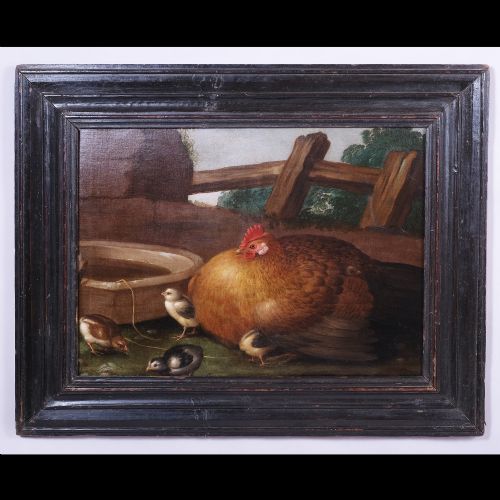
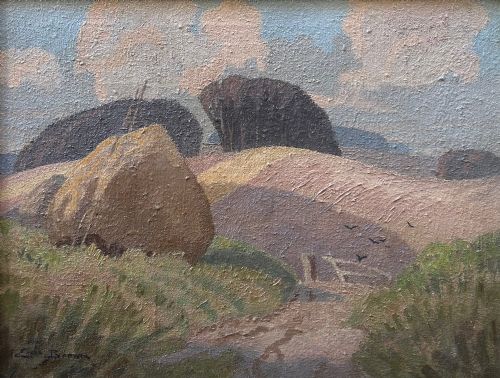
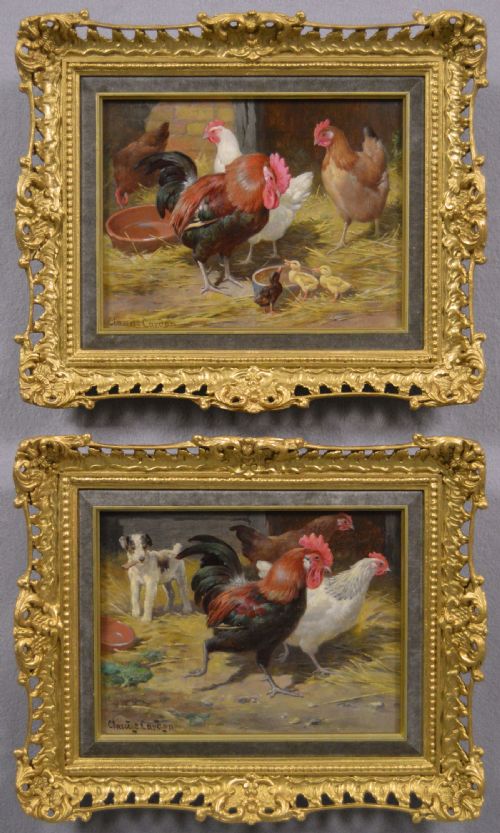
Buyers seeking antique farm artwork will frequently encounter nineteenth-century oil paintings on canvas and panel, alongside watercolours and original etchings from later decades. Common subjects include poultry, cattle, pigs and heavy horses resting by troughs or labouring in fields. These pieces range from intimate framed animal studies to large landscape views of Yorkshire and French provincial farms.
Materials and Techniques
Artists painted primarily with oil paint upon stretched canvas or wooden panels, building up layers of pigment to capture light across rural landscapes and animal coats. Watercolours on paper provide a lighter, more fluid medium favoured for delicate pastoral scenes and preparatory sketches. Etchings utilise metal plates inscribed with acid to produce fine, linear prints on paper.
Frames historically constructed from wood and embellished with gold leaf or giltwood complement many of the oil paintings and etchings. Mixed-media works combine different drawing and painting materials on paper or board to achieve varied surface textures. These traditional supports and mediums ensure the enduring survival of the imagery across centuries.
Antique Farm Artwork Retail Price Guide 2026
Typical asking prices for farm artwork among the pieces listed under this phrase on Sellingantiques today, from the lower quarter to the upper quarter. They describe what is for sale here now, not the wider market.
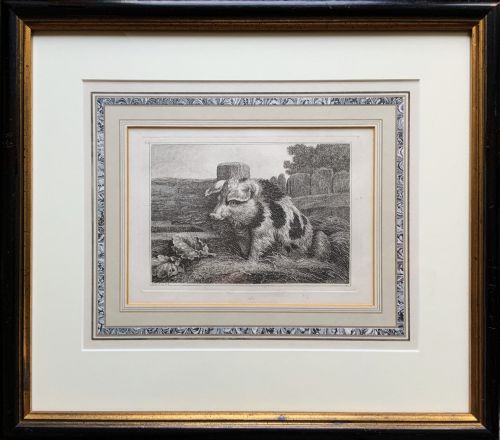
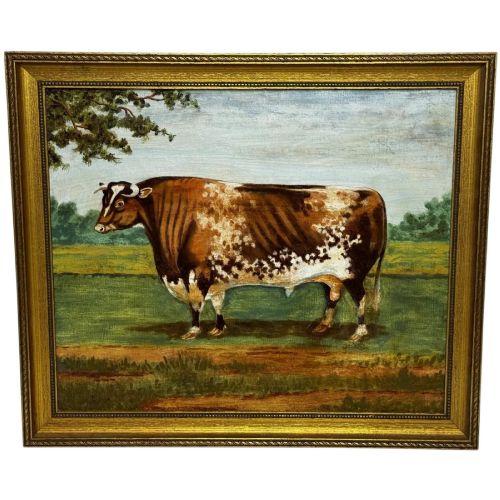
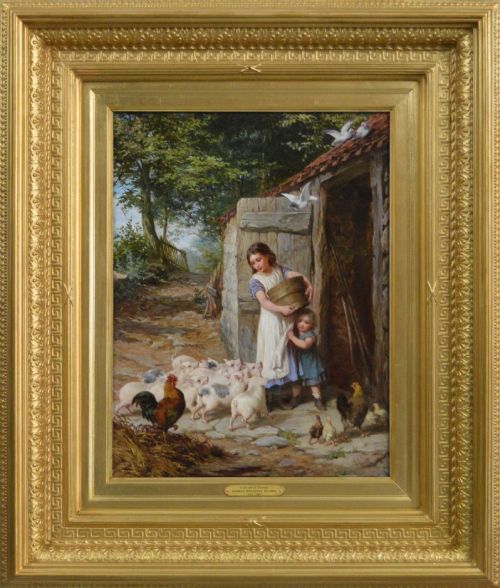
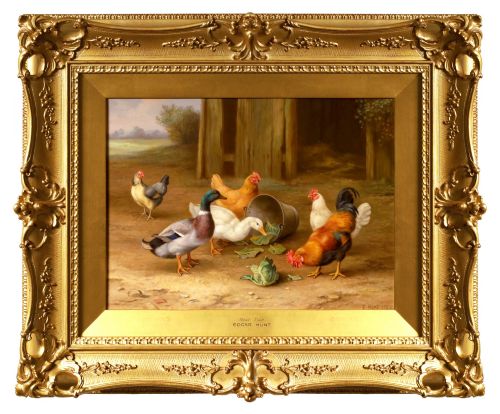
Countless generations of sharp-eyed cockerels, prize shorthorn bulls and muddy farmyard pigs gaze out eternally from these nineteenth-century oil paintings.
Assessing Quality and Execution
Quality in these rural works rests upon the artist's ability to render animal anatomy accurately and manage perspective within complex farmyard compositions. Skilled handling of oil paint or watercolour brings depth to animal fur, plumage and the natural light of the landscape. Greater mastery shows in the lively posture of working horses and the convincing integration of figures within the working farm.
The sophistication of the original framing, often incorporating period giltwood or gold leaf, contributes to the overall presence of the piece. Works by recognised painters with documented studio provenance or exhibition records display superior draughtsmanship and compositional balance. The depth of historical character secured by the artist ultimately elevates the standing of the artwork.
Samuel Howitt·George Augustus Holmes·Edgar Hunt·Claude Cardon·Herbert Dicksee·Raimond Louis Lecourt·Herbert Royle·William JB Jenkins·Franz van Severdonck·James William Booth·John Frederick Herring Jnr·Ernest Pile Bucknall·John Atkinson·Charles Vickers·Frederick W. Jackson·Percival Glenfern·John Linnell·J.C. Grey·Pierre Emmanuel Dielmans·Florence Hess·Arthur Winter Shaw·Owen Bowen·Thomas Sidney Cooper·Robert Russell MacNee
The Antique Farm Artwork Glossary
- Etchings
- Printmaking technique where lines are bitten into a metal plate with acid before being inked and pressed onto paper. Samuel Howitt and Herbert Dicksee produced notable examples in this medium.
- Oil on Canvas
- Pigment mixed with drying oil applied to a woven fabric support stretched across a wooden frame. This method allowed artists to achieve rich colour saturation and varied surface textures.
- Watercolour Painting
- Pigments suspended in a water-soluble vehicle applied to paper. It delivers transparent washes of colour often seen in works by artists like James William Booth.
- Giltwood
- Wood that has been coated with a thin layer of gold leaf or gilt. This finish frequently appears on traditional antique picture frames.
- British School
- Collective term for artists born, trained or working primarily in Britain. Many farmyard oil paintings and watercolours on this page fall under this designation.
Antique Farm Artwork: Frequently Asked Questions
What subjects appear in antique farm artwork?
These pieces typically depict farmyard animals such as cattle, sheep, pigs, horses, chickens and ducks alongside rural labourers and farming landscapes. Scenes range from quiet pastoral watercolours to detailed oil paintings of livestock.
Artists documented everyday agricultural life, capturing working horses at troughs, hay carts in fields and animals resting inside barns.
Which periods do these artworks cover?
The selection spans from the eighteenth century through the Victorian and Edwardian eras into the mid-twentieth century. Early pieces include eighteenth-century etchings and early nineteenth-century mixed-media works.
Later Victorian and twentieth-century paintings reflect the continued popularity of British Realism, Impressionism and pastoral themes among collectors.
How were these paintings and prints framed?
Many period pieces retain their original or contemporary wooden frames, often finished with giltwood or gold leaf. These surrounds were chosen to complement the tones of the oil paint or watercolour within.
Original framing helps preserve the historic integrity of the artwork and enhances its visual presentation on the wall.
Where were these rural scenes painted?
Artists worked across various British locations, including Yorkshire landscapes and rural farms, as well as continental European settings like Normandy and provincial France. Painters often observed actual farmyards, fields and livestock firsthand.
This direct observation provided authentic details of agricultural architecture, working implements and animal behaviour.