
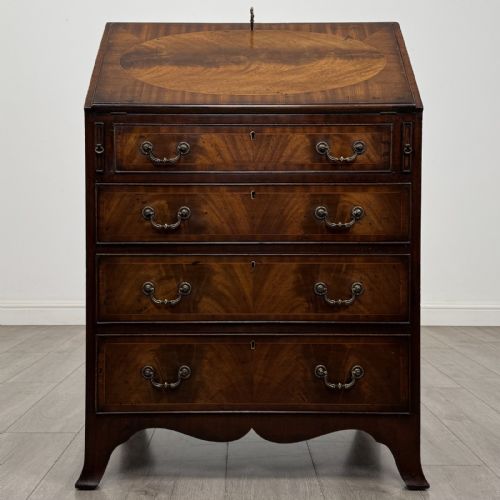
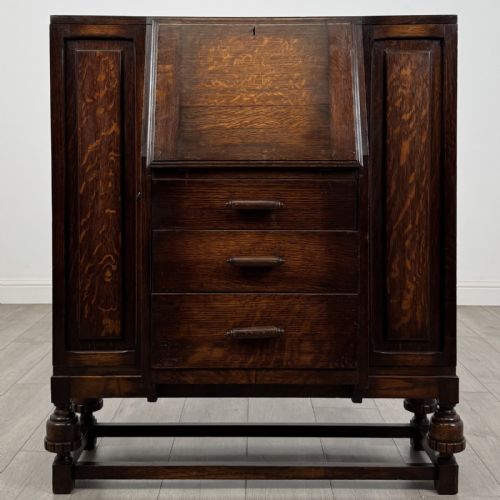
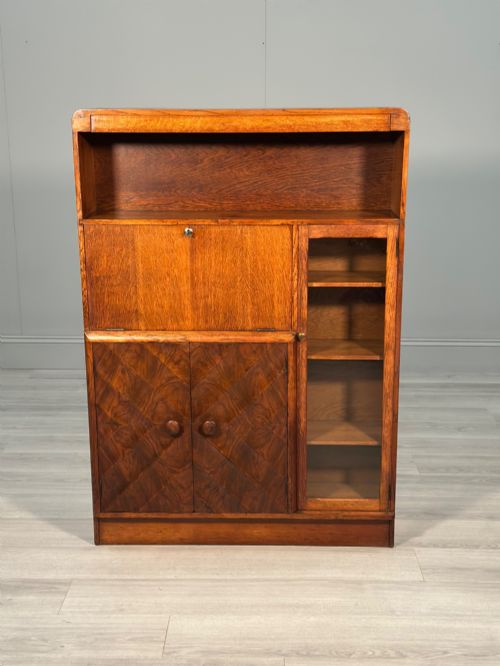
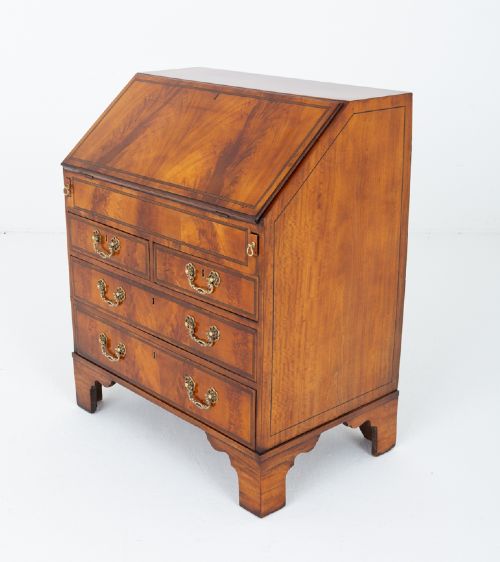
Antique Fall Front
An antique fall front brings centuries of writing furniture into the room, combining a sloped or vertical writing flap with fitted interiors for practical daily use.
Antique Fall Front
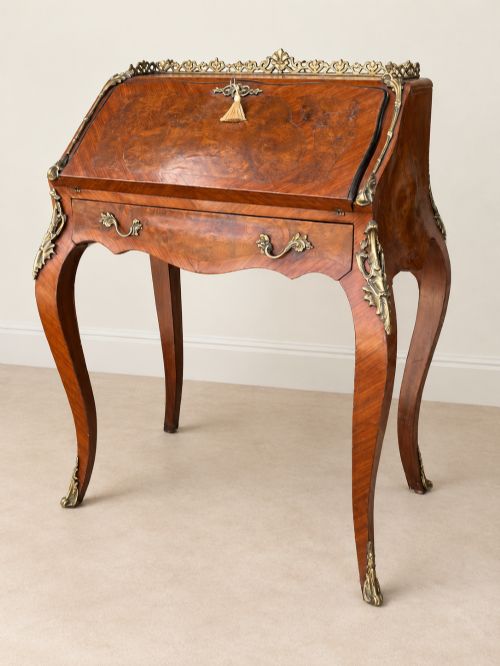
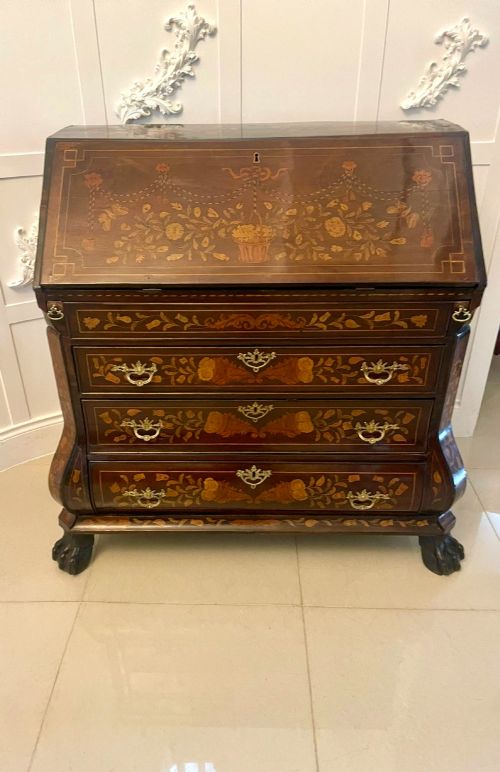
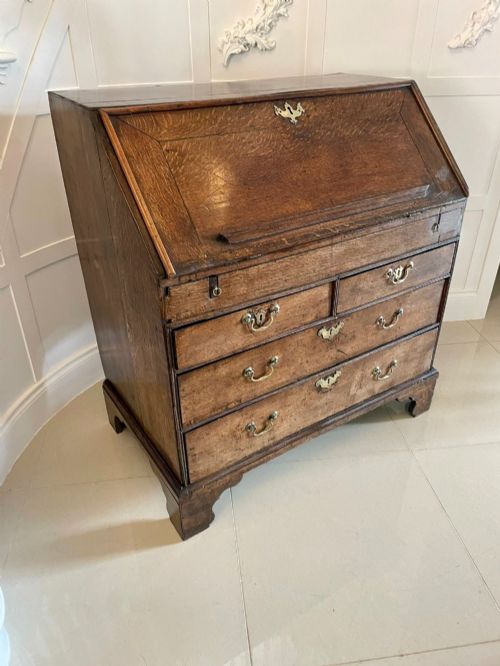
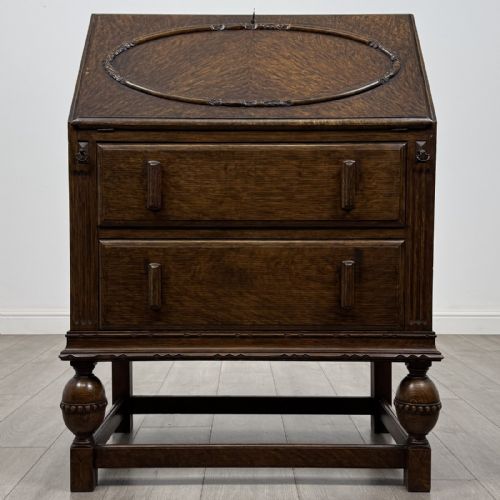
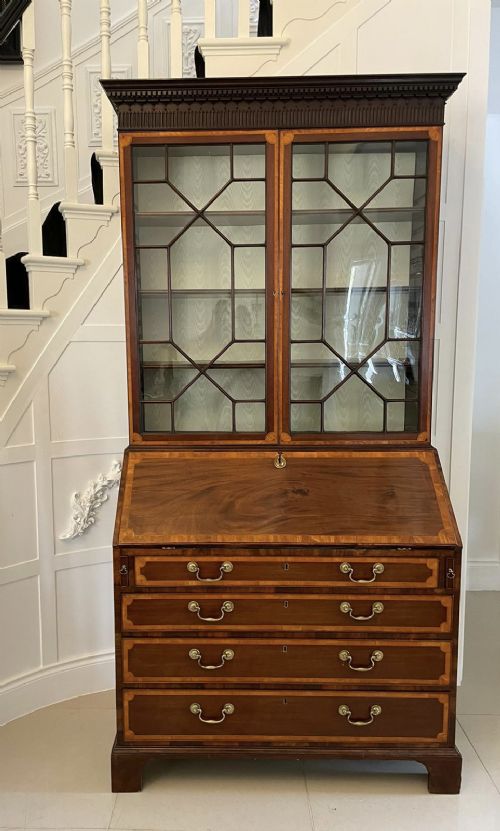
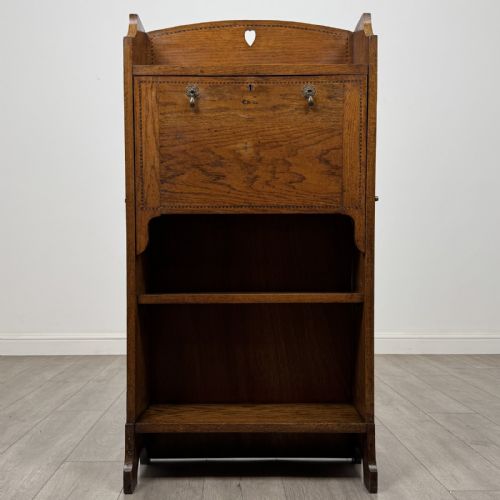
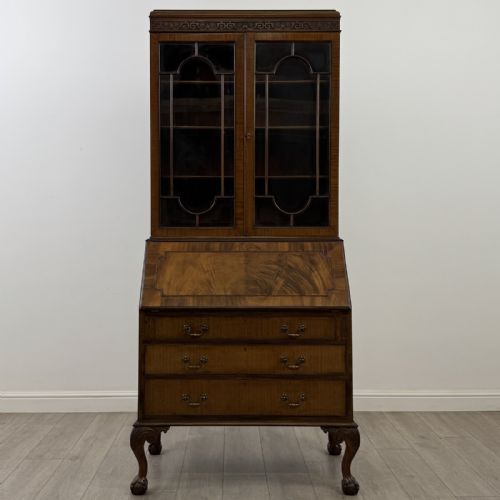
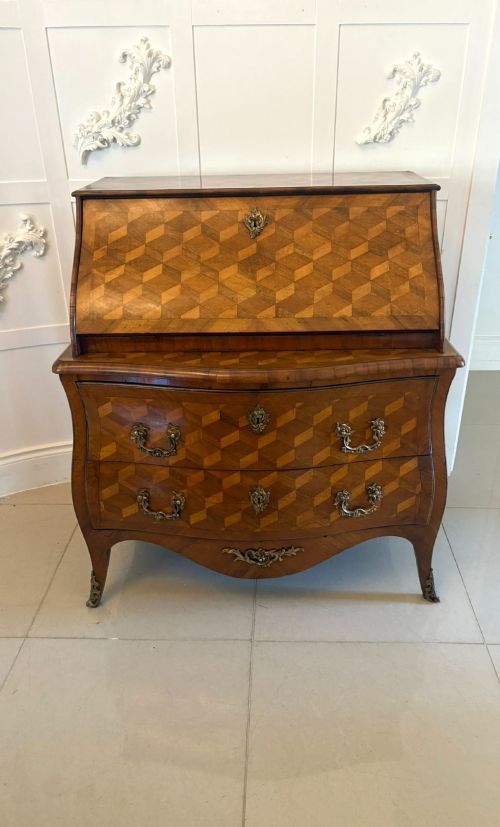
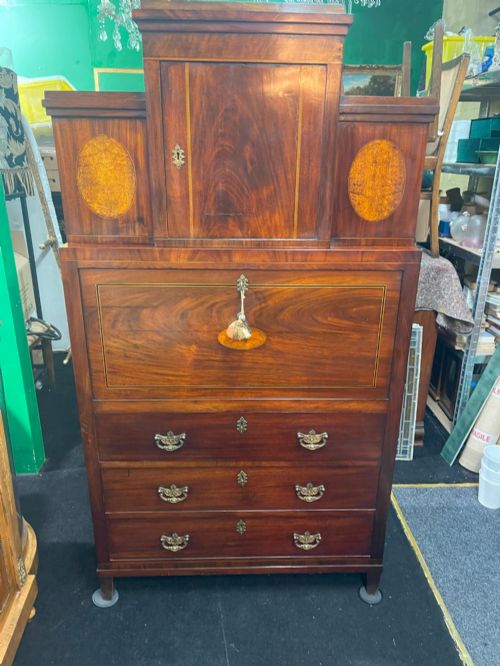
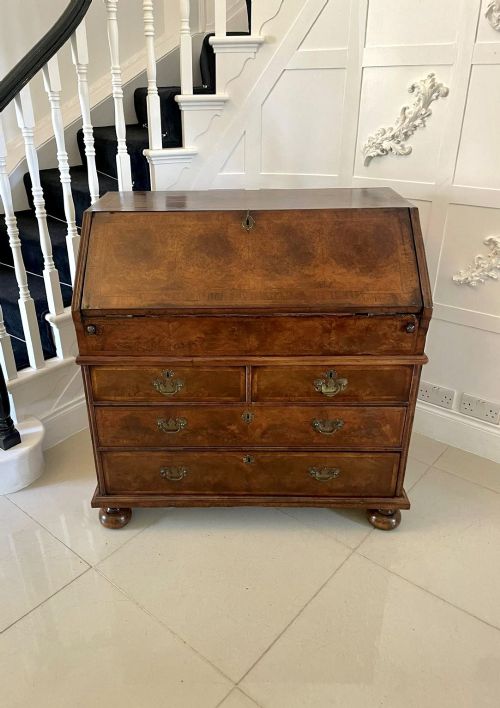
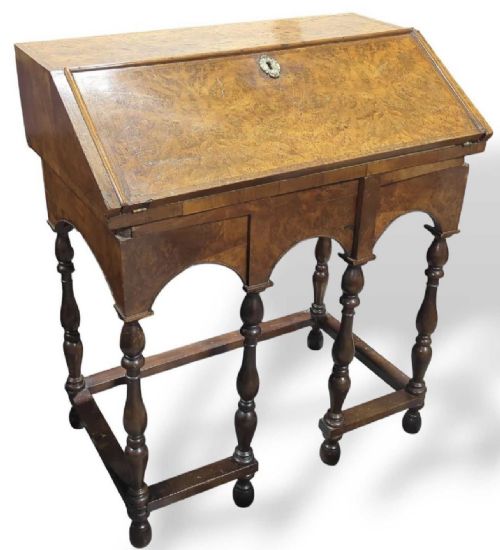
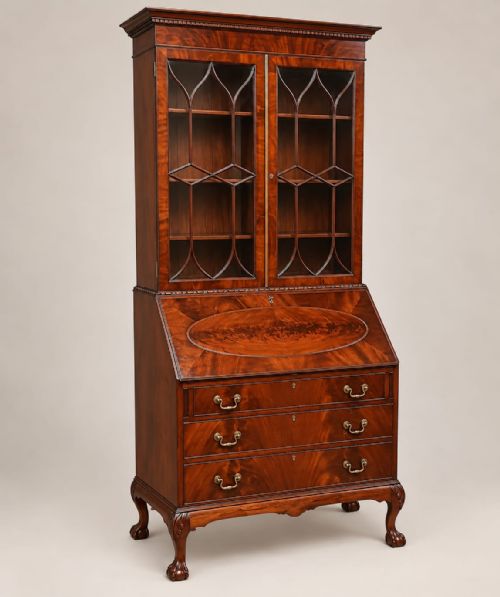
The antique fall front covers a broad selection of writing furniture, from compact Edwardian oak examples to substantial Georgian bureau bookcases and 18th-century burr walnut pieces. Buyers meet diverse formats here, including bureau bookcases with glazed upper sections, bombe-shaped desks, and secretaire cabinets resting on bracket or cabriole feet.
Origins span British workshops of the Georgian and William and Mary periods alongside continental examples such as Dutch marquetry and Swedish oak pieces. Edwardian iterations in oak and mahogany appear frequently alongside earlier walnut designs featuring fitted interior compartments and pigeonholes.
Materials and Technique
Construction relies heavily on timber framing utilising oak, mahogany, and burr walnut, often enhanced with satinwood inlay, marquetry, or herringbone patterns. Brass hardware secures drop fronts and drawers, while glass panels appear in glazed bookcase doors.
Joinery techniques incorporate bracket feet, claw and ball feet, or baluster supports depending on the period. Interior compartments involve detailed pigeonholes and small drawers behind the hinged writing surface.
Music sheet cabinets with drop fronts hide sheet arrangements behind standard drawer fronts.
Assessing Quality
Quality rests on the choice of timber figurations, such as burr walnut or figured mahogany, and the precision of inlaid marquetry and stringing. Superior examples display refined proportions, intact original brasses, and well-executed interior joinery.
The complexity of the form dictates standard, separating simpler Edwardian oak models from elaborate double-dome bureau bookcases with detailed cabinetwork and specialised foot supports.
E Gomme·Heals
The Antique Fall Front Glossary
- Bureau
- A desk featuring a sloping hinged lid that drops down to form a writing surface, concealing small drawers and pigeonholes.
- Fall front
- A vertical or hinged writing flap that pulls down to reveal an inner desk arrangement.
- Secretaire
- A cabinet or chest containing a built-in writing drawer or drop front writing compartment.
- Marquetry
- Decorative veneer work using various coloured woods to create pictorial or geometric patterns on the surface.
- Fitted interior
- The arrangement of small drawers, pigeonholes, and compartments exposed when the writing flap opens.
Antique Fall Front: Frequently Asked Questions
What is an antique fall front?
An antique fall front is a piece of furniture equipped with a hinged panel that lowers to serve as a writing desk.
These items range from compact Edwardian desks to tall 18th-century bureau bookcases with extensive shelving.
How do I date an antique bureau?
Dating relies on timber choices, structural hardware, and stylistic indicators such as bracket feet or marquetry inlay.
Earlier pieces from the 17th and 18th centuries utilise walnut and oak, while Edwardian versions show lighter construction methods.
How were these desks used?
The drop-down flap provided a stable horizontal writing surface for correspondence and record keeping.
Interior compartments held stationery, documents, and inkwells safely out of sight when the flap was closed.
Where should I place one?
These pieces fit well in studies, living rooms, or hallways where floor space accommodates the opened writing flap.
Their enclosed storage keeps rooms looking tidy while offering functional desk space.