


Antique Fabric Pouffe
An antique fabric pouffe brings tactile warmth and low seating to a room, offering a versatile footrest with upholstered charm.
Antique Fabric Pouffe
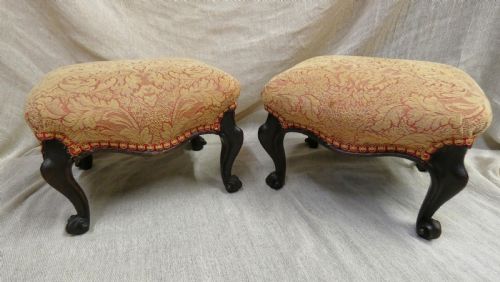
When searching for an antique fabric pouffe, collectors encounter a variety of low upholstered seating including footstools, ottomans, and dressing stools. These functional pieces span periods such as the Georgian era, the Victorian period, and the early twentieth century.
The forms range from pairs of footstools to large heavy oak upholstered stools and gilded examples. Buyers meet French chateau styles alongside Queen Anne, Jacobean, and Art Nouveau revivals.
How they were made
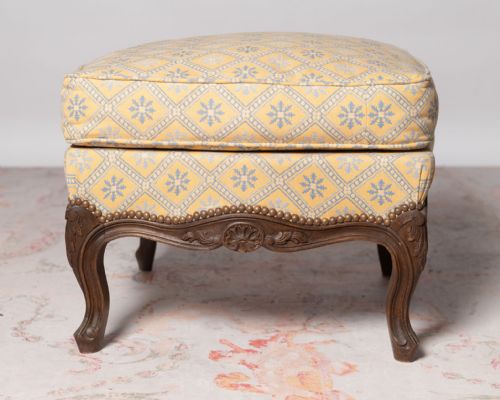
Makers constructed the structural frames of these pieces using sturdy timbers such as mahogany, walnut, oak, and rosewood. Some examples incorporate carved woodwork or gilded surfaces to enhance the visual weight of the frame.
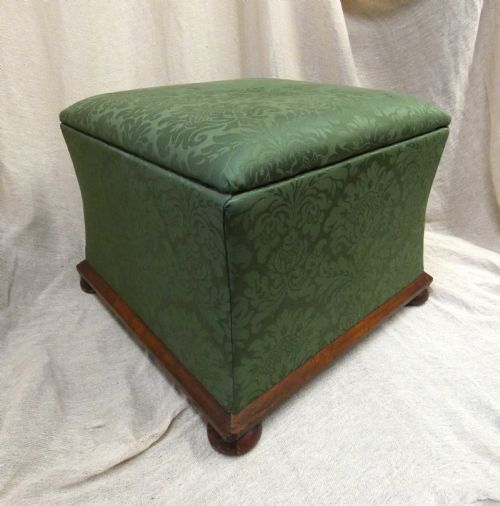
The upholstery employs fabrics, damask, and needlepoint textiles, often finished with decorative fabric trim and brass details. Artisans fitted certain ottomans with internal storage compartments beneath the padded seat.
A French stool waiting patiently for a new owner to choose its upholstery.
What varies in quality
The refinement of the timber frame carving and the choice of structural wood, such as figured mahogany or rosewood, set finer examples apart from simpler oak or general wood constructions. Dense hardwoods and detailed joinery indicate superior craftsmanship.
The selection of the textile covering, whether intricate needlepoint or heavy damask fabric, influences the overall character of the piece. Well-executed upholstery work and original brass embellishments contribute further to the distinction between standard and exceptional examples.
Howard & Sons
The Antique Fabric Pouffe Glossary
- Ottoman
- A low, upholstered seat or footstool without a back or arms, often featuring internal storage beneath the hinged top. This form serves multiple functions in traditional interior settings.
- Needlepoint
- A type of canvas work embroidery used for upholstery, creating durable and decorative patterned surfaces. Victorian examples frequently utilise this technique for footstools.
- Damask
- A reversible figured fabric woven on a jacquard loom, traditionally featuring floral or geometric motifs. It provides a lustrous texture suitable for formal seating.
- Mahogany
- A durable tropical hardwood prized for its reddish-brown colour and fine grain. Cabinetmakers utilised this material extensively for high-quality furniture frames.
Antique Fabric Pouffe: Frequently Asked Questions
What is an antique fabric pouffe?
An antique fabric pouffe is a low, upholstered seat or footstool covered in textiles like damask, fabric trim, or needlepoint. These pieces date from periods including the Georgian and Victorian eras.
They function primarily as footrests, window seats, or casual dressing stools within a room.
How were these ottomans used historically?
Historically, these items served as comfortable footrests before chairs or as low seating near dressing tables and windows. Some larger designs included hidden storage compartments for blankets or accessories.
Their versatile size allowed them to be moved easily around the principal rooms of a house.
How do I care for antique upholstery?
Preserving the fabric requires gentle vacuuming with a soft brush attachment to remove dust without damaging delicate threads or trim. Direct sunlight should be avoided to prevent the fading of antique textiles and damask.
Keeping the underlying wood conditioned with appropriate furniture wax maintains the frame.
How can I tell Victorian pieces apart?
Victorian examples often display specific stylistic revivals such as Art Nouveau influences or heavy carved mahogany frames. Needlepoint tops and tasseled fabric trim frequently point toward nineteenth-century manufacture.
Construction methods and timber choices help distinguish these from later twentieth-century revivals.