
Antique Extended Dining Table
An antique extended dining table brings the flexibility needed for large gatherings while anchoring a room with period character.
Antique Extended Dining Table
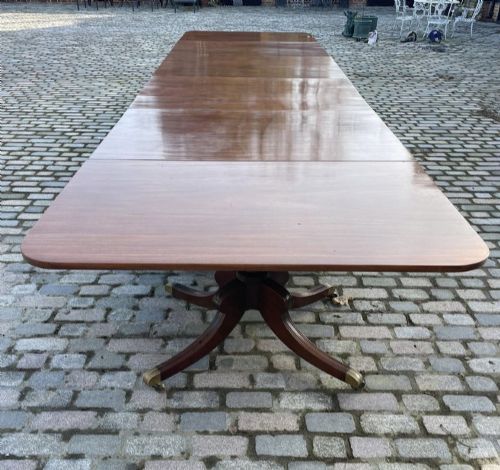
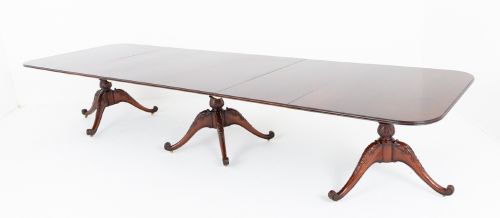
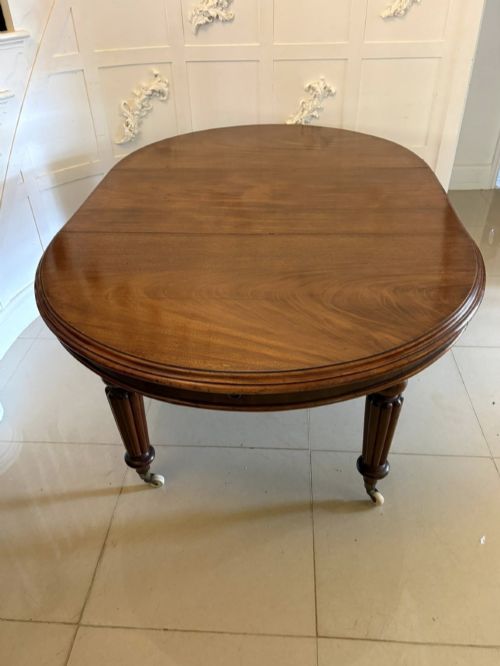
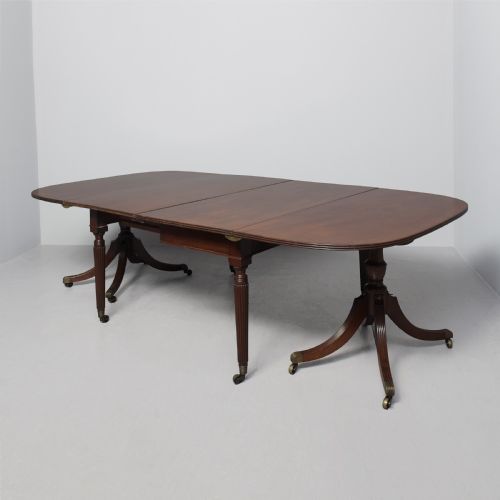
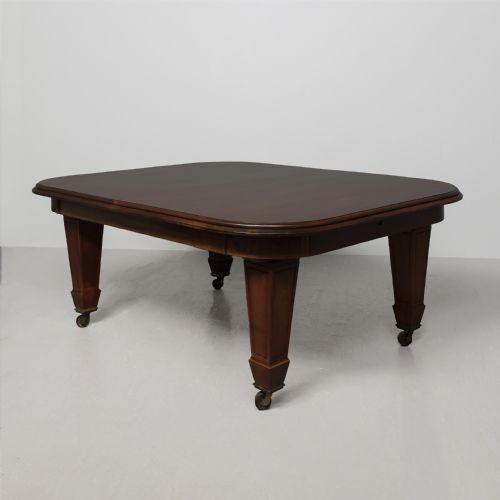
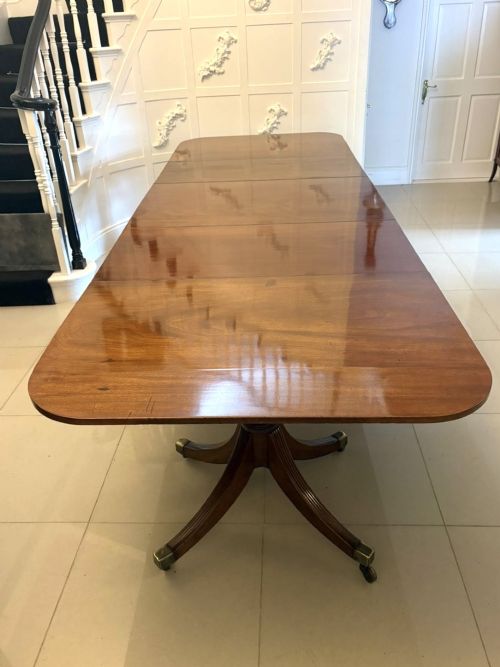
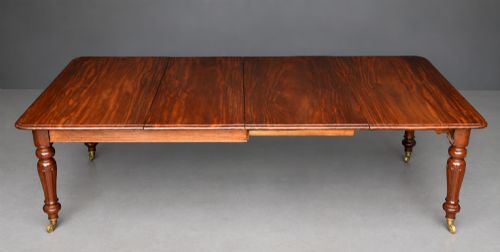
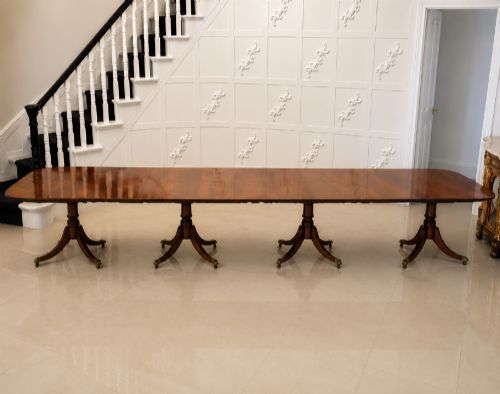
An antique extended dining table provides a practical surface for meals that expands to accommodate larger groups through mechanisms such as draw leaves, wind-out systems, or removable centre leaves. These pieces range from compact Edwardian and Victorian examples seating six to grand banquet tables spanning multiple pedestals for twenty or more guests.
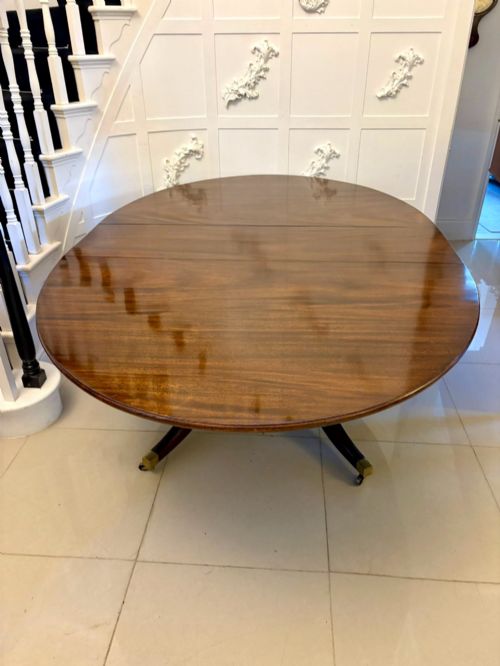
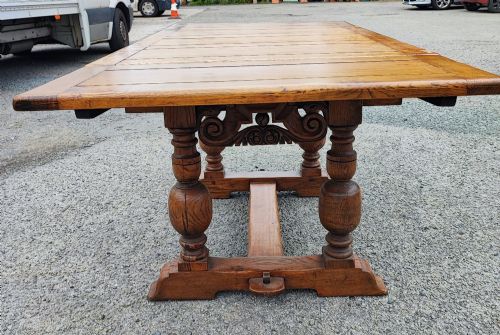
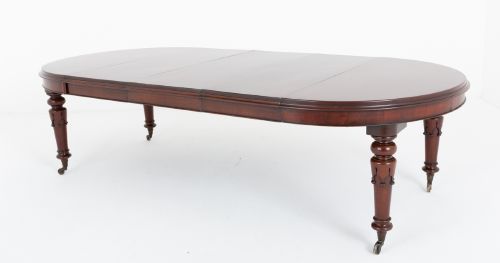
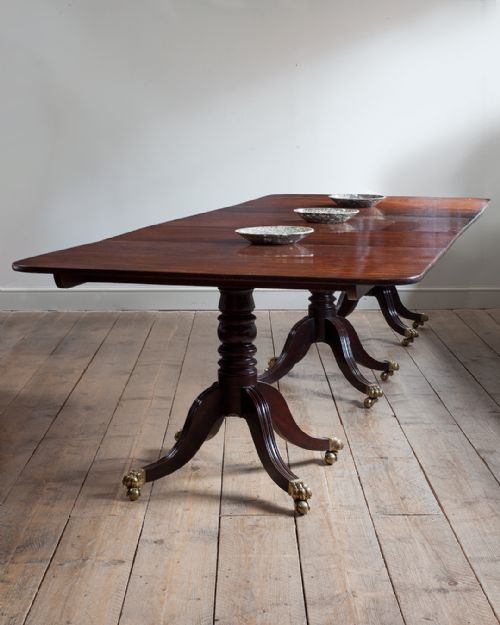
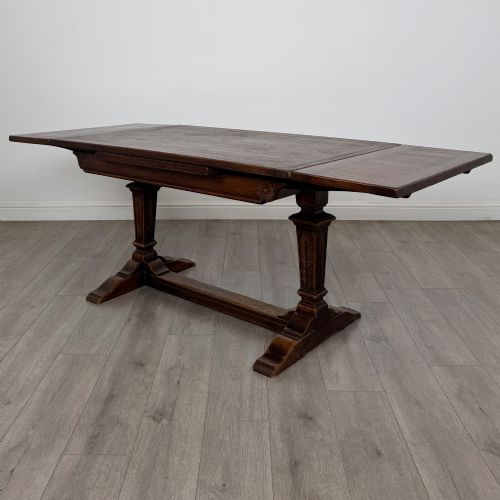
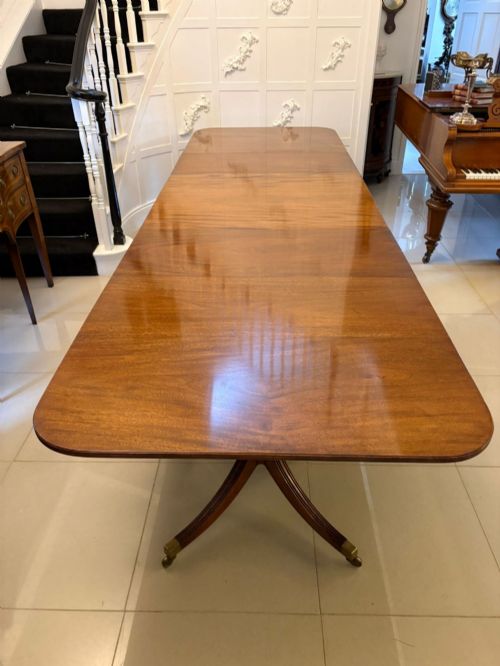
The most common forms on this page are mahogany pedestal tables from the Regency and Victorian eras, alongside solid oak draw-leaf tables spanning from the 17th century to the early 20th century. Buyers will also encounter walnut and rosewood variations designed for versatility in domestic dining spaces.
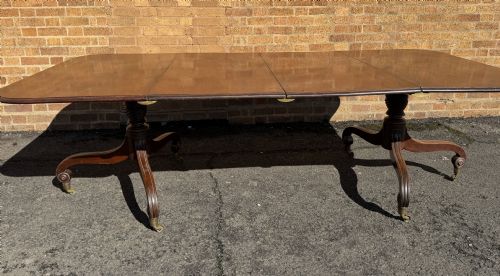
Originating across periods from the Georgian era through to the 1920s, these tables reflect the shifting scale of formal dining rooms. Whether configured as twin-pillar, triple-pillar, or refectory styles, each format serves the fundamental purpose of expanding on demand.
How they were made
Mechanical ingenuity defined the extended table, incorporating brass winding mechanisms, castors for mobility, and integrated runner systems to support multiple leaves smoothly. Joinery relied on robust construction methods, including draw-leaf extensions and pillar mountings, to ensure stability when fully extended.
What varies in quality
The sophistication of the extending mechanism and the precision of its engineering dictate the standard of the piece, where smooth operation under heavy loads separates standard tables from superior examples. Tables retaining their original winding handles, matching extra leaves, and smooth brass castors achieve greater harmony across the extended surface.
Timber selection and the preservation of figured mahogany or solid oak surfaces establish the visual tier of a table. Tables with consistent grain matching across added leaves and minimal structural alteration demonstrate superior craftsmanship from workshops of the period.
Gillows of Lancaster·Thomas Butler of London
The Antique Extended Dining Table Glossary
- Draw leaf
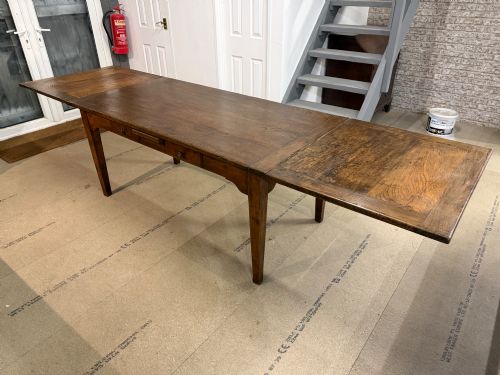
- A table design where two extension leaves are stored beneath the main top and pulled out from each end to lengthen the surface. This mechanism allows for quick expansion without requiring separate loose leaves.
- Wind out
- A mechanical system utilising a handle and internal screw mechanism to expand the frame of a dining table so that additional leaves can be inserted into the centre. It is commonly found on Victorian mahogany tables.
- Pedestal table
- A table supported by one or more central columns rather than four corner legs, often featuring carved or reeded legs terminating in castors. This configuration maximises legroom around the perimeter of the table.
- Refectory table
- A long, narrow dining table traditionally built with solid oak, sturdy stretcher bases, and heavy tops. Early iterations often utilise draw-leaf mechanisms for modern dining flexibility.
- Pillar
- A vertical support column, frequently turned or carved, used in multiples to support large mahogany dining tables. Multiple pillars distribute weight evenly when the table is fully extended.
Antique Extended Dining Table: Frequently Asked Questions
How do wind out tables work?
Wind out tables operate via an internal metal screw mechanism activated by a removable handle inserted into the side apron. Turning the handle separates the table halves to create a gap for insertion leaves.
Once the leaves are placed in the centre, the mechanism winds back to secure the top tightly together. This system ensures the surface remains level and stable when fully extended.
Where are extra leaves stored?
Loose leaves for pedestal and banquet tables are typically stored separately in a cabinet or dedicated leaf case when the table is closed. Draw-leaf tables differ by housing their extension panels directly beneath the main surface.
When not needed, these draw leaves slide smoothly back under the primary top to save space. Buyers should verify whether extra leaves are original to the table.
How many people can these seat?
Seating capacity varies from compact six-seater tables up to grand banquet formats accommodating over twenty guests. The total capacity depends entirely on the length of the table and the number of inserted leaves.
Pedestal tables with multiple leaves offer flexible seating arrangements that adjust according to the occasion. Measuring the dining space helps determine the appropriate fully extended length.
How do I identify the period?
Period identification relies on timber choice, leg design, and structural hardware such as brass castors or winding mechanisms. Georgian and Regency tables often feature refined mahogany pillars and reeded legs, while Victorian examples introduce heavy wind-out machinery and castors.
Earlier 17th and 18th century pieces typically utilise solid oak construction with stretchers and draw-leaf configurations. Comparing these physical characteristics against historical styles clarifies the date.