



Antique Export Glass
These pieces of antique export glass span centuries of global trade, offering a glimpse into cross-cultural design from the Georgian era onwards.
Antique Export Glass
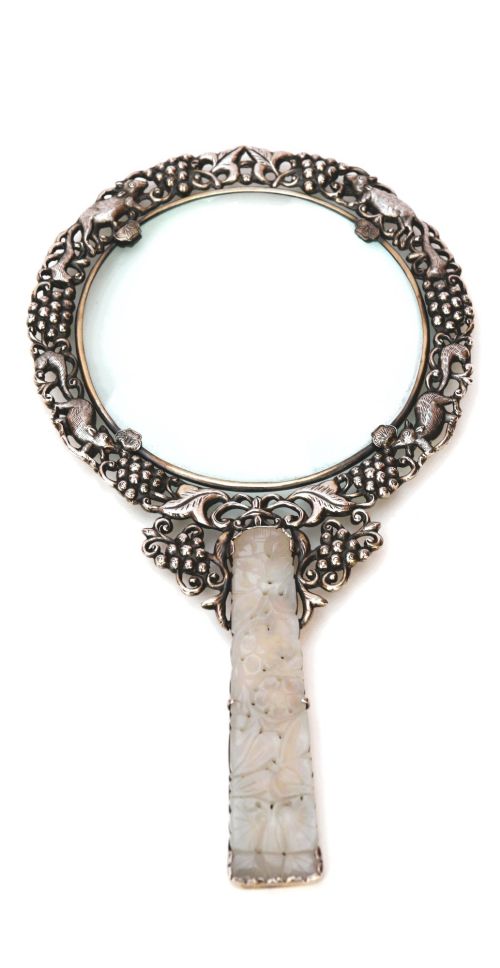
When you search for antique export glass, you encounter items made for international markets during periods such as the 18th century, the 19th century, and up to 1940. The selection includes reverse painted mirrors, decanters, magnifying glasses, and glassware.
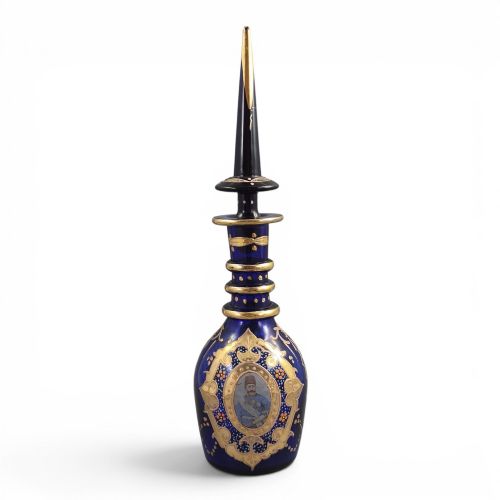
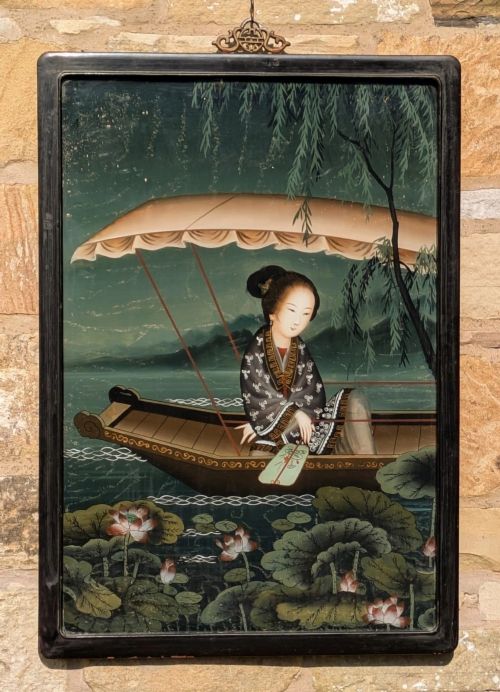
You are most likely to meet Chinese reverse paintings on glass alongside Bohemian enameled cobalt glass decanters made for the Persian Qajar market. These objects bridge distinct cultural aesthetics through glass production.
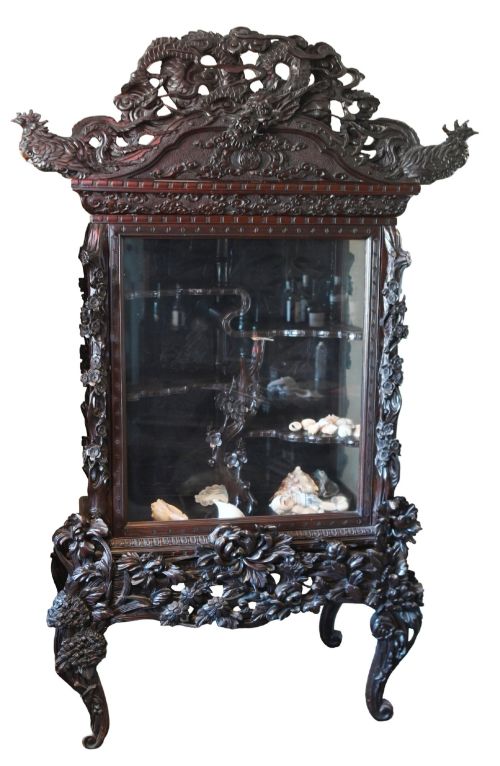
Items range from Georgian green export glass to carved cabinets and display pieces housing related objects. The material history stretches across various stylistic influences including Chinoiserie and Asian export designs.
How they were made
Glass forms the primary medium, appearing alongside materials such as silver, jade, brass, hardwood, and gold leaf. Makers applied paint directly to glass surfaces or shaped vessels using traditional blowing and moulding techniques.
Reverse painting on glass required artists to apply details in reverse on the rear surface so the image displayed correctly from the front. Additional framing often involved carved wood or metal mountings.
Antique Export Glass Retail Price Guide 2026
Typical asking prices for export glass among the pieces listed under this phrase on Sellingantiques today, from the lower quarter to the upper quarter. They describe what is for sale here now, not the wider market.
Listings feature items spanning the 18th century, Georgian period, 19th century, and 1940, utilising glass, wood, silver, and jade.
What varies in quality
Quality rests on the precision of the reverse painting, the clarity of the glass, and the complexity of associated materials like silver and jade mounts. Finer examples show meticulous brushwork and well-preserved painted surfaces.
The integration between the glass component and its housing, whether a display cabinet or a hardwood frame, indicates the level of craftsmanship invested in the piece.
The Antique Export Glass Glossary
- Reverse painting on glass
- A technique where an image is painted on the back of a glass pane to be viewed from the front. This method was widely used in Chinese export workshops.
- Qajar market
- A destination for European export goods during the Qajar era of Persia, often supplied by Bohemian makers producing enameled cobalt glass.
- Green export glass
- A classification seen in Georgian pieces, typically denoting utility or wine glassware produced in England or Europe for overseas trade.
- Chinoiserie
- A European stylistic interpretation of Chinese and East Asian artistic traditions, frequently applied to furniture and decorative objects.
Antique Export Glass: Frequently Asked Questions
What is antique export glass?
Antique export glass encompasses decorative and functional objects produced in one region for trade and use in another. The category includes reverse paintings, decanters, and glassware.
Items date from the 18th century through the mid-20th century, reflecting global trade routes between Europe and Asia.
How do you display reverse glass paintings?
Reverse paintings on glass require wall placement away from direct sunlight to protect the pigments applied behind the glass panel. Stable indoor humidity helps preserve both the glass and any wooden frames.
Lighting should be angled to prevent glare from obscuring the painted details beneath the smooth glass surface.
How are Georgian export glasses identified?
Georgian export glasses, such as green wine roemers, date from the late 18th century and often feature hollow stems and characteristic green hues. Their attribution relies on form, manufacturing traits, and period context.
They represent trade goods sent from England and Europe during the Georgian period.