

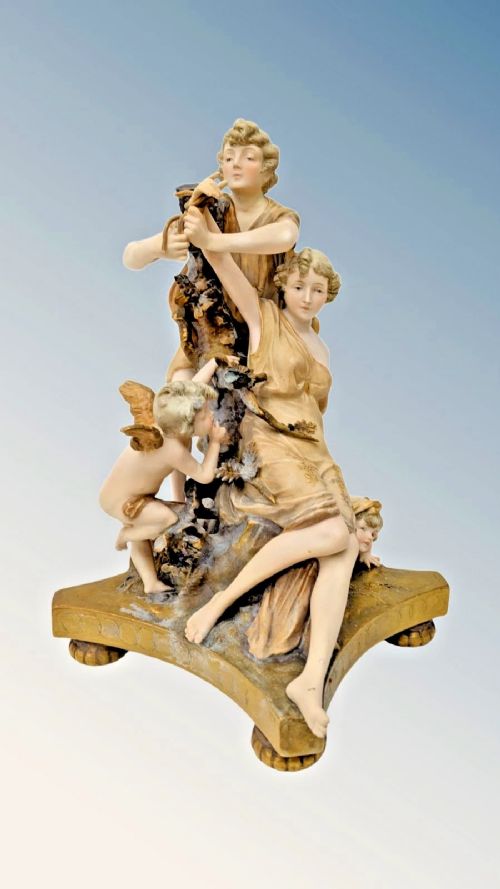


Antique Ernst Wahliss
Antique Ernst Wahliss pieces are striking ceramic figures and vases from late nineteenth and early twentieth century Vienna, offering distinct floral lines for sophisticated display.
Antique Ernst Wahliss
When you search for antique Ernst Wahliss, you are looking at decorative ceramics originating from the Turn-Teplitz and Vienna workshops active across the nineteenth and twentieth centuries. These works span useful decorative forms like cornucopia vases and spill vases, alongside sculptural figures and portrait busts.
The pieces on this page are most frequently defined by flowing Art Nouveau aesthetics, alongside occasional Neoclassical figures and groups. Forms range from large single figures to matched pairs of vases, capturing organic curves and expressive human subjects.
Makers and marks connect these ceramics directly to the output associated with Ernst Wahliss and the Alexandra Porcelain Works. Collectors encounter both porcelain and earthenware bodies, frequently embellished with painted enamel and applied gilding.
Materials and methods
Surfaces received careful decoration through hand-painted enamel and metallic additions. Gilding, gold leaf, and rich glaze applications highlighted the organic contours typical of the Turn-Vienna output.
Antique Ernst Wahliss Retail Price Guide 2026
Typical asking prices for ernst wahliss among the pieces listed under this phrase on Sellingantiques today, from the lower quarter to the upper quarter. They describe what is for sale here now, not the wider market.
The inventory records figures and vases created across multiple decades, highlighting both sculptural groups and floral vessels.
Assessing quality and execution
Quality in these ceramics rests on the crispness of the moulded form and the precision of the hand-painted enamel. Sculptural pieces with expressive facial details and subtle colour transitions represent the higher tier of production.
The application of gilding and gold leaf also distinguishes individual examples, with superior items showing careful placement that accentuates the Art Nouveau lines without overwhelming the ceramic body.
Ernst Wahliss·Alexandra Porcelain Works
The Antique Ernst Wahliss Glossary
- Turn-Teplitz
- A region in Bohemia historically recognised for ceramic production. Wahliss operated a prominent establishment here before expanding retail operations to Vienna.
- Art Nouveau
- An international style of art and architecture prevalent from the late nineteenth century until the First World War. It is characterised by intricate asymmetrical lines and motifs inspired by natural forms.
- Spill Vase
- A small cylindrical vessel designed to hold thin wooden splints used for transferring fire from a hearth to a candle or pipe. These decorative items often take organic or figural shapes.
- Cornucopia
- A horn-shaped ornamental vessel traditionally symbolising abundance and harvest. In nineteenth-century ceramics, this form often served as a decorative flower vase.
- Alexandra Porcelain Works
- A notable ceramic factory associated with Ernst Wahliss production in Bohemia. Pieces bearing this mark reflect the firm's transition into sophisticated decorative pottery.
Antique Ernst Wahliss: Frequently Asked Questions
What is Ernst Wahliss?
Ernst Wahliss was a prominent nineteenth-century Austrian ceramic manufacturer and retailer based in Vienna and Bohemia. The enterprise produced notable earthenware and porcelain decorative objects.
Items from this maker are especially sought after for their distinctive interpretation of organic forms and figurative sculpture.
How to identify Art Nouveau ceramics?
Art Nouveau ceramics typically feature flowing, plant-inspired lines, stylized female figures, and asymmetrical compositions. These design elements depart sharply from rigid historicist revivals.
Look for undulating borders and naturalistic modelling on vases and figural groups produced around the turn of the twentieth century.
Where were these pieces made?
Production primarily took place in facilities located in Vienna and the Bohemian region of Turn-Teplitz. The workshops combined local clay resources with skilled moulding and painting artisans.
Retail showrooms in Vienna subsequently distributed these artistic ceramics to collectors across Europe.
How to care for antique porcelain?
Dust these delicate ceramic surfaces gently with a soft, dry brush to prevent accumulation. Avoid abrasive cleaning materials that might harm fragile enamel or gold leaf details.
Keep pieces away from direct sunlight and areas subject to sudden temperature fluctuations to preserve the glaze.