



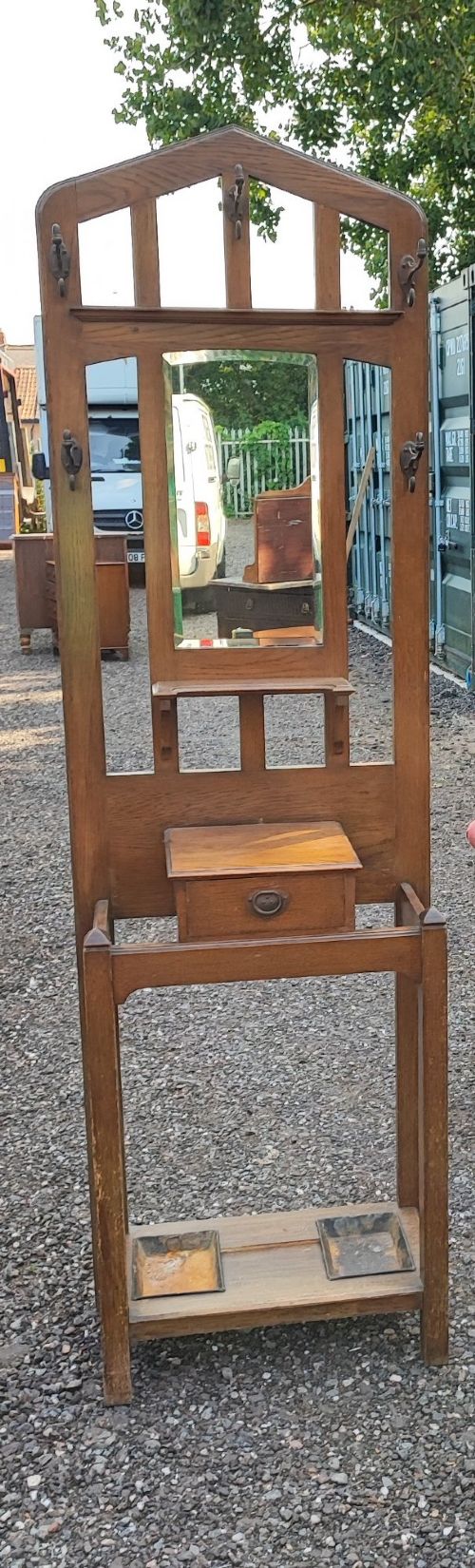

Antique Entry Stand
An antique entry stand sets the tone for a home, combining practical storage for hats, coats and umbrellas with the presence of period woodwork and metalwork.
Antique Entry Stand
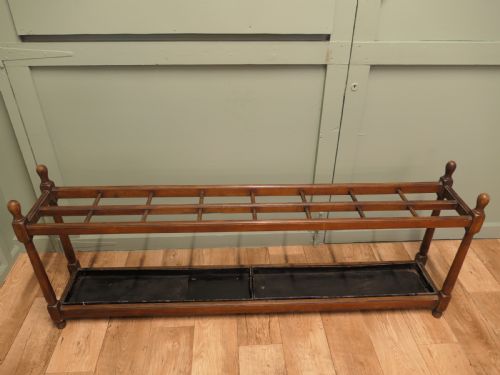
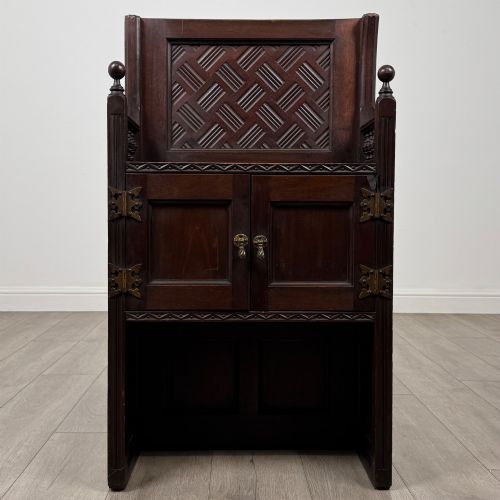
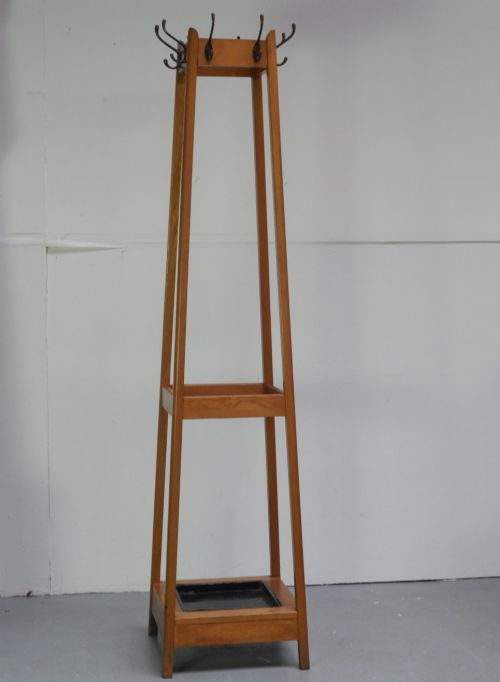
When buyers search for an antique entry stand, they encounter a practical category that includes hall stands, hall seats, umbrella stands, console tables, and coat racks. These pieces served the Victorian, Edwardian, and early twentieth-century hallway as the primary place to deposit outdoor garments and walking gear upon entering the house.
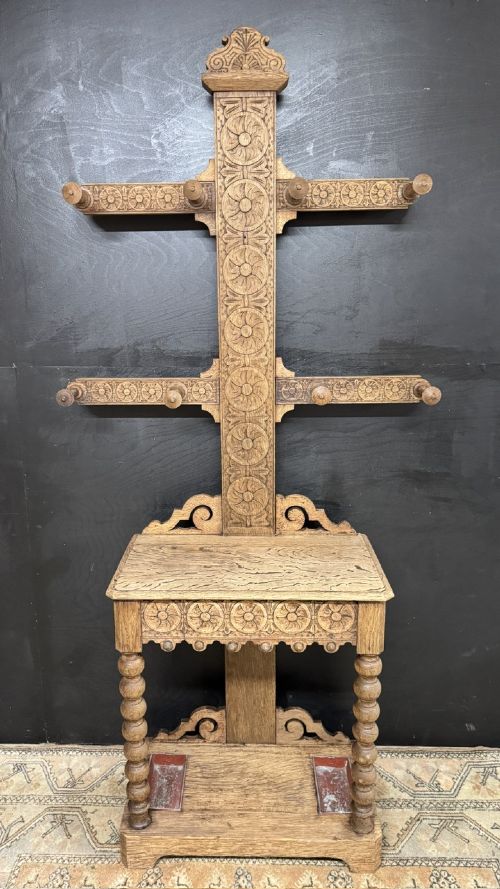
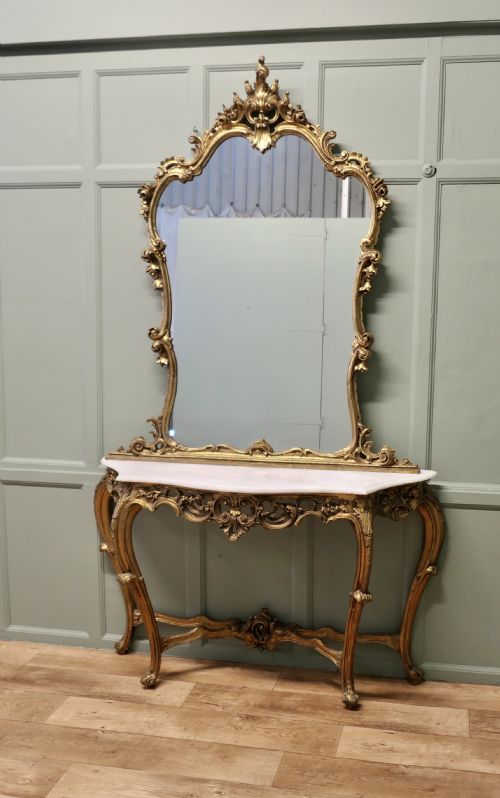
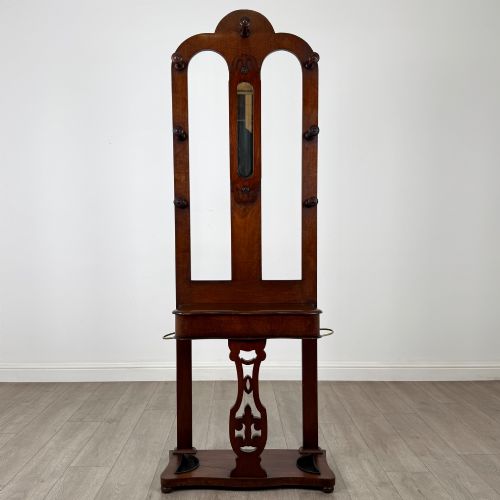
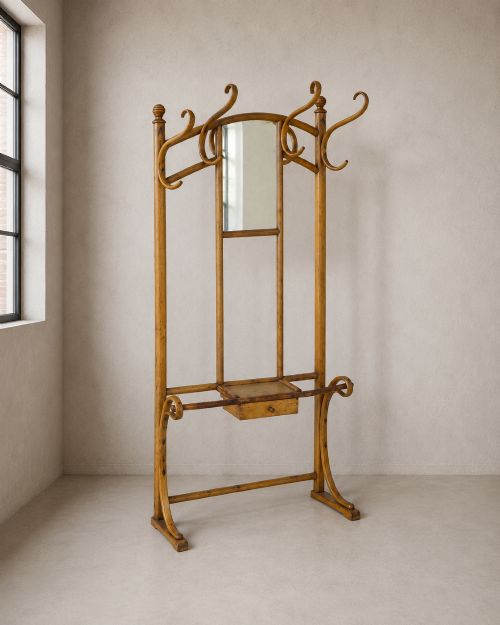
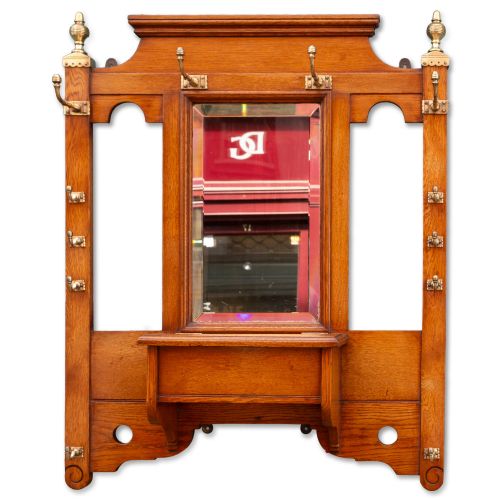
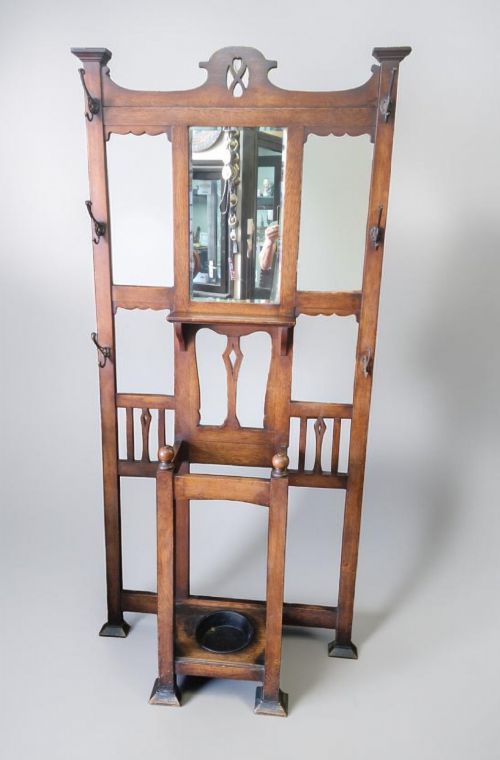
The most common examples on this page are upright timber hall stands featuring integrated mirrors, coat hooks, and drip trays for umbrellas, alongside console tables and hall seats in oak, mahogany, and walnut. Dating ranges from the nineteenth century through the Edwardian period and the 1920s, reflecting changing domestic habits in domestic circulation spaces.
Materials and Construction Techniques
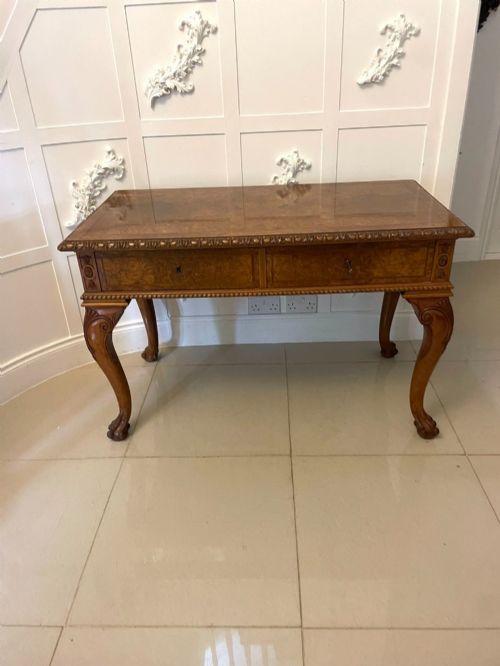
Cabinetmakers utilised durable hardwoods such as oak, mahogany, and walnut, often employing quarter-sawn oak for figured grain or burr walnut for decorative console tops. Carving, turning, and inlay work defined the aesthetic of Victorian and Arts and Crafts pieces, while bentwood construction provided lightweight elasticity for hall stands.
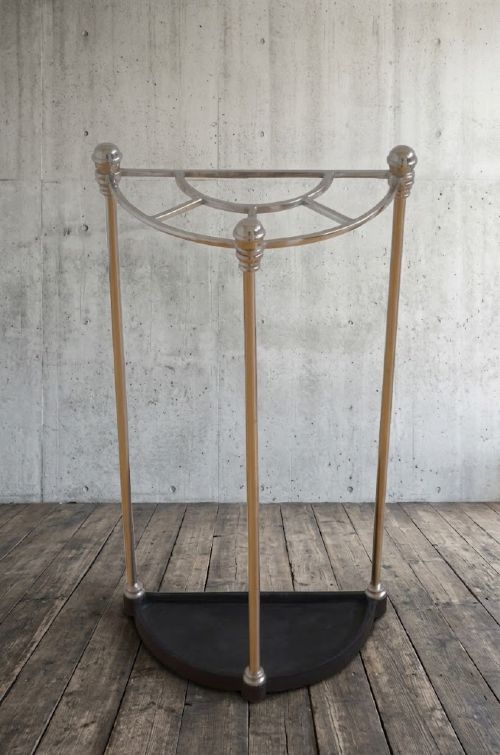
Metal components added structural utility and contrast, incorporating brass coat hooks, cast iron frames for heavy stick stands, and nickel plating or iron in later Art Deco and industrial designs. Marble tops frequently appeared on console tables to provide a durable, wipe-clean surface for keys and visiting cards.
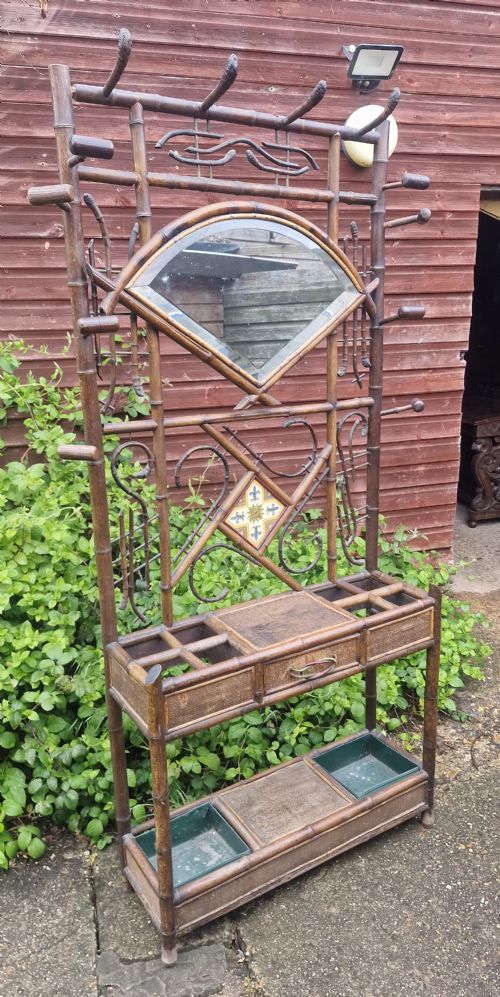
Secondary materials like glass mirrors, bamboo stems, and pine linings completed the construction, balancing heavy timber architecture with reflective light and organic texture suited to narrow entrance spaces.
Antique Entry Stand Retail Price Guide 2026
Typical asking prices for entry stand among the pieces listed under this phrase on Sellingantiques today, from the lower quarter to the upper quarter. They describe what is for sale here now, not the wider market.
Some Victorian hall stands feature carved wooden Greenman faces peering out from the foliage to watch over arriving guests.
Distinguishing Quality Across the Range
The architectural ambition of the carving and the integrity of the timber separate standard hall furniture from exceptional examples. Dense, well-figured mahogany, burr walnut, and deeply carved oak indicate superior workshop standards, particularly when figural elements like Greenman motifs or hand-carved panels show crisp definition.
Structural complexity and hardware integration also govern the hierarchy of quality. Pieces that combine multiple functions - such as a hall seat with a cabinet, bevelled mirror, and original brass drip trays - demonstrate thoughtful design and complete original fittings rather than assembled components.
Shapland and Petter·Liberty·Thonet·Coalbrookdale
The Antique Entry Stand Glossary
- Hall Stand
- A multi-functional hallway furniture piece incorporating coat hooks, a mirror, glove boxes, and umbrella holders. It anchored the Victorian and Edwardian entrance hall.
- Console Table
- A table designed to stand flat against a wall, frequently topped with marble or fine wood. These often served narrow entryways as side tables.
- Bentwood
- Wood softened by steam and bent into curved structural forms. It enabled lightweight, resilient frames popular in early twentieth-century hall stands.
- Drip Tray
- A metal tray housed at the base of a stick or umbrella stand to catch moisture. Original trays are a mark of completeness.
- Demi-Lune
- A half-moon shape characteristic of console tables and umbrella stands designed to sit flush against a wall.
Antique Entry Stand: Frequently Asked Questions
What is an antique entry stand used for?
These pieces provided designated storage for outdoor apparel in nineteenth and twentieth-century homes. They held hats, coats, gloves, and walking sticks close to the front door.
Today, they serve the same practical purpose in modern hallways while introducing period character and architectural structure to entrance spaces.
How do I date an oak hall stand?
Dating relies on stylistic clues, construction methods, and materials seen across the eras. Heavy carving and Gothic revival details point to the Victorian period, while cleaner lines often suggest Edwardian or Arts and Crafts origins.
Hardware, mirror bevelling, and timber selection further refine the age, distinguishing mid-nineteenth-century work from later twentieth-century production.
Where should I place a console table?
Console tables fit naturally against flat walls in narrow hallways or entrance spaces where floor area is restricted. Their shallow depth allows them to function without obstructing foot traffic.
Pairing a console table with a wall-mounted mirror or coat rack creates an effective alternative to a freestanding all-in-one hall stand.
Are bamboo hall stands durable?
Bamboo furniture offers surprising structural resilience combined with a lightweight profile. These pieces gained popularity during the late nineteenth and early twentieth centuries for their exotic aesthetic.
Living with bamboo requires normal indoor humidity control to preserve the natural plant stems and any associated chinoiserie panels.