




Antique English Barometer
An antique english barometer brings domestic weather tracking into your hall in brass-fitted mahogany, walnut, or carved oak.
Antique English Barometer
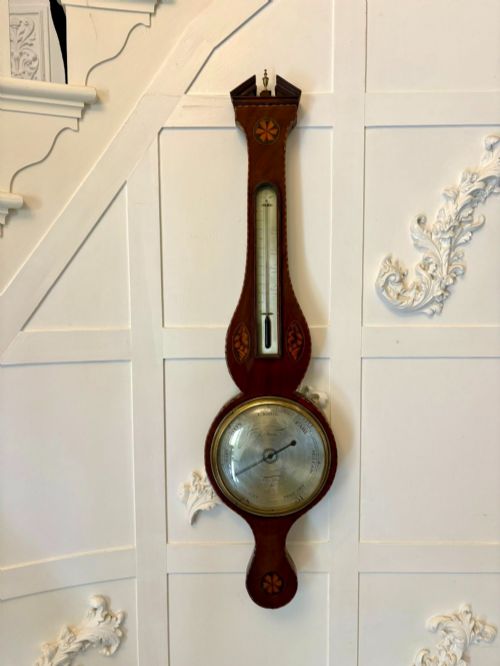
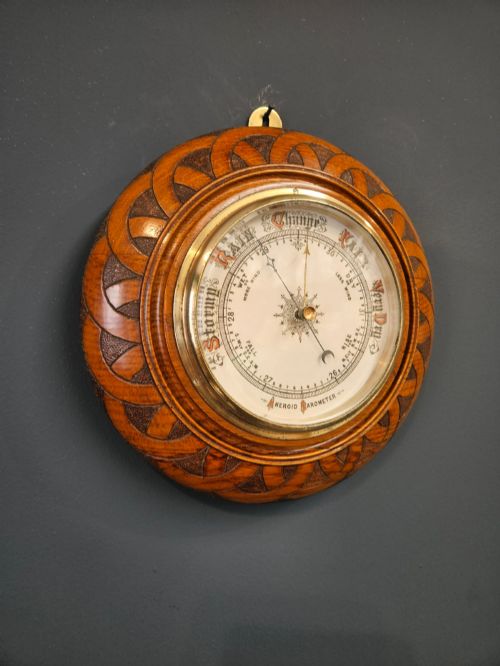
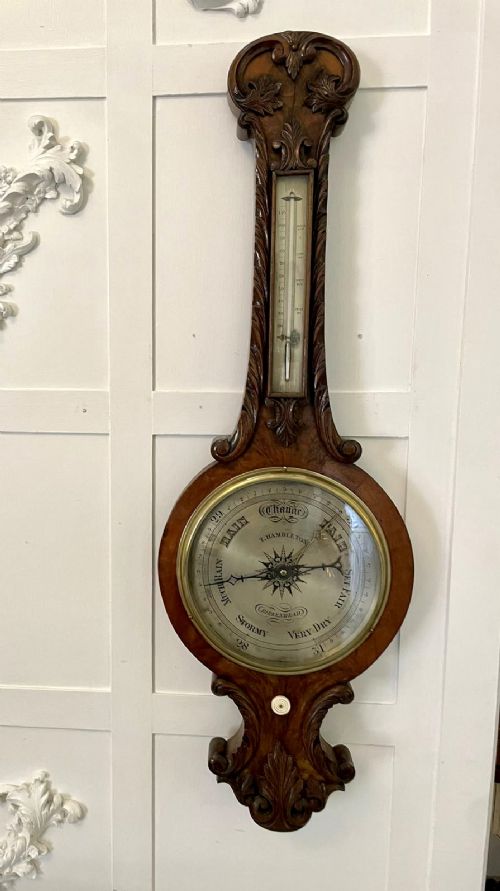
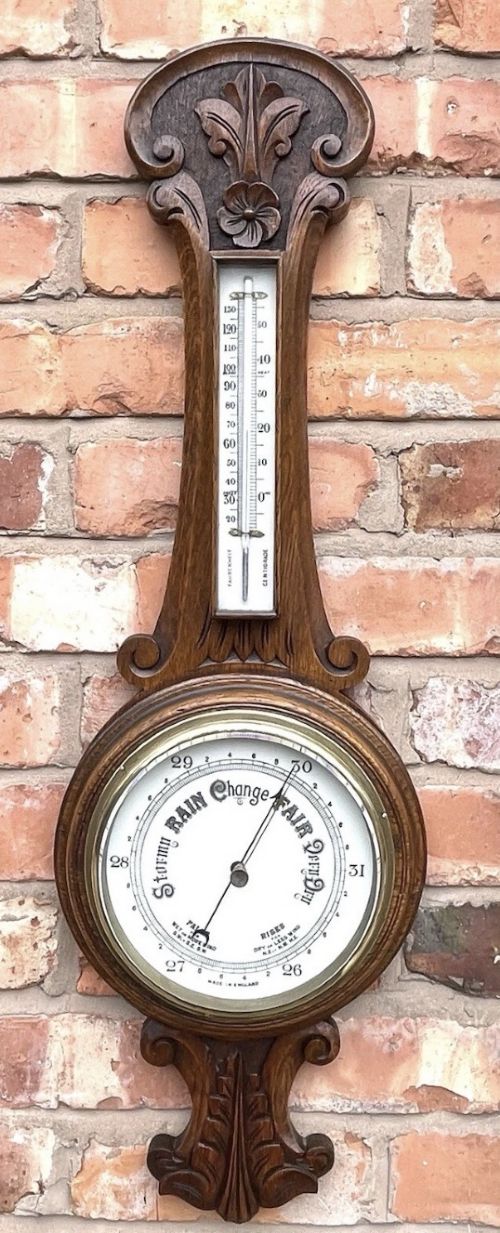
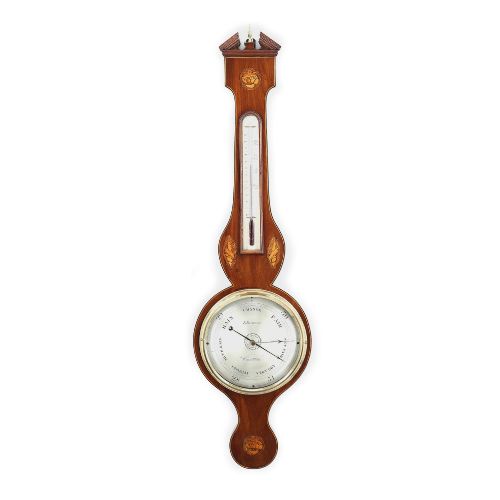
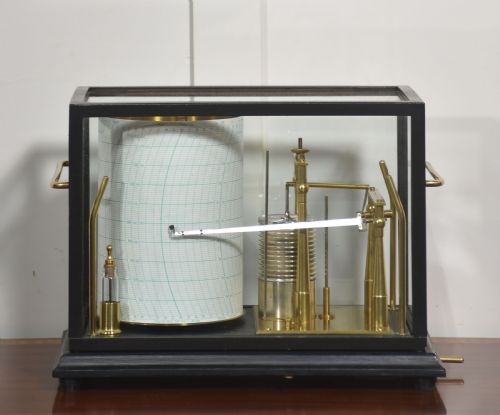
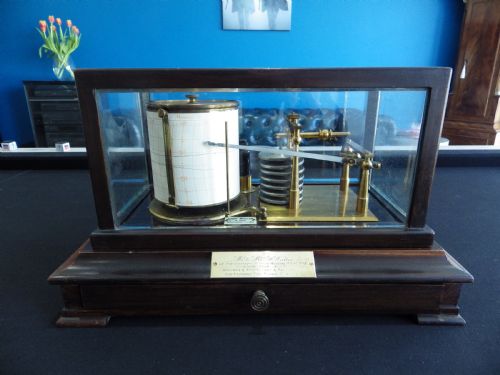
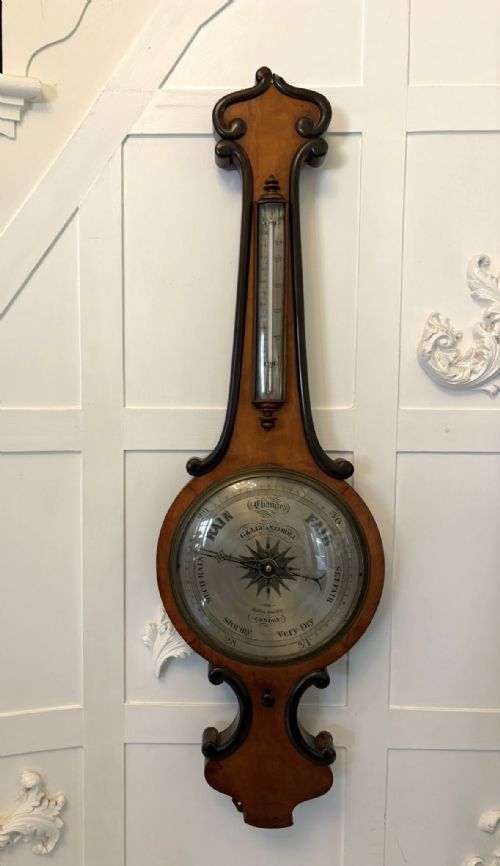
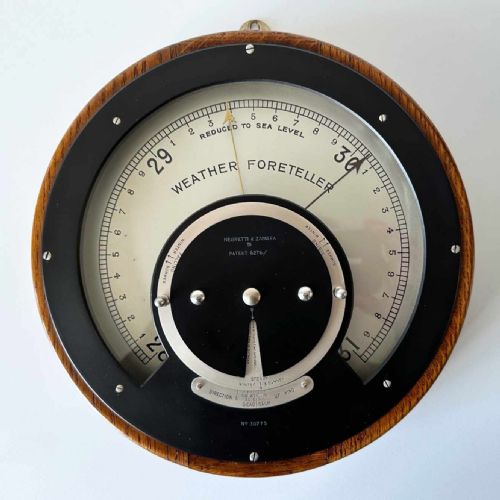
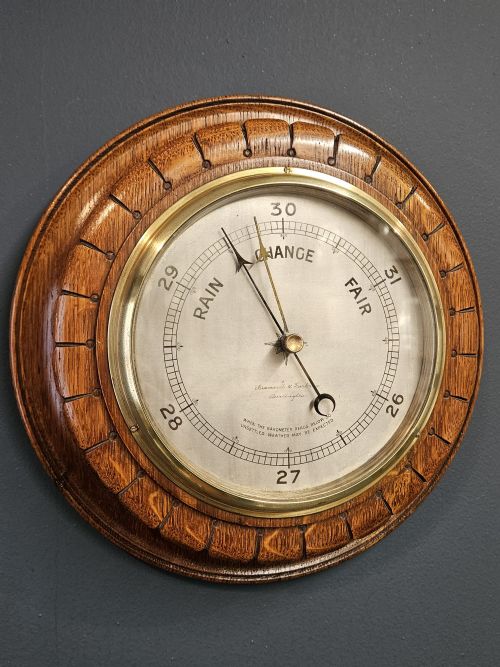
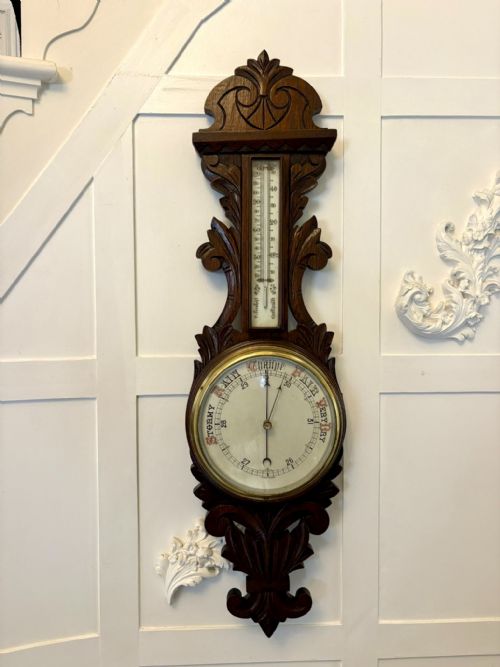
When you search for an antique english barometer, you encounter domestic instruments designed to measure atmospheric pressure for weather forecasting inside the home. These pieces cross several distinct silhouettes, from tall, narrow stick barometers and sweeping wheel or banjo formats to robust oak barographs housed in glass cases.
The examples on this page span the Georgian, Victorian, and Edwardian eras, reaching into the Interwar Period and Art Deco styles. You will frequently find banjo barometers featuring silvered metal dials alongside marine stick barometers and mechanical barographs recording pressure onto paper charts.
Materials and Construction
Cabinetmakers built these instruments using dense cabinet timbers like mahogany, walnut, oak, and rosewood, often shaping them with turned details, shell inlay, or carved scrollwork. Selected pieces incorporate brass bezels, bevelled glass panels, bone scale plates, and mother-of-pearl accents to frame the delicate internal movements.
The mechanics rely on mercurial columns within stick tubes or aneroid mechanisms driven by sealed metal vacuum capsules. Instrument makers mounted these delicate brass and silvered metal scales within timber housings equipped with mercury thermometers and adjustment screws.
Listings feature timber cases in mahogany, oak, walnut, and rosewood alongside brass and silvered metal dials across the Georgian to Art Deco periods.
The Distinctions in Grade
Quality rests in the crispness of the cabinetwork and the precision of the signed dial engraving. Pieces bearing the names of established scientific instrument makers display finer dial division and more substantial brass components than anonymous workshop output.
The survival of original glass, intact mercury columns, and unpolished timber surfaces elevates an instrument. Master cabinetwork featuring matched veneers or detailed carving separates utilitarian weather glasses from high-status hall furnishings.
Short & Mason·Negretti & Zambra·J Hughes·Casella London·B Bramwell & Harbron
The Antique English Barometer Glossary
- Aneroid barometer
- An instrument that measures atmospheric pressure by the expansion and contraction of a sealed metal capsule, avoiding liquid mercury entirely.
- Barograph
- A recording meteorological instrument that draws a continuous line of atmospheric pressure onto a rotating drum holding a paper chart.
- Banjo barometer
- A domestic wall barometer housed in a case shaped like a banjo, typically combining a dial gauge with a thermometer and dampness indicator.
- Stick barometer
- A tall, slender instrument displaying a vertical mercurial tube alongside a scale plate and sliding vernier for reading pressure changes.
- Silvered dial
- A brass or metal indicator face treated with silver powder and engraving to create bright markings against a frosted background.
- Vernier
- A auxiliary scale sliding alongside the main barometer scale to allow precise readings of fractional pressure measurements.
Antique English Barometer: Frequently Asked Questions
How do I read an antique barometer?
Locate the main pointer on the silvered dial, then use the manual setting hand to mark its current position. Observing whether the needle moves above or below that marker indicates rising or falling air pressure.
Changes pointing toward rain, change, or fair weather reflect shifting atmospheric conditions over the hours. Mercurial stick instruments require reading the top of the liquid column against the engraved scale and sliding the vernier for exact fractions.
Where should I hang a wall barometer?
Mount the instrument on an interior wall away from direct sunlight, central heating radiators, and constant draughts. Rapid temperature fluctuations can affect the metal mechanisms or liquid columns.
Choose a stable surface at eye level in a hallway or study where the timber case remains protected from heavy vibrations and accidental knocks.
Can antique barometers still predict weather?
Working instruments continue to register real-time atmospheric pressure shifts with high mechanical accuracy. Aneroid movements and mercurial columns respond directly to outside weather systems just as they did centuries ago.
Periodic professional calibration ensures the readings align with current barometric pressure standards for your local area.
How do I tell a Georgian barometer from a Victorian one?
Georgian instruments often feature understated mahogany or walnut cases with understated line inlay and architectural pediments. Their silvered dials tend to display clean, restrained engraving typical of eighteenth-century workshops.
Victorian and later examples introduce heavier timbers, carved oak foliage, burr walnut veneers, and more ornate banjo or skeletonised brass configurations.