


Antique Enamel Wall Art
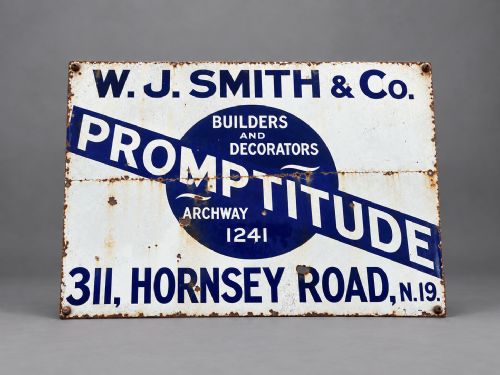
Antique enamel wall art brings rich colour and enduring metalwork into interiors, offering striking visual depth through fired vitreous pigments.
Antique Enamel Wall Art
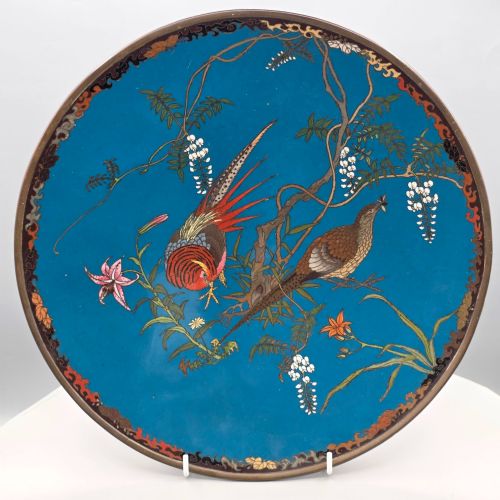
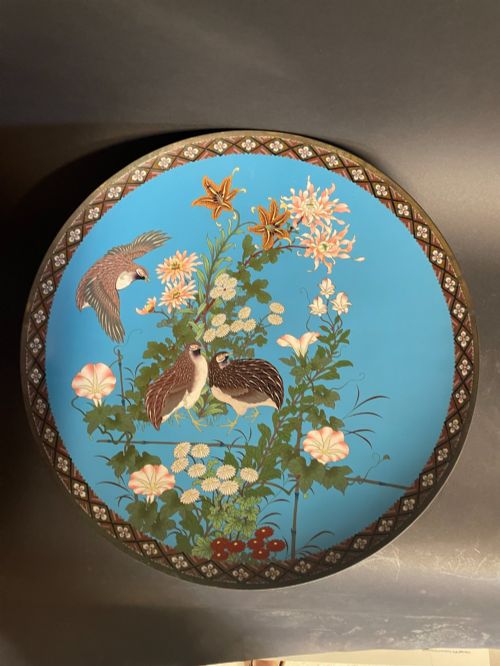
When you search for antique enamel wall art, you encounter diverse decorative forms spanning several centuries and origins. The selection on this page centres heavily on Japanese Meiji period cloisonné chargers, French Limoges painted plaques, and British Arts and Crafts copper or brass pieces.
You find wall plaques, decorative plates, mirrors, wall sconces, and tiles created to adorn domestic spaces. Eighteenth-century examples from Limoges and South Staffordshire sit alongside late nineteenth and early twentieth-century creations from Japan, France, and Britain.
Each piece utilises metal or ceramic as a base for vitreous enamel, producing flat and concave surfaces decorated with birds, figures, or abstract motifs. The variety ranges from large Japanese dragon chargers to Georgian enamel oval plaques and Art Deco wall lights.
How they were made
Makers applied powdered glass or vitreous enamel onto metal bases such as copper, brass, or bronze, and occasionally porcelain or ceramic. These pieces underwent high-temperature firing to fuse the coloured pastes securely to the underlying support.
Techniques varied from cloisonné, where thin metal wires formed cells to hold different enamel colours, to Limoges painted enamel where artists brushed pigments directly onto copper panels. Frameworks of wood, glass, and specialised brass mountings often completed the wall art for hanging.
Listings feature periods from the eighteenth century through the 1930s, using copper, brass, porcelain, and glass.
What varies in quality
Quality rests in the precision of the design and the mastery of the firing process. Finer pieces display crisp wirework in cloisonné or detailed brushwork in painted panels, achieving smooth surfaces without bubbling or cracking.
The sophistication of the palette and the complexity of the subject matter distinguish superior examples from standard production. Artisans who achieved subtle tonal gradations and well-balanced compositions produced the works that command greater appreciation today.
Royal Worcester·Smiths Sectric·Longwy·Samson
The Antique Enamel Wall Art Glossary
- Cloisonné
- A decorative technique where metal wires form raised barriers on a metal body to create cells filled with enamel paste. These cells are fired and polished smooth.
- Limoges Enamel
- Painted enamelwork originating from the French city of Limoges, typically featuring polychrome figural scenes or portraits on copper panels.
- Charger
- A large decorative plate or dish intended for display on a wall or sideboard rather than for practical dining use.
- Totai Shippo
- A Japanese technique involving porcelain bases decorated with cloisonné wirework and enamel, resembling traditional metal-based pieces.
- Vitreous Enamel
- A material made by fusing powdered glass to a substrate by firing, producing a durable and glossy coloured coating.
Antique Enamel Wall Art: Frequently Asked Questions
How do I hang heavy enamel chargers safely?
Heavy chargers require sturdy wall anchors and specialised bracket mounts designed to support the weight of metal and ceramic securely. Ensure the hanging wire or integrated foot ring engages properly with the wall fixture.
Avoid hanging pieces in areas subject to excessive vibrations or direct moisture fluctuations. Periodically check the mounting hardware to maintain secure wall placement.
What is the difference between Limoges and Japanese cloisonné?
Limoges enamel involves painting liquid or powdered pigments directly onto copper panels to create detailed pictorial portraits or scenes. This French tradition relies on brushwork and tonal shading rather than wire cells.
Japanese cloisonné uses fine metal wires soldered onto a metal base to outline distinct compartments for various coloured enamels. The piece is then fired and polished to a smooth, compartmentalised finish.
Where were South Staffordshire enamel plaques made?
South Staffordshire plaques originated in the English Midlands during the eighteenth century, centred around workshops in Bilston and Wednesbury. These small copper plaques were coated in white enamel and hand-painted with charming pastoral or portrait scenes.
They frequently served as decorative inserts for boxes, frames, or interior wall displays. Their distinct eighteenth-century palette marks them out from later continental production.