
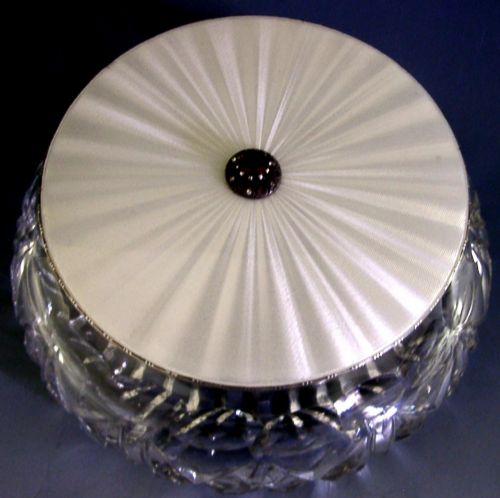


Antique Enamel Trinket Jar
An antique enamel trinket jar is a small lidded vessel for the dressing table, combining glass or metal with colourful fused vitreous work.
Antique Enamel Trinket Jar
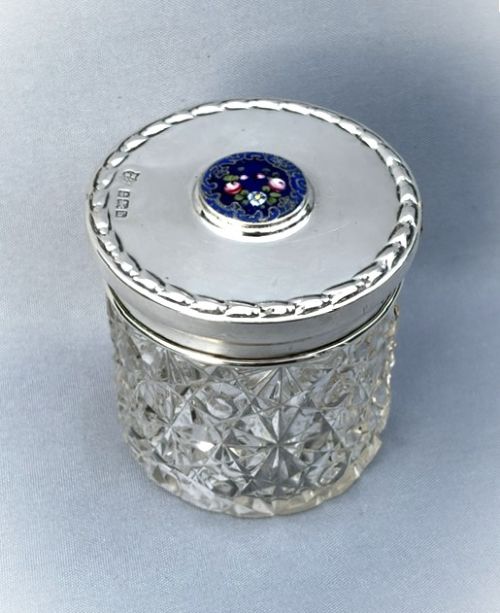
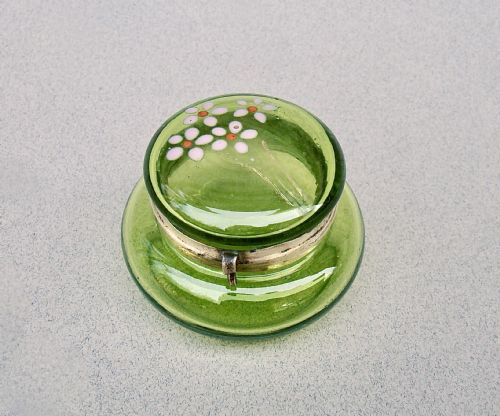
An antique enamel trinket jar serves to hold pins, rings, and small cosmetics on a Victorian, Edwardian, or dressing table. These lidded pots appear in several distinct forms, from heavy cut glass jars topped with sterling silver and enamel to delicate French glass boxes.
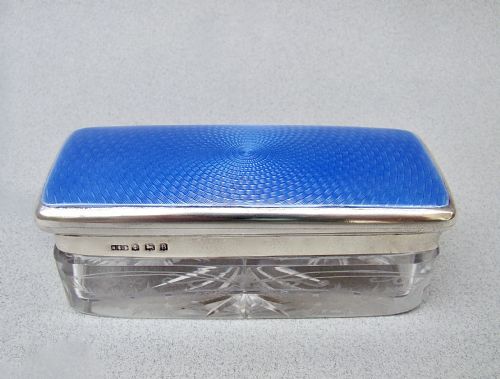
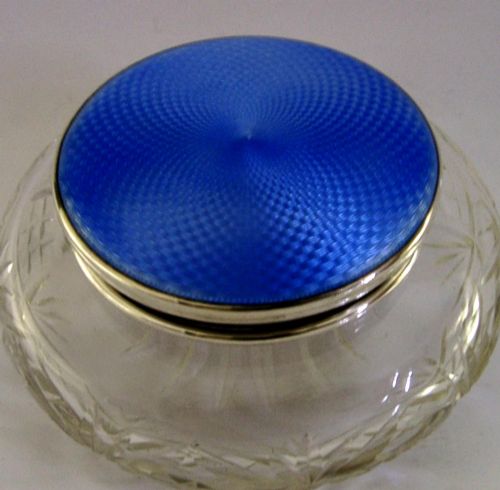
The pieces on this page span from the nineteenth century through the Art Deco era, encompassing styles such as Victorian, Edwardian, and Japanese Meiji. Buyers most frequently encounter twentieth-century examples featuring guilloche enamel lids paired with sterling silver collars and glass bodies.
Origins vary widely across the selection, taking in English workshops, French glasshouses, and Asian regional makers. Each piece combines a utilitarian function with decorative surface work that reflects the aesthetic tastes of its specific decade.
How they were made
Glass bodies are frequently moulded, cut, or blown, utilising Bristol blue, cranberry, or clear glass to form the main vessel. Artisans then fitted these containers with mounts and lids fashioned from sterling silver or brass.
Vitreous enamel is applied to metal surfaces, sometimes over an engine-turned guilloche pattern that creates geometric ripples beneath translucent colour. Cloisonne techniques also appear on Asian regional pieces, setting wire partitions into the design before filling them with enamel paste.
Gourd pots from the Meiji period bring unexpected botanical shapes to the vanity table.
What varies in quality
The clarity and depth of the glass body set the foundation for a piece, alongside the weight and purity of the sterling silver or brass mounts. Thicker glass and substantial metal gauge indicate higher production standards.
The precision of the enamel work dictates the upper tier of the range, particularly the intricacy of guilloche patterns and the absence of firing flaws in the vitreous surface. Intricate hand-painted details or complex cloisonne wiring also elevate an object's execution.
Henry Clifford Davis
The Antique Enamel Trinket Jar Glossary
- Guilloche Enamel
- A decorative technique where translucent enamel is layered over mechanically engraved metal. This process produces repeating geometric patterns that show beneath the coloured glass surface.
- Cloisonne
- A method of decorating metal objects by affixing flat wires to the surface to create compartments. These cells are then filled with enamel paste and fired.
- Cut Glass
- Glass shaped and patterned by abrasive grinding against stone or metal wheels. The resulting deep facets catch and refract light across the jar.
- Bristol Blue
- A deep cobalt blue glass traditionally produced in the English city of Bristol during the eighteenth and nineteenth centuries. It remains a signature material for Victorian dressing table containers.
- Sterling Silver
- An alloy of silver containing ninety-two point five percent pure silver and seven point five percent other metals, usually copper. It provides the rigid lids and collars for many Edwardian and Art Deco jars.
Antique Enamel Trinket Jar: Frequently Asked Questions
What is an antique enamel trinket jar used for?
These vessels were designed for the dressing table to safely hold small personal items such as rings, pins, and cosmetics.
Today, they serve the same practical function while functioning as decorative tabletop accents that showcase period craftsmanship.
How do I identify an Art Deco trinket jar?
Art Deco examples typically display clean geometric lines, stylized patterns, and machine-turned guilloche enamel in bright or contrasting colours.
They often pair sterling silver collars with clear or frosted cut glass bodies dating from the nineteen-twenties and nineteen-thirties.
What is guilloche enamel?
Guilloche is a decorative technique where a metal substrate is mechanically engraved with precise geometric patterns before translucent enamel is applied.
The underlying pattern shines through the coloured glass layer, creating depth and movement as the light shifts.
How do I care for an antique enamel jar?
Clean the glass and metal components gently with a soft, dry cloth to remove dust without abrasive polishes.
Keep moisture away from the interior mounts and avoid harsh chemical cleaners that can damage fragile enamel surfaces.