
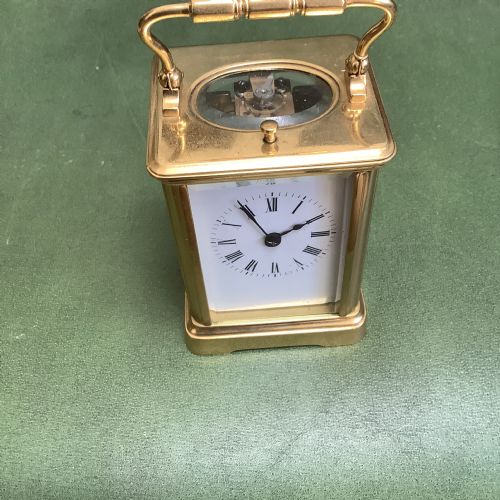
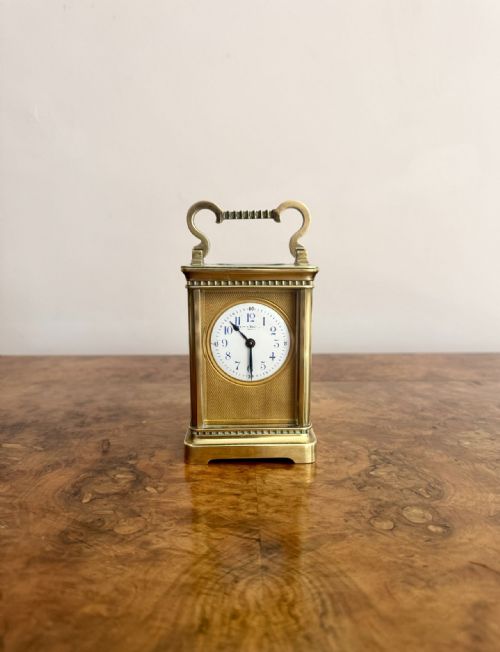
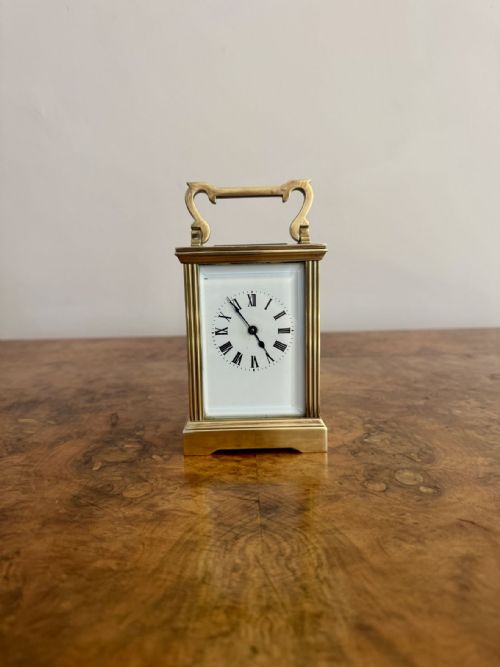
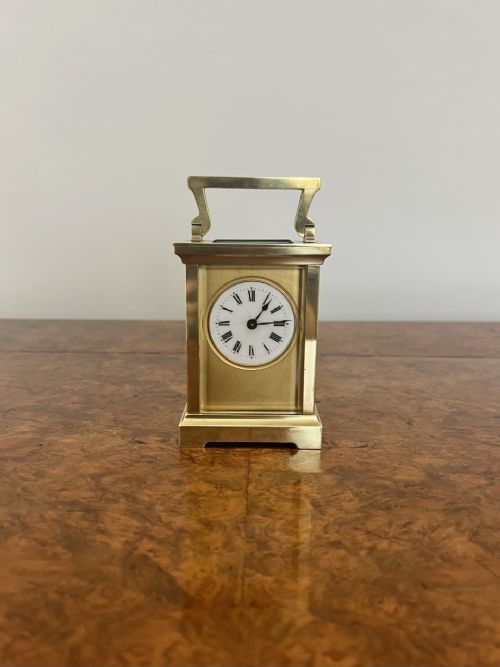


Antique Enamel Mantle Clock
An antique enamel mantle clock brings mechanical precision and decorative enamelwork together, offering a striking centrepiece for a mantelpiece.
Antique Enamel Mantle Clock
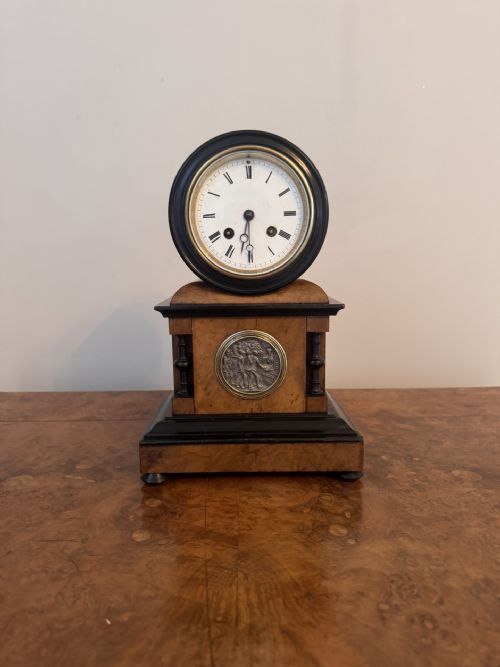
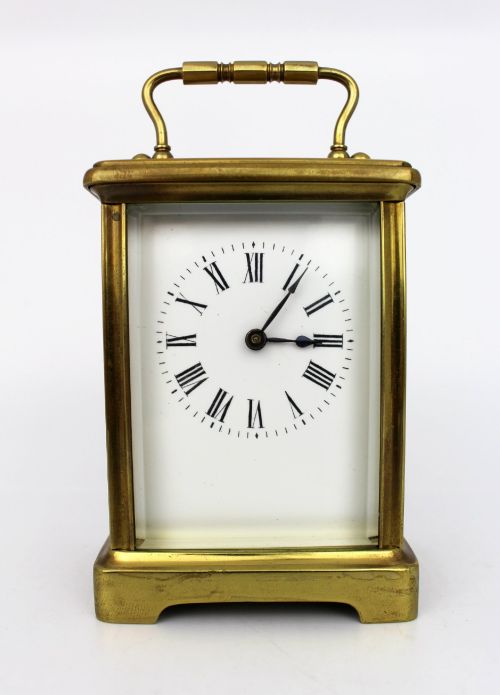
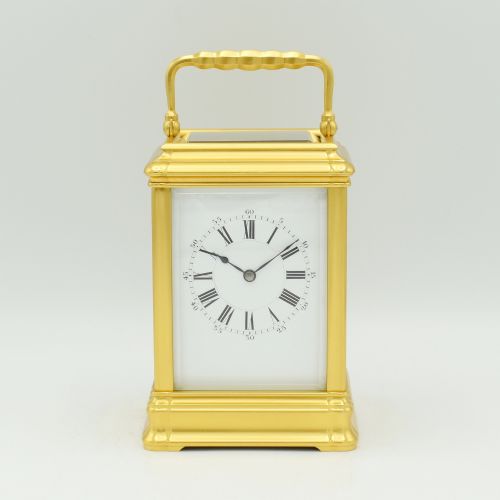
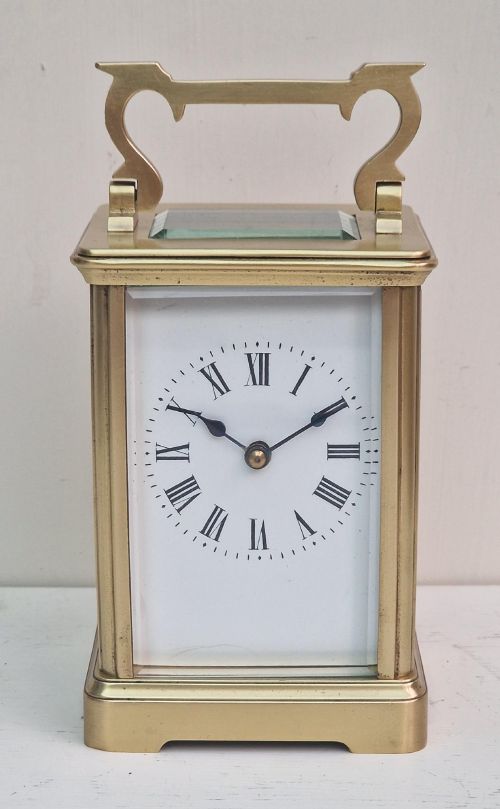
The antique enamel mantle clock category encompasses a variety of domestic timepieces produced during the Victorian, Edwardian, and nineteenth-century periods. These objects range from heavy French mantel clocks housed in brass, ormolu, and bronze to portable carriage clocks fitted with travel cases and intricate dials.
Buyers will frequently encounter carriage clocks and mantel clocks originating from French workshops alongside English examples. Styles span from Louis XVI Revival and French Rococo Revival to Arts and Crafts designs, reflecting diverse aesthetic preferences of the nineteenth and early twentieth centuries.
Many specimens incorporate glass panels and glazed doors that reveal the mechanical movement within. Dial variations include champlevé enamel, Delft enamel, and blue guilloche enamel, often paired with hand-painted details or engraved brass cases.
Materials and construction
Clockmakers utilised brass, gilt brass, ormolu, and gilt bronze to construct robust internal chassis and ornate exterior cases. Glass and silver also appear frequently, providing transparent panels and protective travel housings for portable designs.
Enamel work forms a defining visual element, applied to dials and panels through specialised firing techniques. Pewter and wood, including faux tortoiseshell finishes, support diverse regional styles such as Arts and Crafts productions.
Listings feature pieces spanning the Victorian and Edwardian eras, constructed from brass, ormolu, and pewter with enamel and glass elements.
Assessing craftsmanship
Superior examples demonstrate meticulous hand-engraving on the metal case and precise execution in the painted or champlevé enamel dials. The integration of complicated movements, such as striking and repeating mechanisms, separates standard pieces from those produced by premier makers.
The quality of the casting in bronze, ormolu, and brass defines the crispness of architectural and floral motifs on revival styles. Well-preserved original glass panels and matching travel cases further elevate a piece within its period.
Henri Jacot·Margaine Of France·David Veasey for Liberty and Co·C. Detouche Paris·Henry Jacob·Tiffany·Japy Freres·Charles Frodsham and Holingue Freres
The Antique Enamel Mantle Clock Glossary
- Carriage clock
- A small, portable spring-driven clock designed for travel, typically fitted with a carrying handle and glass panels. They emerged in the nineteenth century for use by travellers.
- Champlevé
- An enamelling technique where troughs or cells are hollowed out in the metal surface and filled with vitreous enamel before firing. This creates colourful patterns flush with the metal dividers.
- Ormolu
- Gilded bronze produced by applying a mercury and gold amalgam to a bronze base and heating it. The process yields a rich, golden finish characteristic of French decorative objects.
- Guilloche
- A decorative mechanical technique that etches an intricate, repetitive pattern onto a metal surface under enamel. Blue guilloche varieties display a geometric depth beneath translucent coloured glass.
- Repeating mechanism
- A mechanical complication in clocks that sounds the last hour or quarter-hour on demand when a lever or button is pressed. It allowed owners to check the time in darkness.
Antique Enamel Mantle Clock: Frequently Asked Questions
What is a carriage clock?
A carriage clock is a portable timepiece equipped with a folding handle, designed originally for officers and travellers during the nineteenth century. These clocks are housed in brass or gilt frames with glass sides that display the escapement and gear train.
Most examples operate on a spring-driven movement rather than hanging weights. They often sit inside leather travel cases to protect the glass and delicate enamel dials during transit.
How do striking and repeating mechanisms work?
Striking mechanisms automatically sound the hours or quarters using internal hammers hitting bells or gongs. Repeating mechanisms allow the owner to trigger the last sounded time manually by pressing a button or cord.
These complications required advanced mechanical skill from nineteenth-century horologists. They served a practical purpose before electric lighting made checking a dial easy in the dark.
What distinguishes champleve enamel?
Champlevé enamel involves carving or casting depressions into a metal base, which are then filled with powdered glass enamel and fired. The metal walls left between the recesses form distinct outlines around the coloured sections.
This technique produces durable, vibrant patterns across clock bezels and dial surrounds. It appears frequently on French mantel and carriage clocks from the late Victorian period.
How should I care for an antique clock?
Keep mechanical clocks away from direct sunlight, damp environments, and sudden temperature fluctuations that can affect the metal and wood. Winding requires gentle handling to avoid over-tensioning the mainspring.
Professional servicing every few years ensures the internal brass gears remain clean and properly lubricated. Avoid using harsh chemical polishes on gilded brass or delicate enamel surfaces.
How do I identify the period of a clock?
Dating relies on stylistic clues, materials, mechanical developments, and signatures inscribed on the movement backplate or dial. Victorian and Edwardian pieces often incorporate revival motifs inspired by Louis XVI or Rococo aesthetics.
Maker marks and registration numbers help narrow down the decade of production. Examining the construction of the escapement and balance wheel provides further evidence of manufacturing date.