





Antique Enamel Jewellery Box
An antique enamel jewellery box holds small treasures securely while displaying rich colour and metalwork on a dressing table.
Antique Enamel Jewellery Box
An antique enamel jewellery box serves as a small decorative container for keepsakes, trinkets, and precious accessories. Collectors searching this phrase encounter various forms, including hinged trinket boxes, lidded caskets, and miniature table cabinets from the nineteenth and twentieth centuries.
The pieces on this page span several distinct design movements, including Victorian, Edwardian, Art Deco, and Arts and Crafts periods. European workshops dominate the selection, with British silver pieces, French porcelain and ormolu caskets, and Japanese cloisonné containers appearing frequently.
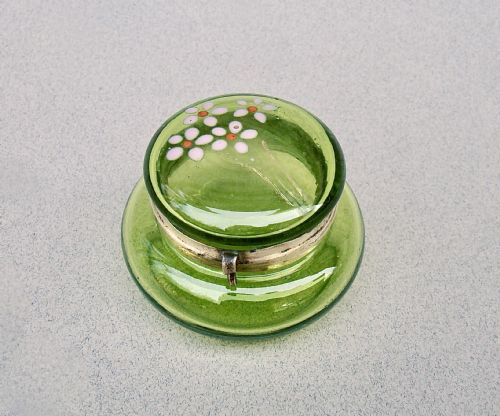
While the search term specifies jewellery boxes, the material evidence also encompasses related small receptacles such as glass trinket boxes and desk caskets. These containers share the primary characteristic of fused glass surfaces applied to metal, ceramic, or glass bodies.
How they were made
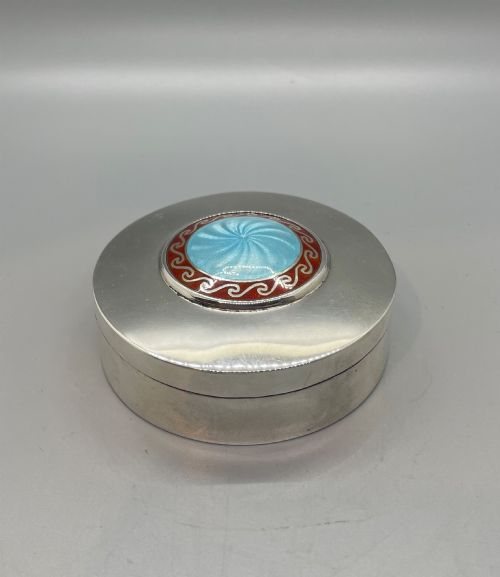
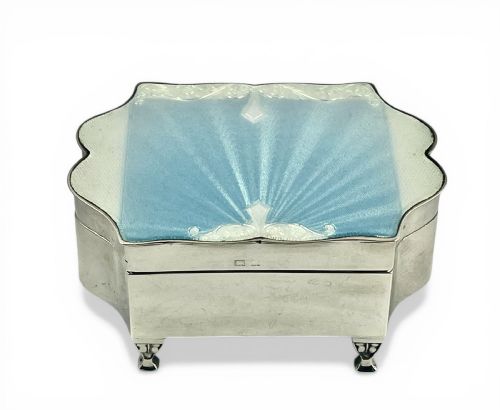
Makers applied powdered glass to metal bases such as silver, copper, brass, or bronze and fired the pieces in a kiln to create smooth, vitreous enamel surfaces. Techniques range from translucent guilloche enamel over engine-turned metal to opaque painted panels and wire-inlaid cloisonne.
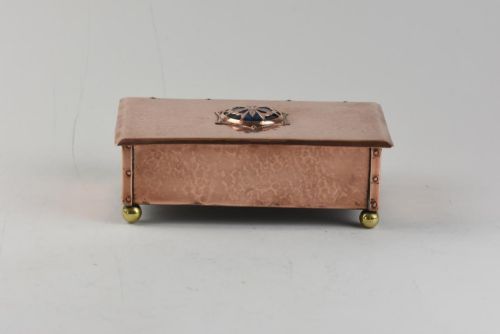
Many boxes combine enamel work with other artisanal methods, such as cast ormolu mounts, hand-painted porcelain plaques, and beaten metal panels riveted to wooden or metallic carcases. Gold and silver gilt often provide interior linings and exterior framing for the enamel panels.
One Arts and Crafts box displays a copper panel of a boy and girl wearing clogs.
What varies in quality
Quality rests primarily on the technical skill of the enameller and the precision of the metalwork mountings. Finer pieces display even vitreous layers without bubbling or firing cracks, alongside crisp hand-painting or sharply defined guilloche patterning beneath the glaze.
The weight and purity of the housing materials also separate standard production from high-end commissions. Heavy sterling silver, solid bronze, and gold components reflect superior manufacture compared to thin brass stampings or plated base metals.
S Theeman·Taye Kenning & Spencer Ltd·Belinda Gentle
The Antique Enamel Jewellery Box Glossary
- Guilloche
- An ornamental pattern engraved mechanically into metal under translucent enamel. This technique creates a repeating geometric wave or sunburst effect beneath the coloured glass surface.
- Cloisonne
- A decorative metalwork method where thin wires form raised barriers on a surface to create compartments. Artisans fill these cells with enamel paste before firing the piece.
- Ormolu
- Gilt bronze ornament applied to decorative objects and furniture. The process involves coating base metal with a mercury and gold amalgam.
- Vinaigrette
- A small hinged box containing a perforated grill over a sponge soaked in aromatic vinegar. These portable containers were popular in the eighteenth and nineteenth centuries.
- Champleve
- An enamelling technique where troughs or cells are hollowed out of a metal plate and filled with enamel paste. The surrounding metal walls remain visible as part of the design.
Antique Enamel Jewellery Box: Frequently Asked Questions
What are antique enamel jewellery boxes made of?
These boxes combine a base material of sterling silver, copper, brass, bronze, porcelain, or glass with fused vitreous enamel. Many feature interior velvet linings and gilt metal mounts.
Makers frequently incorporated additional elements such as pearls, cameos, or painted porcelain plaques into the exterior lids.
How do I clean an antique enamel box?
Enamelled surfaces require gentle cleaning with a soft, dry cloth to remove dust. Moisture can seep into tiny hairline fractures or damage exposed metal mounts.
Silver or bronze housings benefit from careful polishing with a non-abrasive cloth, keeping polish away from the enamel panels entirely.
When were most enamel boxes made?
The pieces recorded here date predominantly from the nineteenth and early twentieth centuries. Victorian and Edwardian examples sit alongside Art Deco and Arts and Crafts productions.
Earlier eighteenth-century pieces, such as gold vinaigrettes, appear less frequently in the surviving record.
Where were these boxes manufactured?
Production centres span Britain, France, Austria, and Japan. British workshops in Birmingham and London produced sterling silver and guilloche items.
Continental makers in Paris, Limoges, and Vienna specialised in porcelain caskets, painted miniatures, and detailed bronze work.