



Antique Empire Accent Chairs
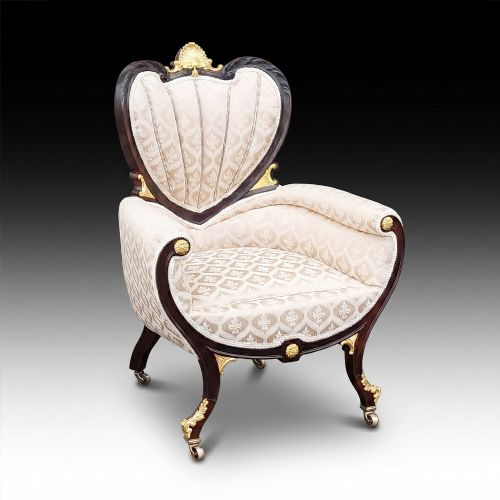
Antique empire accent chairs combine classical proportion with bold mahogany, ormolu and giltwood frames for commanding interior seating.
Antique Empire Accent Chairs
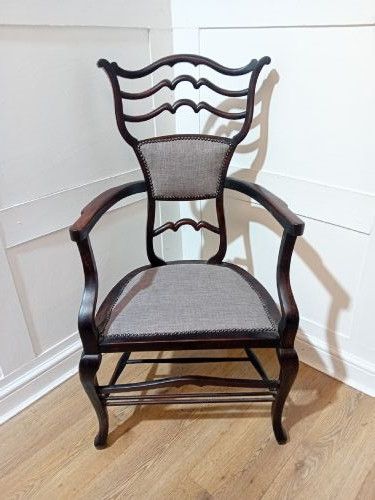
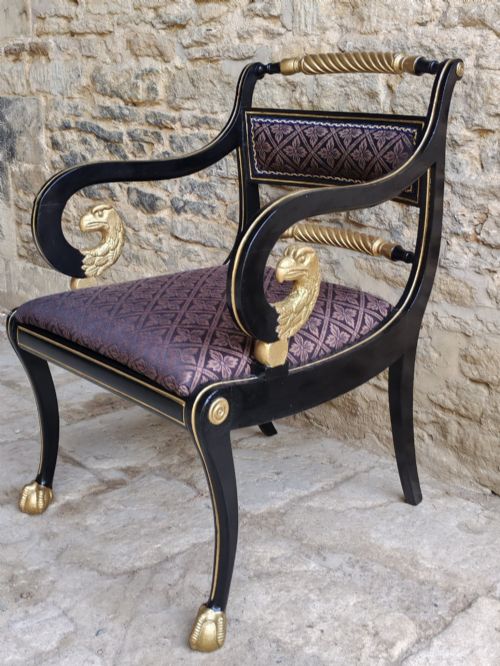
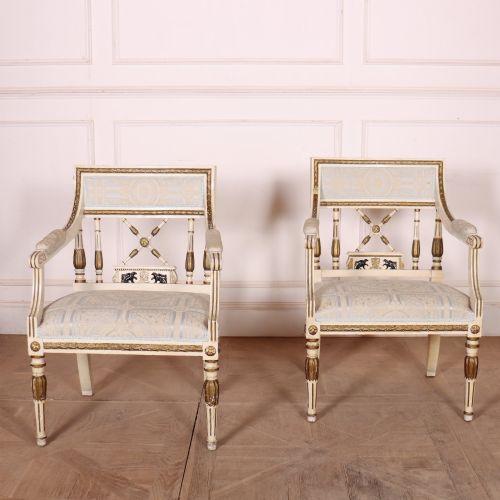
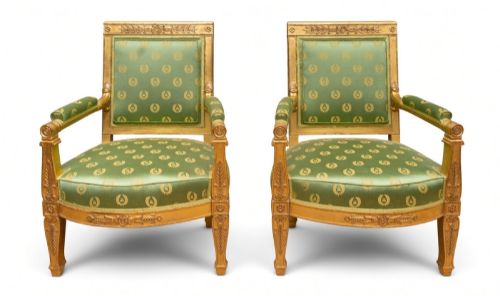
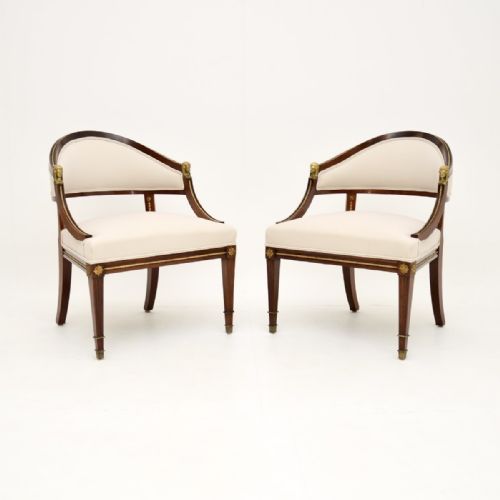
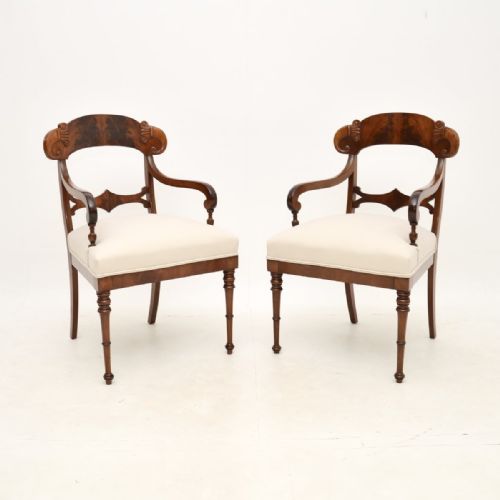
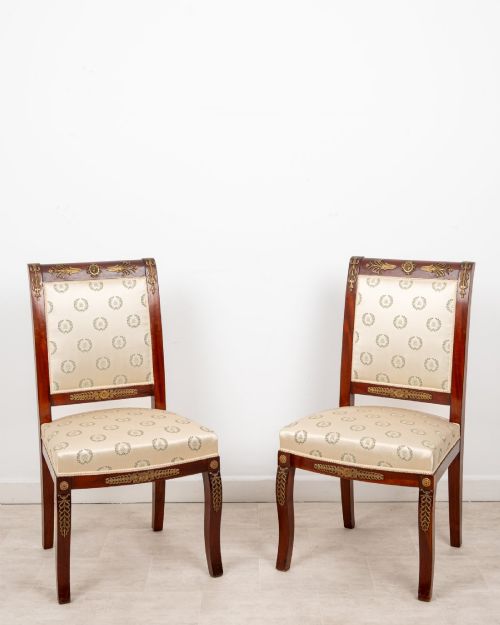
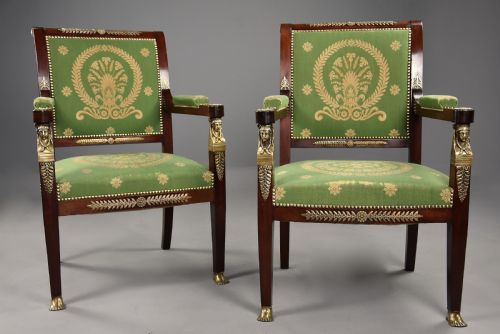
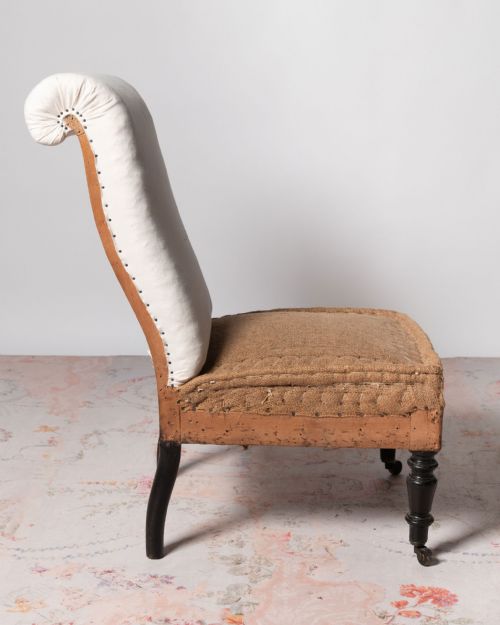
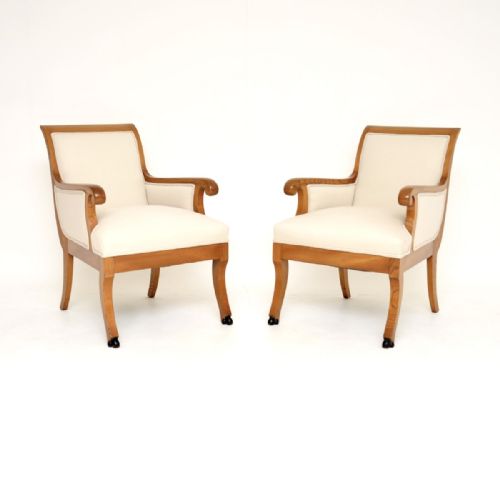
Most examples you meet on this page rely on mahogany, walnut, or giltwood construction, often accented with brass or bronze mounts. Forms vary from open armchairs and fauteuils to scroll-back slipper chairs and curule stools, reflecting both continental origins and domestic revivals.
How they were made
Cabinetmakers built these frames primarily from solid mahogany and walnut, occasionally employing birch, elm, or painted and gilded woods. Artisans shaped structural timbers through traditional joinery before applying hand-carved decorative motifs.
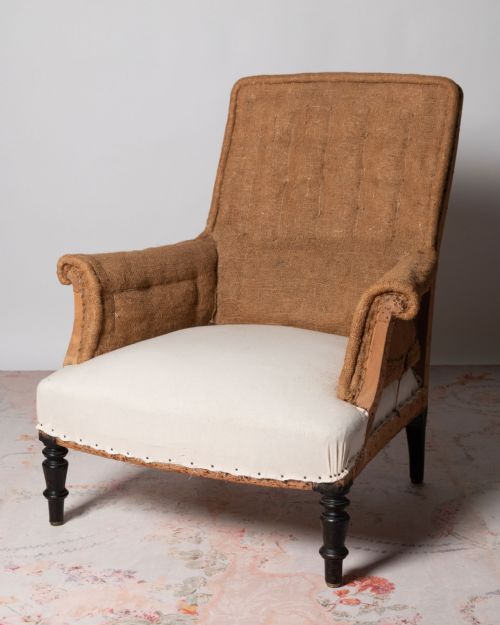
Metal ornament played a defining role, utilising cast ormolu and brass mounts fixed to the wood. Upholstered elements relied on traditional textile webbing and stuffing, preparing chairs for silk, damask, or contemporary fabric coverings.
Curule stools maintain an unbroken design lineage stretching from ancient Roman magistrates straight through to nineteenth-century drawing rooms.
What varies in quality
The standard of carving and the crispness of the timber determine the initial distinction between ordinary seating and finer examples. Sharp, deep relief work in mahogany and precise execution of giltwood indicate a higher level of workshop competence.
The integration and quality of cast ormolu mounts further separate standard production from superior pieces. Well-chased bronze mounts fitted flush to the wood elevate a chair well above simpler framed equivalents.
Jacob-Desmalter·Henry Thomas Peters
The Antique Empire Accent Chairs Glossary
- Fauteuil
- An open-arm armchair with a wooden frame left exposed around the upholstered elements. These typically feature carved arm supports and padded armrests.
- Ormolu
- Gilt bronze ornamentation applied to furniture frames. Makers cast and chased these metal mounts to highlight structural junctions and classical motifs.
- Curule
- A distinctive X-shaped stool or chair design derived from ancient Roman magistrate seats. These pieces often feature scrolling supports joined by a central stretcher.
- Marquetry
- Decorative patterns formed by fitting contrasting veneers into wooden surfaces. This technique appears on select nineteenth-century chair rails and backrests.
- Neoclassical
- A dominant design movement drawing direct inspiration from classical antiquity. The style manifests in symmetrical geometries, columns, and restraint.
Antique Empire Accent Chairs: Frequently Asked Questions
What defines an empire style chair?
Empire style chairs draw heavily from classical Roman and Greek motifs, featuring strict symmetry, dark hardwoods, and prominent metal mounts. The aesthetic projects formal dignity through architectural lines and restrained decoration.
Such seating avoids excessive curves in favour of scroll-backs, saber legs, and straight uprights. Ormolu and gilt bronze accents complete the distinctive visual language of the period.
How do I date an empire chair?
Dating relies on examining timber selection, mount quality, and the specific stylistic revival movement at play. Early nineteenth-century pieces display hand-cut joinery and heavy solid hardwoods, while later revivals often incorporate softer secondary woods.
Comparing structural details against documented nineteenth-century cabinetmaking practices helps narrow the timeframe. Regional variations, such as Swedish Neoclassical interpretations, also guide chronological placement.
Where should I place an accent chair?
These chairs function effectively as single statement pieces in hallways, studies, or drawing rooms where their architectural frames remain visible. Pairing two armchairs creates a balanced seating arrangement around a fireplace or focal wall.
Because open armchairs and salon chairs possess finished backs, they sit comfortably away from walls in open spaces. Their modest scale allows them to anchor corners without overwhelming the room.
How do I care for antique wood and ormolu?
Maintain mahogany and walnut frames using natural wax polishes applied sparingly and buffed with soft cloths. Avoid modern silicone sprays that degrade historical finishes over time.
Clean ormolu mounts with a dry brush to remove dust, avoiding chemical brass cleaners that strip the original gilding. Keeping furniture away from direct sunlight preserves both the wood tone and the underlying textiles.