
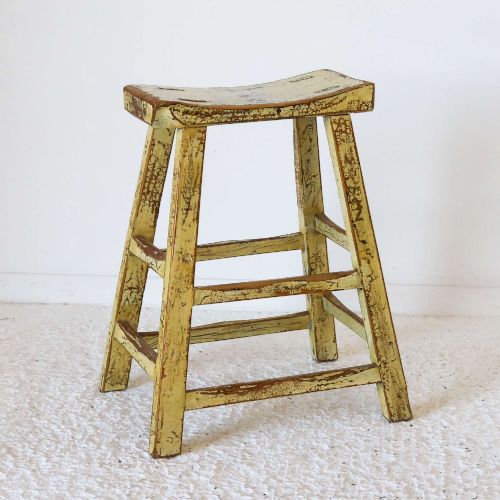


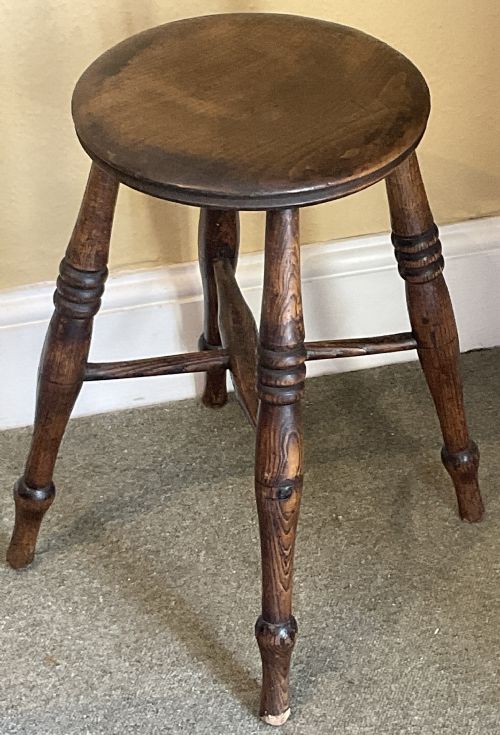
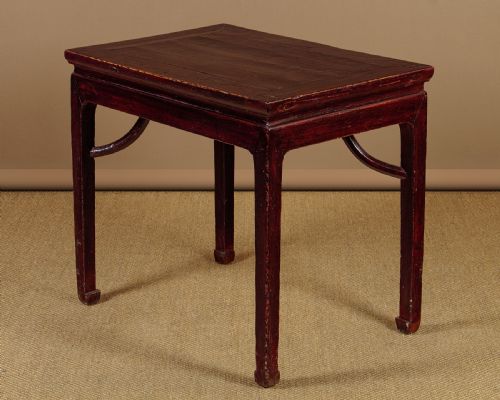


Antique Elm Side Stool
These antique elm side stool pieces bring honest utility and character to an interior through robust vernacular craftsmanship spanning British country traditions to Chinese provincial forms.
Antique Elm Side Stool
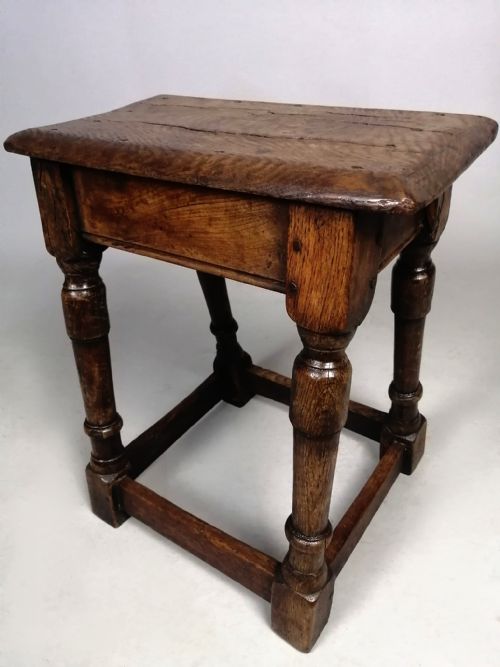
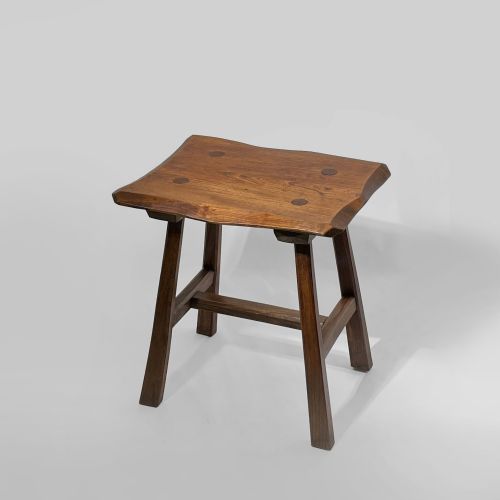
When you search for an antique elm side stool, you encounter a remarkably varied group of low seating and small utility surfaces shaped by local rural workshops. The pieces span centuries from early joint construction through Georgian country iterations to later 19th-century French provincial and Chinese vernacular examples.
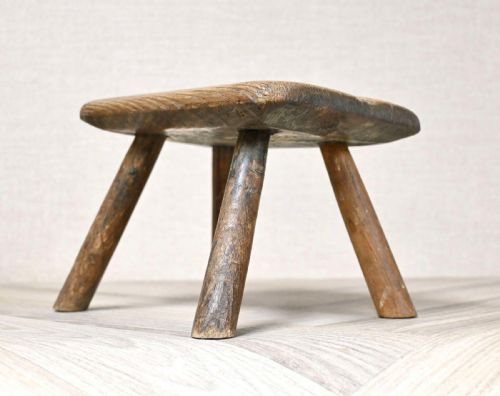
The version you are most likely to meet on this page combines a thick elm top with supporting timber legs, often manifesting as a three-legged milking stool, a square-topped seat, or a low occasional table. These forms served practical daily needs in dairies, farmhouses, and workshops before finding a place in modern homes as side tables or impromptu seats.
Materials and Technique
Makers relied heavily on elm for its toughness and interlocking grain, which prevented splitting under heavy daily use, frequently pairing it with oak or ash for structural stability. Legs were often tenoned directly into the underside of the solid wooden top or secured with simple wedged joints in the traditional Windsor manner.
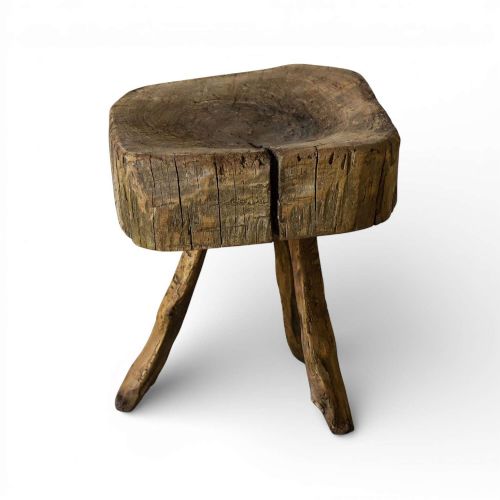
Surface treatments vary widely depending on origin, ranging from simple scrubbed timber and original dark patination to ebonised finishes and traditional Chinese lacquer. Vernacular builders utilised whatever local hardwood was to hand, leaving tool marks and natural gnarled shapes visible on the finished object.
Some French country pieces arrive equipped with wonderfully gnarled legs that look ready to walk out of the room on their own.
Judging Quality
Quality in an antique elm side stool rests in the integrity of the timber and the honesty of the construction rather than refined surface ornamentation. Pieces with thick, well-figured elm tops and original untouched legs command greater respect than heavily restored examples.
The balance between utility and wear dictates the character of the piece, where stable joints and minimal intervention preserve the historic integrity of the item. Better examples display harmonious proportions and a deep, natural patina accumulated through generations of use.
The Antique Elm Side Stool Glossary
- Elm
- A durable, tough hardwood prized for its resistance to splitting, commonly used for vernacular seating and table tops. Its characteristic interlocking grain makes it difficult to split cleanly.
- Vernacular
- Objects made by local craftsmen for everyday practical use rather than following high-style academic design. These pieces reflect regional materials and traditional local methods.
- Joint Stool
- A sturdy wooden stool constructed with mortise and tenon joints pegged together, dating back to earlier centuries. They served multiple domestic purposes before chairs became common.
- Ebonised
- Timber treated with a chemical stain or finish to imitate expensive ebony. This dark, formal surface treatment appears on select Victorian and Japanese pieces.
- Milking Stool
- A low, typically three-legged seat designed for use while milking animals. The tripod base ensured stability on uneven floors.
Antique Elm Side Stool: Frequently Asked Questions
How were antique elm stools used originally?
These low seats served practical purposes around the farmhouse, dairy, and hearth, providing movable seating for daily chores. Their sturdy construction allowed them to double as small auxiliary tables or mounting blocks.
Over time, their straightforward utility and compact proportions made them adaptable for varied domestic tasks where quick, movable seating was required.
Can I use an antique stool as a side table?
The flat, solid tops and sturdy leg placement make these pieces well-suited to holding lamps, books, or drinks beside a chair or sofa. Their modest footprint allows them to fit easily into tight spaces.
Using a low stool as an occasional table brings warmth and historic texture to a room without overwhelming the surrounding layout.
How do I care for an elm surface?
Maintain the dry timber by dusting regularly with a soft cloth and avoiding excessive moisture or direct heat sources. Natural wax can be applied sparingly to nourish the grain if the wood appears dry.
Protecting the surface from heavy liquid spills preserves the historic patina and prevents warping in the solid timber top.
How can I tell the age of a stool?
Dating relies on observing construction methods, tool marks, and the natural wear patterns accumulated on the wood over generations. Early examples often feature pegged joints and hand-cleaved timber, while later 19th-century pieces show different turning techniques.
Comparing the timber shrinkage and the colour of the patina helps distinguish between early Georgian items and later Victorian or provincial reproductions.