



Antique Egg Holder
These antique egg holder pieces range from silver cruet sets to earthenware hens on nests, offering practical charm for the breakfast table.
Antique Egg Holder
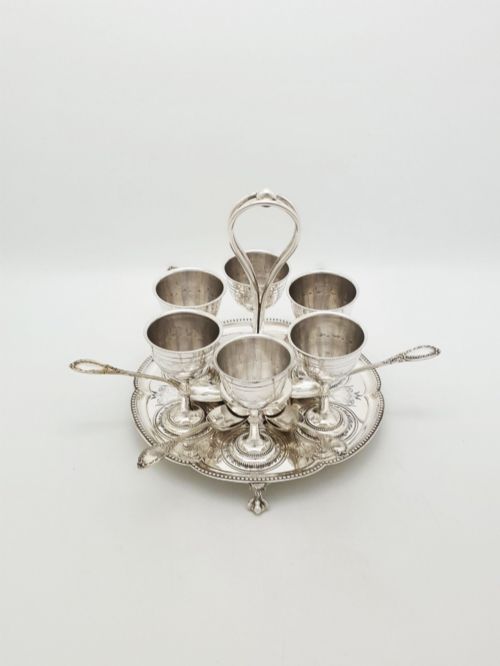
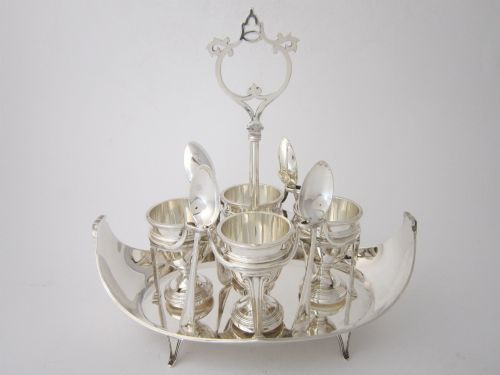
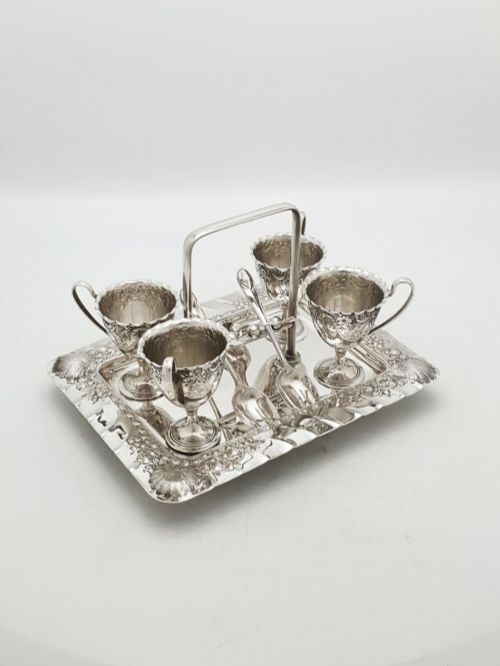
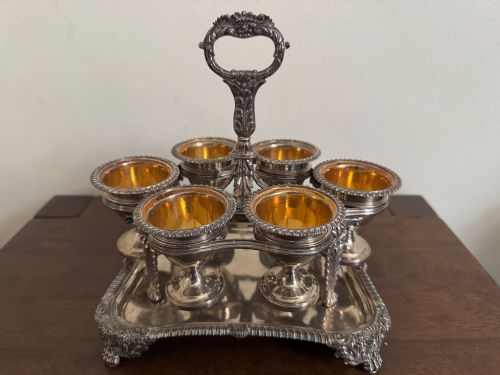
An antique egg holder encompasses several distinct forms designed for breakfast service and display, most commonly encountered as silver cruet stands, ceramic crocks, and individual cups. These pieces span periods from the eighteenth century through the Edwardian era, reflecting changing dining habits and table settings.
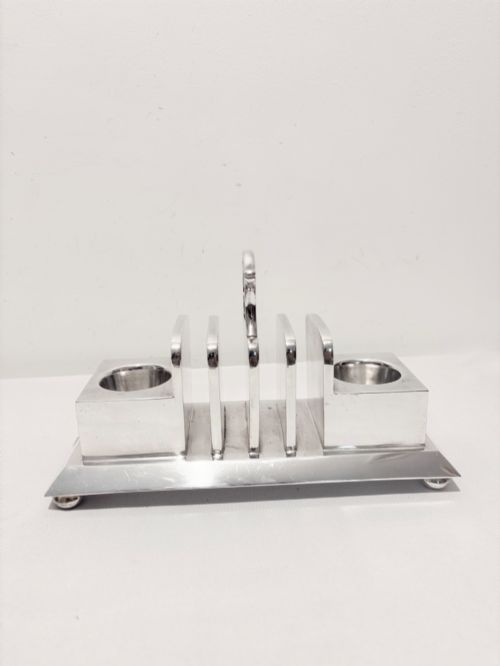
Cruet sets dominate the larger examples, often holding multiple cups alongside toast racks or spoons in sterling silver or silver plate. Ceramic iterations, particularly Staffordshire hen on nest crocks and earthenware tureens, provide a domestic alternative for pantry or table use.
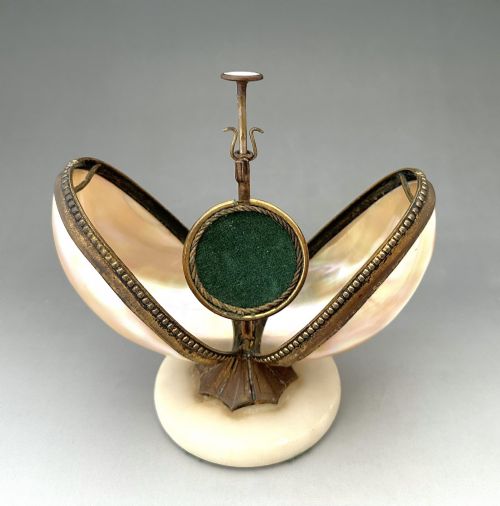
Smaller variations include pocket vinaigrettes and sewing accessories shaped like eggs, alongside treen stands and individual glass or wood cups. The variety reflects domestic utility across Georgian, Victorian, and Edwardian households.
Materials and construction methods
Metals form the structural basis for many examples, utilising sterling silver, silver plate, and electroplated nickel silver shaped into cruet frames and cups. Copper and brass appear in Arts and Crafts designs, whilst gold gilt provides interior enrichment for smaller silver items.
Pottery and glass represent the ceramic output, seen in Staffordshire earthenware moulded into hen and chick forms and cobalt glass blown into cups. Organic materials such as yew wood, oak, treen ware, and mother-of-pearl utilise traditional turning and carving techniques.
Antique Egg Holder Retail Price Guide 2026
Typical asking prices for egg holder among the pieces listed under this phrase on Sellingantiques today, from the lower quarter to the upper quarter. They describe what is for sale here now, not the wider market.
The selection includes formal Georgian silver cruet frames alongside Arts and Crafts copper cups and French oeufrier designs.
Distinctions in craftsmanship and design
The standard of silversmithing dictates the appeal of metal cruet stands, where crisp hallmarks, substantial gauge silver, and balanced frame architecture distinguish maker-marked pieces from plated alternatives. Engraved detailing and matching components within a set indicate higher workshop input.
Ceramic examples rely upon hand-painted glaze work and moulding definition, where Staffordshire hens show greater artistry through detailed feather rendering and rich colour application. Treen and wooden items depend on the choice of timber and precision of the turned revolving mechanism.
William Burwash·Charles Horner·Picards
The Antique Egg Holder Glossary
- Cruet stand
- A frame or stand designed to hold multiple condiment or tableware items, in this context specifically configured for eggs, spoons, and toast.
- Treen
- Small domestic wooden objects made by turning on a lathe or carving by hand, encompassing revolving stands and cups.
- Vinaigrette
- A small ornamental box with a perforated inner grille, historically used to hold a sponge soaked in aromatic vinegar and occasionally formed in an egg shape.
- Oeufrier
- A French term for an egg holder or cruet apparatus used at the dining table.
- Wrythen
- Twisted or spiral moulded glass decoration, seen in eighteenth-century cups.
Antique Egg Holder: Frequently Asked Questions
How do I date a silver egg cruet?
Silver cruet frames usually carry hallmarks that indicate the assay office, year letter, and maker's mark. Comparing the style of the feet and handle to Georgian or Edwardian design canons helps confirm the period.
Matching spoons or fitted compartments further assist in establishing whether the set remains in its original configuration.
What is a Staffordshire hen on nest?
These ceramic pieces consist of a nesting bird lid seated atop a basket base, designed during the Victorian period to keep eggs warm on the breakfast table or store them in the pantry.
Pottery examples range in scale from small domestic bowls to large table centrepieces.
Are wooden egg cups safe to use?
Antique wooden and treen ware cups are primarily collected as decorative items or for display within private collections. Modern cleaning methods and frequent exposure to moisture can damage aged timber and historic finishes.
Gentle dry dusting preserves the surface patina of yew, oak, and turned wood pieces.
What is the difference between silver plate and sterling silver?
Sterling silver contains a high purity of precious metal throughout and bears official assay office hallmarks. Silver plate involves a thin layer of silver applied over a base metal foundation, such as nickel silver.
Examining the marks and wear patterns reveals which metal composition an individual piece utilises.