



Antique Dwarf Cupboard
An antique dwarf cupboard offers low-profile storage in figured timbers, bringing architectural presence to smaller rooms.
Antique Dwarf Cupboard
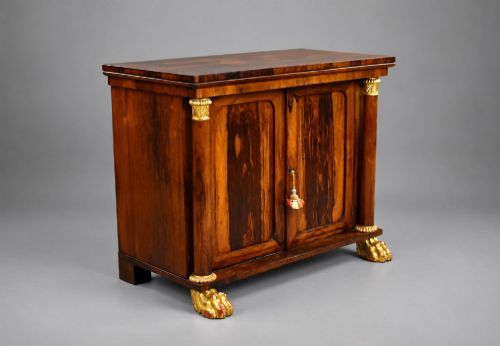
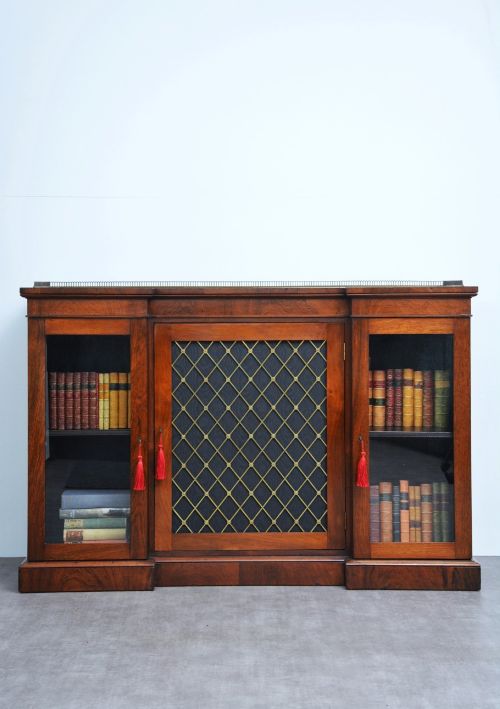
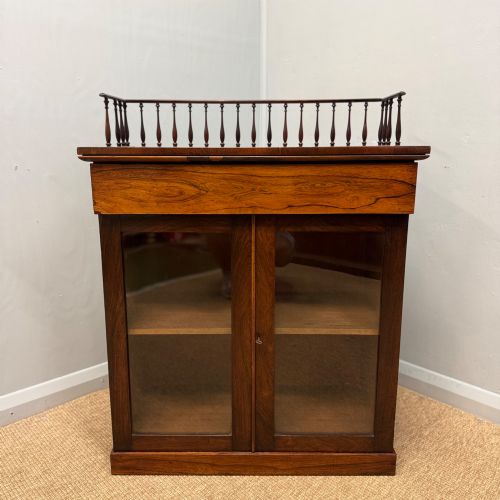
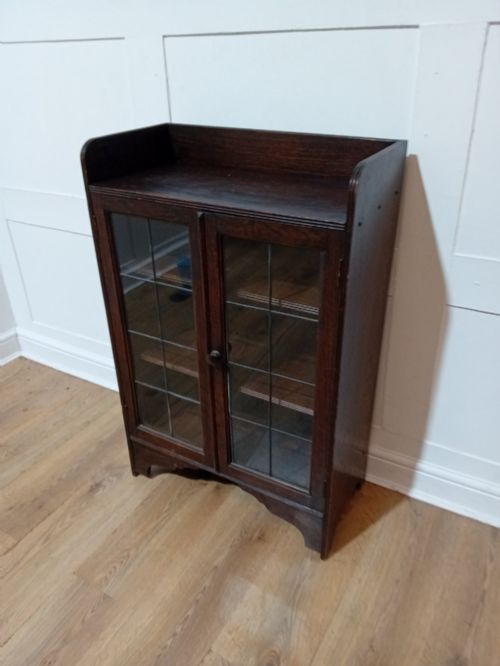
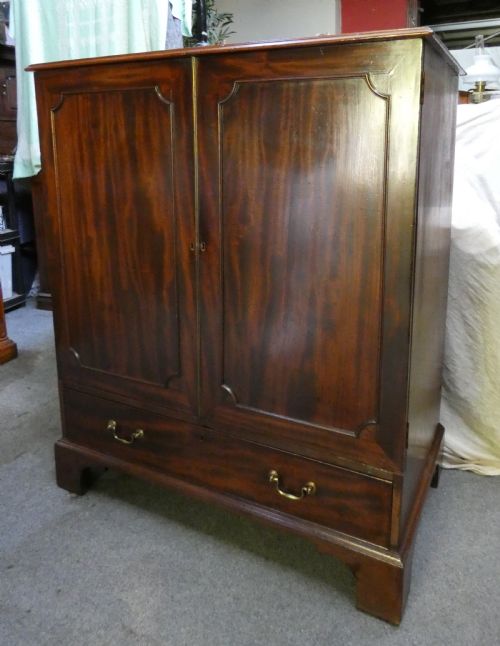
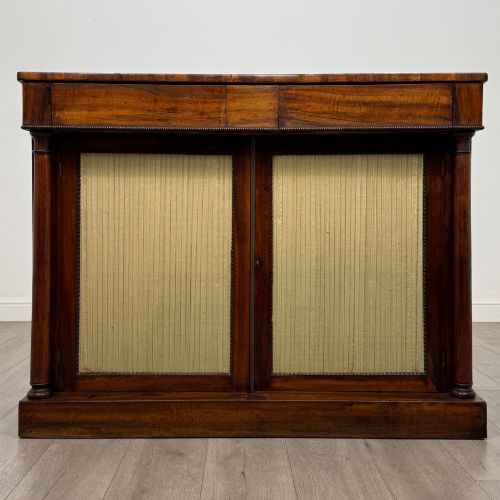
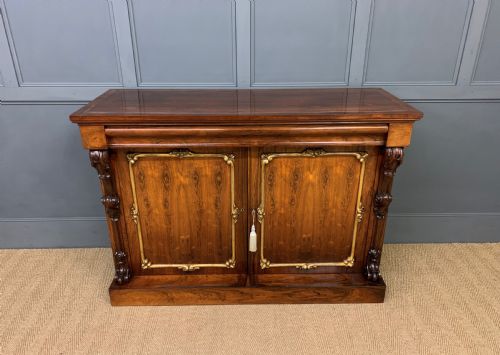
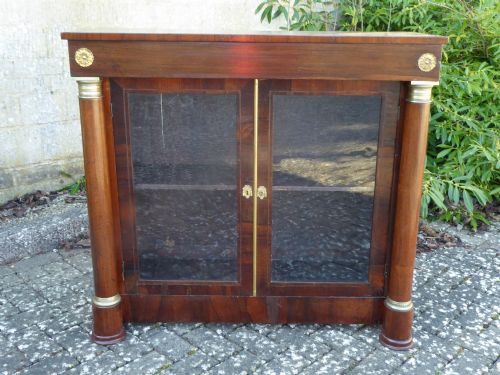
An antique dwarf cupboard is a low-slung storage piece spanning the Georgian, Regency, and Victorian eras, taking the form of side cabinets, bookcases, and linen presses. You will most frequently encounter mahogany and rosewood examples from the Regency period, often featuring glazed doors or brass inlay.
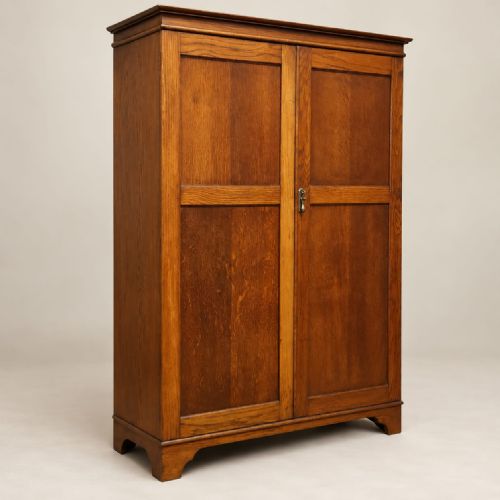
The inventory ranges from robust oak housekeeper pieces dating to the eighteenth century through to refined satin-grained rosewood cabinets of the nineteenth century. Makers such as Gillows contributed elevated designs, while country workshops produced simpler press cupboards in native timbers.
Materials and construction
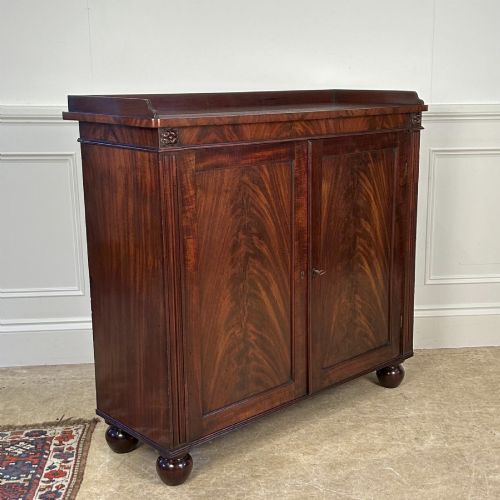
Cabinet makers utilised dense primary timbers including mahogany, rosewood, and oak, frequently applying flame mahogany veneer to create striking grain patterns on the doors. Secondary woods provided structural stability within the carcasses of these low cabinets.
Detailing relied on precision brass inlay, glazed door panels, and pleated chiffon inserts behind glass. Grain painting and polished finishes completed the exterior surfaces, protecting the wood while accentuating the natural figures.
Antique Dwarf Cupboard Retail Price Guide 2026
Typical asking prices for dwarf cupboard among the pieces listed under this phrase on Sellingantiques today, from the lower quarter to the upper quarter. They describe what is for sale here now, not the wider market.
The listings demonstrate a strong presence of Regency rosewood side cabinets alongside Georgian oak press cupboards.
Judging execution
Quality rests upon the selection of timber figures, such as matched flame mahogany veneer or richly grained rosewood, which dictate the visual impact of the front elevation. Superior examples demonstrate careful book-matching and tight joinery around doors and plinths.
The refinement of internal fittings, secondary drawer construction, and original hardware distinguish standard utility furniture from high-workshop commissions. Finer pieces incorporate subtle brass stringing or specialised internal sliding trays.
Gillows
The Antique Dwarf Cupboard Glossary
- Dwarf cupboard
- A low-height storage cabinet designed to sit beneath table height or window level. These pieces provide compact capacity without dominating wall space.
- Press cupboard
- A dual-purpose storage item featuring upper shelving or hanging space above lower drawers or cupboards. They were traditionally utilised for linens and clothing.
- Flame mahogany veneer
- A thin slice of mahogany timber cut from the fork of the tree to produce a flickering flame pattern. It is applied to primary surfaces for decoration.
- Pier cabinet
- A low cabinet built specifically to fit the wall space between windows. They frequently incorporate glass doors or open shelving.
- Regency
- An English design period spanning the early nineteenth century defined by classical restraint and archaeological influence. Pieces from this era often showcase rosewood and brass inlay.
Antique Dwarf Cupboard: Frequently Asked Questions
What is a dwarf cupboard?
A dwarf cupboard is a low-standing storage unit produced primarily during the Georgian and Regency periods. These versatile pieces function as side cabinets, bookcases, or linen presses.
Their reduced height allows them to sit comfortably beneath windows or along walls where standard tall cupboards would overwhelm the proportions of the room.
How do I date an antique cabinet?
Dating relies on identifying timber choices, construction methods, and prevailing decorative styles. Georgian pieces often utilise solid mahogany or oak with straightforward joinery, while Regency examples lean towards rosewood, brass inlay, and glazed panels.
Examining secondary woods inside drawers and internal partitions also helps establish the era of manufacture.
Where were dwarf cupboards used?
These cabinets suited various domestic spaces including libraries, parlours, and bedrooms. Housekeeper cupboards stored linens and provisions in larger country houses.
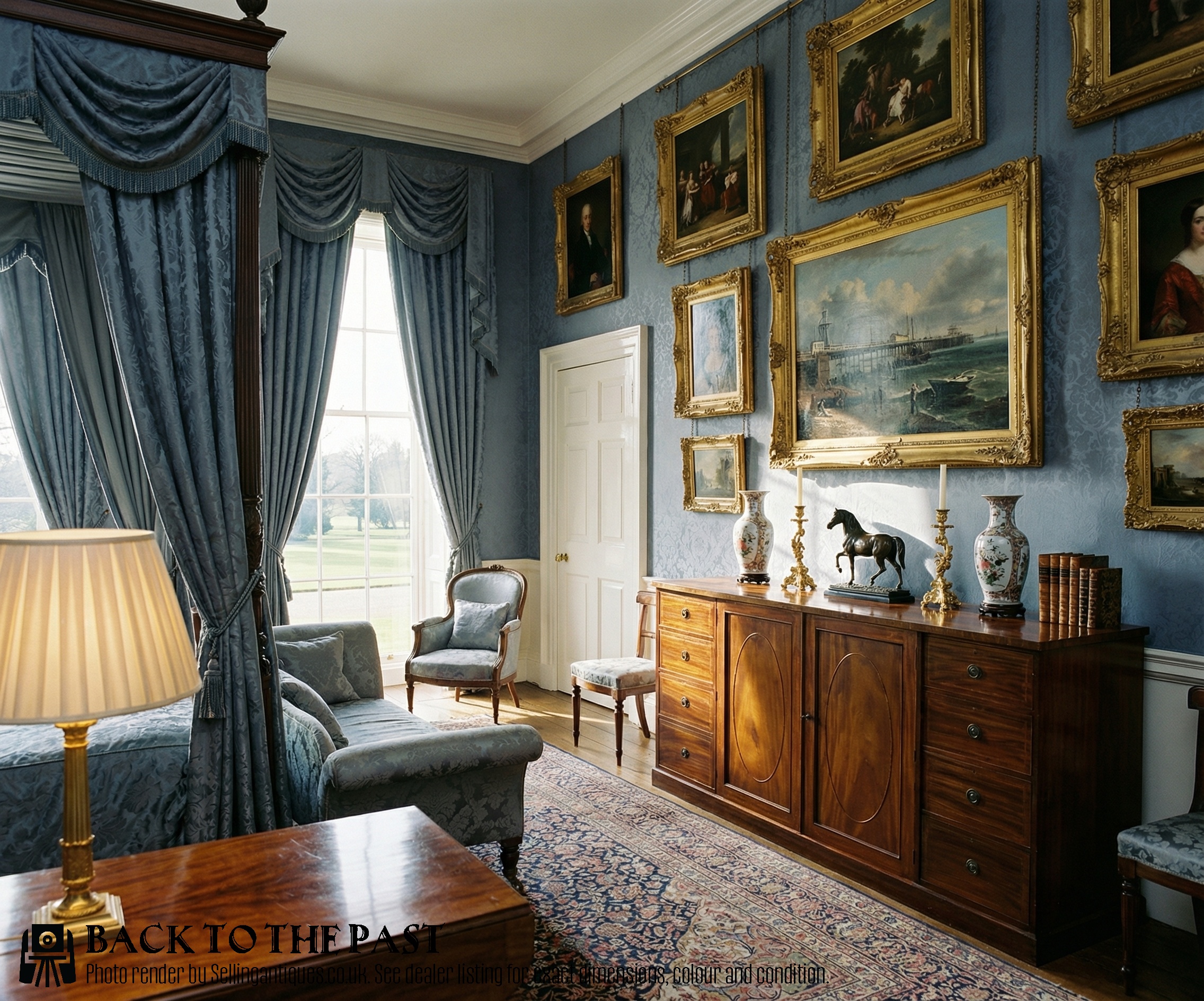
Drawing rooms utilised refined rosewood side cabinets to display books and decorative objects upon their upper surfaces.
Are these cabinets suitable for modern homes?
Their compact dimensions make them exceptionally practical for contemporary interiors requiring discreet storage. They function effectively as media units, sideboards, or hallway storage.
The restrained profiles of Regency and Georgian designs complement both traditional and minimalist modern decor schemes.