





Antique Dutch Chairs
Antique dutch chairs bring together centuries of dense walnut, intricate marquetry and regional vernacular forms.
Antique Dutch Chairs
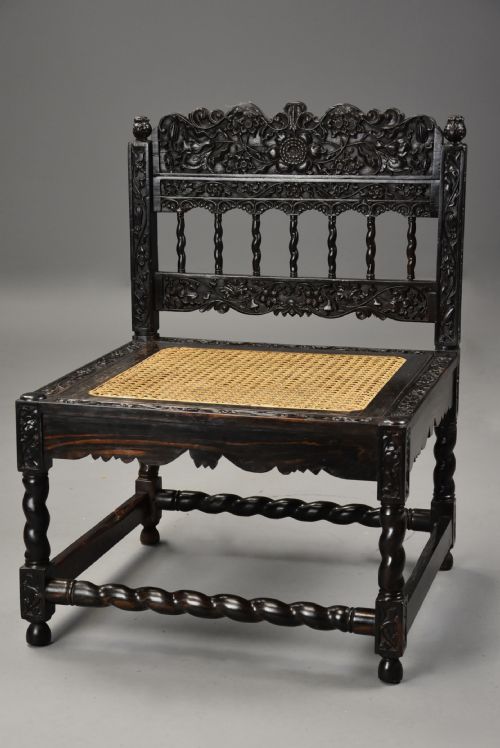
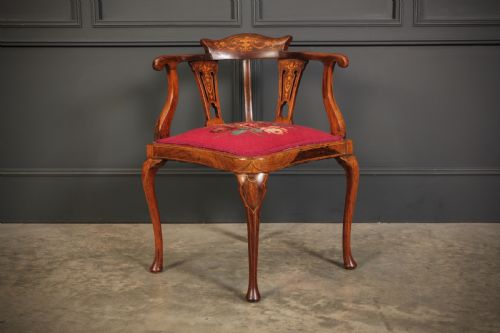
When you search for antique dutch chairs, you encounter a varied landscape ranging from grand urban seating to rustic provincial designs. The pieces on this page span several centuries, including 17th, 18th and 19th century examples reflecting Baroque, Rococo and regional tastes.
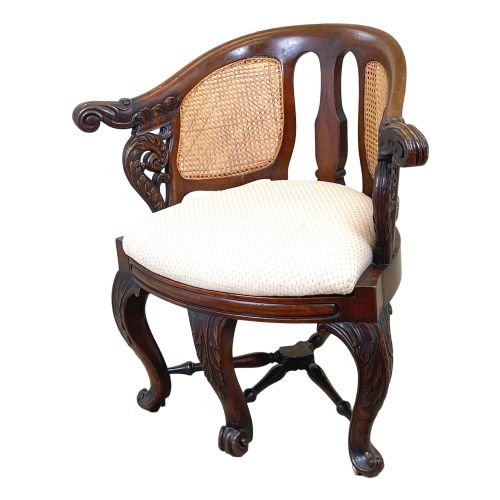
You are most likely to meet walnut high-back dining chairs decorated with floral marquetry, alongside side chairs, armchairs and occasional miniature models. Forms extend from formal mahogany seating to ash ladder backs and country lambing chairs.
The origin stretches across urban workshops and provincial centres, capturing both high-style Anglo-Dutch interpretations and vernacular furniture traditions.
How they were made
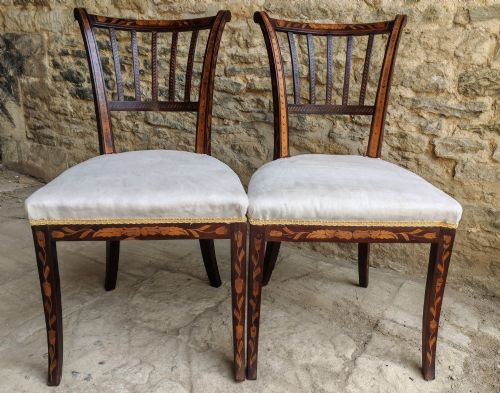
Cabinetmakers utilised dense timbers such as walnut, mahogany, oak and fruitwood, often building structural frames to support elaborate decorative schemes. Marquetry inlay played a central role, employing lighter woods and tinted veneers to create floral and foliate motifs across splats and backrests.
Surface finish depended on the regional workshop, combining carved elements, parcel-gilding, lacquered decoration and hand-painting in specific vernacular styles like Hindeloopen. Upholstery materials included early textiles, leather, fabric and needlepoint fixed to frames with traditional methods.
Antique Dutch Chairs Retail Price Guide 2026
Typical asking prices for dutch chairs among the pieces listed under this phrase on Sellingantiques today, from the lower quarter to the upper quarter. They describe what is for sale here now, not the wider market.
The inventory spans the seventeenth, eighteenth, nineteenth, and twentieth centuries.
What varies in quality
The standard of a piece rests upon the crispness of the carving and the precision of the marquetry inlay. Superior examples display tight botanical detail and harmonious timber selection, whereas lesser pieces show simplified cutting and mismatched veneers.
Structural integrity also separates the range, as solid timber framing and original joinery retain stability better than heavily restored or loose carcases. The retention of original surfaces, such as early gilding, paint or lacquer, distinguishes standard specimens from heavily altered ones.
Daniel Marot·S&H Jewell·Roosje Hindeloopen
The Antique Dutch Chairs Glossary
- Marquetry
- Decorative veneer work forming pictures or patterns by fitting together small pieces of wood. This technique defines many formal dining chairs from the eighteenth century.
- Parcel-Gilding
- The practice of gilding only specific portions of an object, usually carved details. It highlights specific lines against a dark walnut or mahogany ground.
- Ladder Back
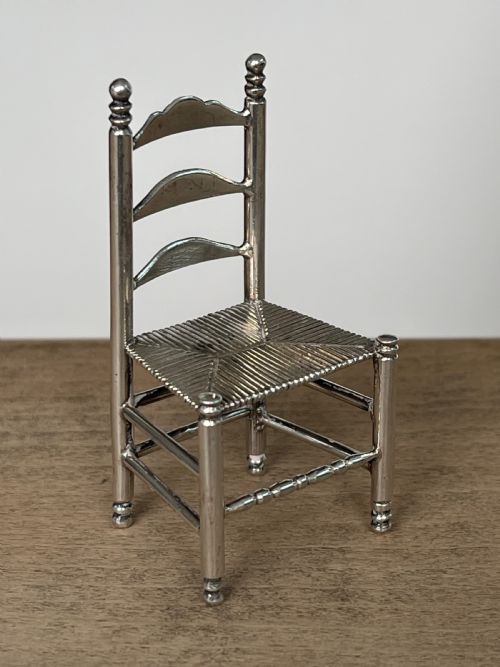
- A chair back featuring multiple horizontal wooden slats between the upright posts. This form appears in provincial seating.
- Lambing Chair
- A vernacular enclosed wooden armchair with a high back and solid sides. It served practical heating and shelter purposes in domestic interiors.
- Delftware
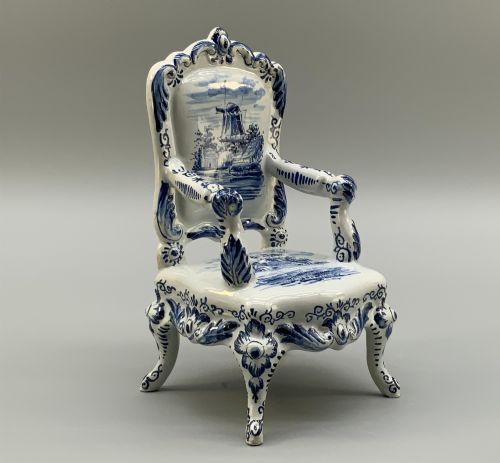
- Tin-glazed earthenware associated with blue and white ceramics. Miniature furniture pieces replicate this ceramic tradition.
Antique Dutch Chairs: Frequently Asked Questions
How do I identify marquetry on chairs?
Marquetry appears as contrasting inlaid wood veneers cut into floral, urn or bird motifs across the backrest and splat. Close inspection reveals the grain direction of the individual veneer pieces.
Finer examples integrate multiple fruitwoods and shaded elements to achieve depth, while simpler versions rely on basic geometric or repetitive floral outlines.
What is an Anglo-Dutch chair?
An Anglo-Dutch chair reflects design influences traded between England and the Netherlands during the late seventeenth century. These pieces typically feature walnut frames, high backs and cabriole legs.
They combine the structured proportions popular in English seating with the rich ornamentation and tall splats favoured by Dutch cabinetmakers.
Are miniature chairs dollhouse furniture?
Miniature chairs and silver models served various purposes, including cabinet display, dollhouse furnishing and apprentice demonstration pieces. They replicate full-scale chairs with surprising structural accuracy.
Craftsmen produced these small items in wood, porcelain and silver to showcase skill or decorate elite miniature rooms.
What is a Burgermeister's chair?
A Burgermeister's chair is a heavy, elaborately carved ceremonial armchair associated with civic dignitaries. These formal seats often feature extensive woodwork and solid proportions.
They were designed for administrative or public settings rather than everyday domestic dining.
How should I care for antique wood?
Maintain antique wooden chairs by keeping them away from direct heat sources and fluctuating humidity. Consistent indoor conditions prevent timber shrinkage and veneer lifting.
Apply traditional wax polish sparingly to nourish the surface without building up excessive residues that obscure the patina.