

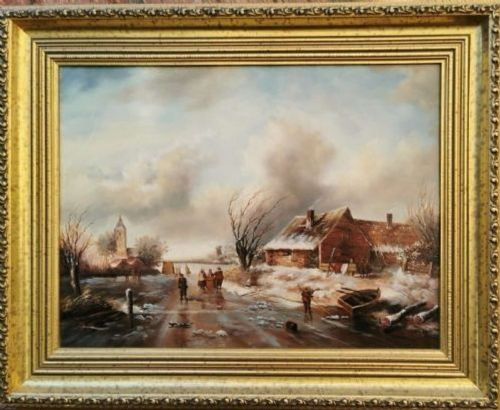
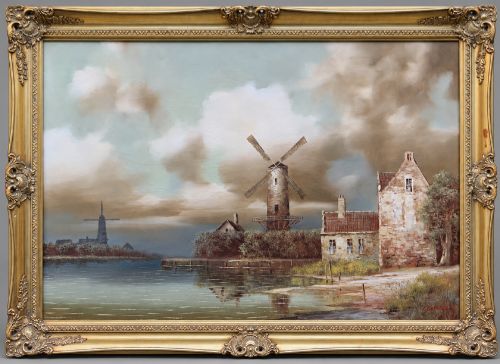


Antique Dutch Canal Scene
These antique dutch canal scene works bring atmospheric waterways and historic windmills directly into your room through textured brushwork.
Antique Dutch Canal Scene
An antique dutch canal scene captures the atmospheric waterways, historic windmills, and winter landscapes characteristic of the Low Countries. These works range across the nineteenth and twentieth centuries, reflecting enduring traditions in regional painting.
Most examples found here are oil paintings on canvas, often housed in gilt frames. Subjects span quiet barge routes, urban quaysides such as Rotterdam, and freezing winter vistas.
Makers and artists working within these traditions include figures such as William Dommersen and Jan van Couver. Their compositions celebrate the interplay of light and water peculiar to Dutch topography.
How they were made
Makers applied oil paint to stretched canvas or wooden panels, building rich textures that capture the shifting light on water and snow. Artists employed varied brush techniques, from the tight detail of nineteenth-century realism to the looser strokes of impressionism.
Antique Dutch Canal Scene Retail Price Guide 2026
Typical asking prices for dutch canal scene among the pieces listed under this phrase on Sellingantiques today, from the lower quarter to the upper quarter. They describe what is for sale here now, not the wider market.
Several canvases swap quiet windmills for bustling Rotterdam ports, proving Dutch ducks had to dodge barges even then.
What varies in quality
Quality rests upon the sureness of the brushwork and the artist's command of atmospheric light. Stronger paintings convey depth and movement in the water without relying on formulaic details.
The integrity of the canvas surface and the preservation of the original giltwood frame heavily influence the standing of a piece. Finer examples retain their original surface texture and structural stability without intrusive restoration.
William Raymond Dommersen·Jan van Couver·William Dommersen
The Antique Dutch Canal Scene Glossary
- Dutch School
- A broad term describing artists trained in or influenced by the artistic traditions of the Netherlands. This grouping spans centuries of landscape, maritime, and genre painting.
- Gesso
- A plaster-like mixture applied to wooden frames as a smooth base before gilding. It allows for crisp decorative moulding.
- Giltwood
- Wood that has been coated with thin gold leaf or a metallic finish. It provides a bright border for traditional oil paintings.
- Realism
- An artistic approach focused on depicting subjects truthfully and without idealisation. In these scenes, it manifests in accurate portrayals of architecture, boats, and atmospheric conditions.
Antique Dutch Canal Scene: Frequently Asked Questions
What subjects appear in these paintings?
These works typically depict waterways, windmills, barges, and urban quaysides across the Netherlands. Winter landscapes with frozen canals also feature prominently among the selections.
Artists frequently focused on the unique light reflecting off Dutch rivers and harbours. This creates moody, atmospheric compositions rooted in regional topography.
How should I care for an oil painting?
Keep canvases away from direct sunlight and sources of extreme heat to prevent the oil paint and canvas from drying out. Maintain a stable room temperature to protect both the painting and its wooden frame.
Dust the surface gently with a soft, dry brush when necessary. Avoid using liquid cleaners or household solvents on the painted canvas.
How do I identify the period?
Examine the materials of the stretcher and the style of the canvas preparation. Nineteenth-century works often display traditional realism or maritime detailing, while twentieth-century pieces may show impressionist influences.
Frame construction and framing materials also offer clues to the age. Gesso and giltwood styles changed over the decades, helping to date the complete object.
Are these paintings signed by the artist?
Some pieces bear artist signatures or attributions, while others remain unsigned examples of the wider Dutch school. Signatures should be examined in context with the canvas age and brush style.
Unsigned works still demonstrate the technical skill and palette typical of their period. Attribution often relies on stylistic comparisons rather than explicit signatures.