
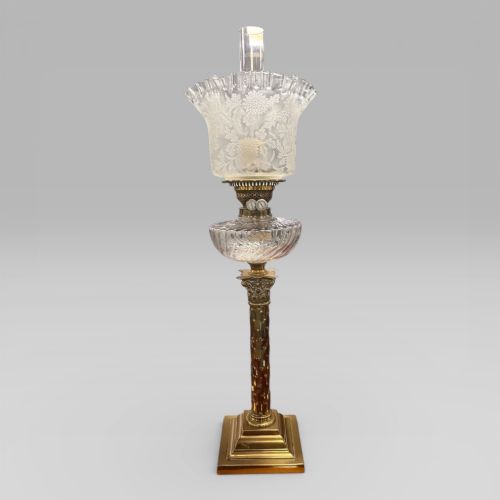
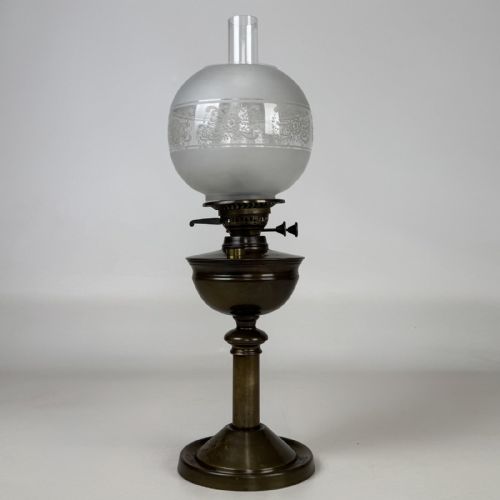
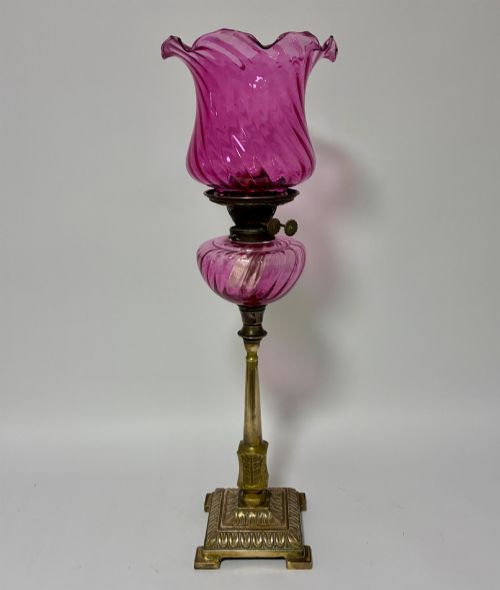
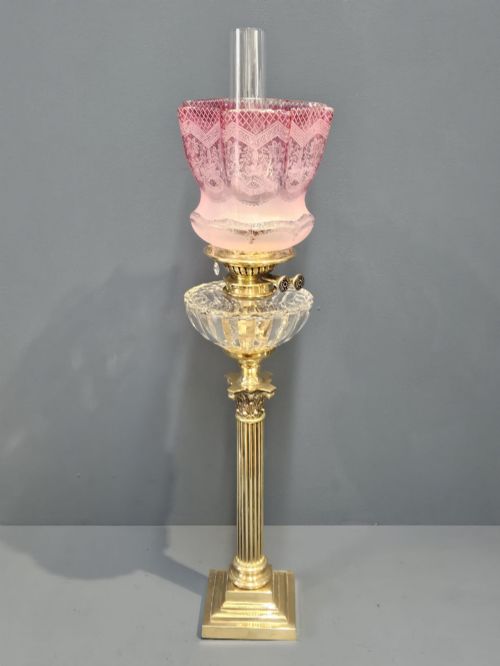

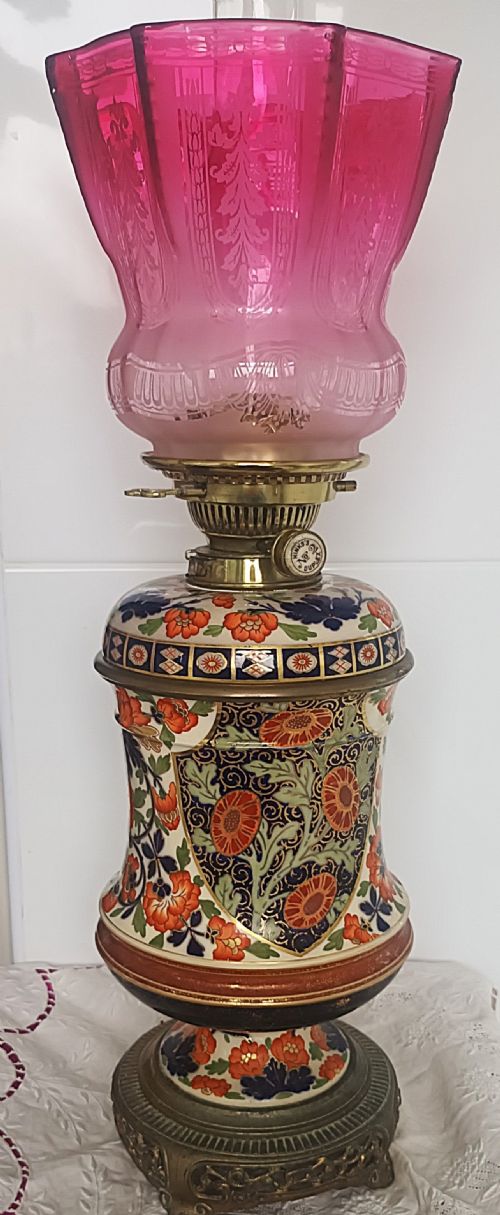


Antique Duplex Burner
An antique duplex burner provides the twin-wick illumination that lit Victorian and Edwardian rooms with a steadier, brighter flame than single-wick predecessors.
Antique Duplex Burner
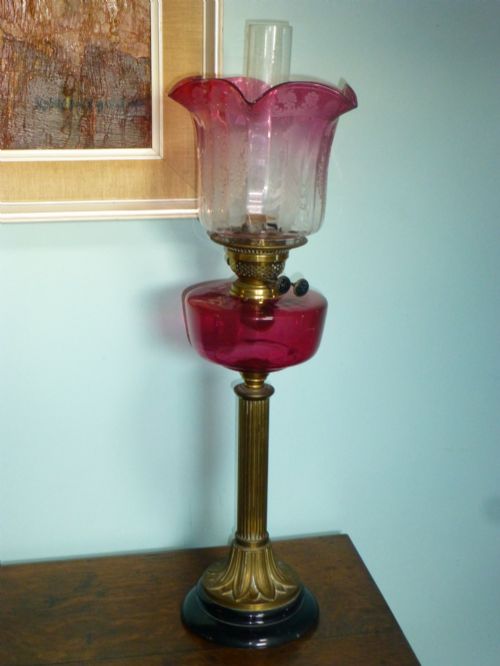
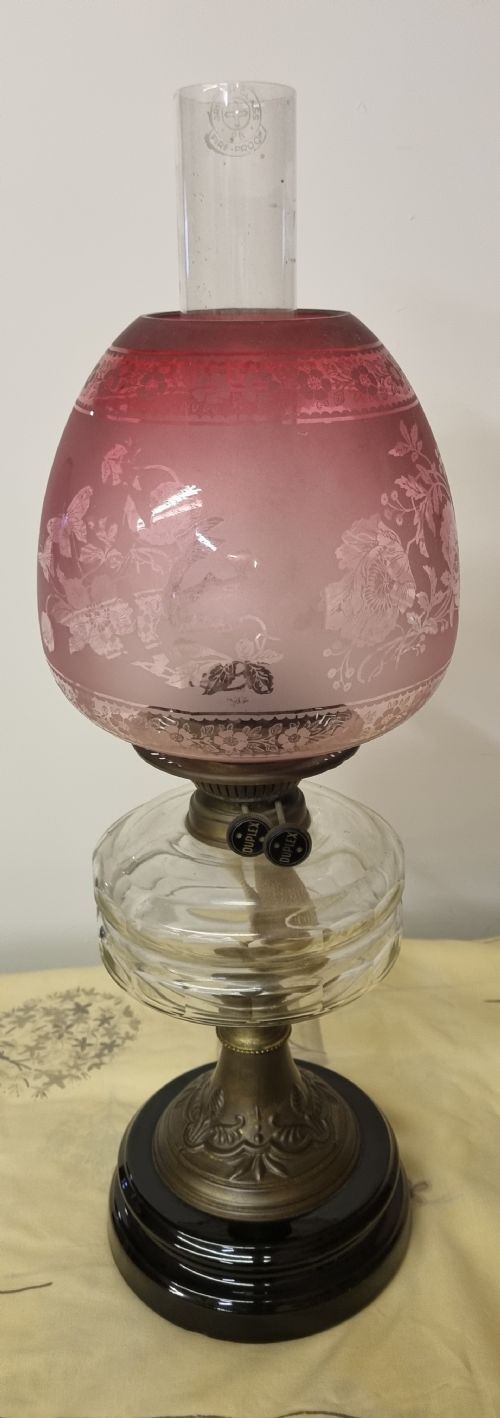
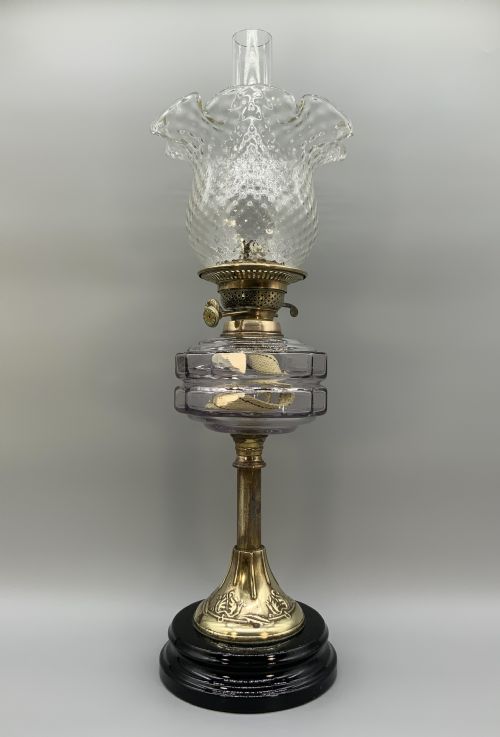
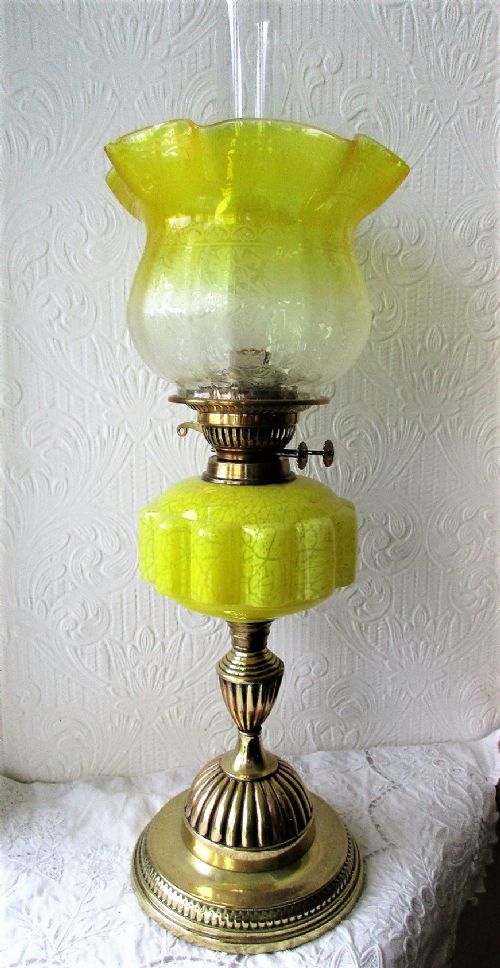
When you search for an antique duplex burner, you encounter tall table oil lamps configured with twin wicks to burn paraffin efficiently. The examples on this page span the Victorian and Edwardian periods, stretching from the mid-nineteenth century into the early twentieth century.
Most pieces combine a heavy metal stand with a coloured glass or ceramic font. You will frequently meet brass columns paired with cranberry, frosted, or opaline glass shades, alongside ceramic and crystal bodies.
Tall pillar designs, telescopic stands, and Corinthian columns appear regularly among the oil lamps listed here. These taller table models served as principal light sources in nineteenth-century homes before electricity reached every room.
Materials and construction
Makers built these lamps using cast and spun brass for the structural columns and heavy bases, often adding ormolu or silver plate for decorative effect. The metalwork provides the necessary weight to balance the tall glass or ceramic fonts and shades above.
Fonts and shades showcase glassmaking techniques of the period, including hand-blown cranberry glass, cut crystal, opaline glass, and etched tulip shades. Ceramic and porcelain bodies also appear, sometimes painted with botanical motifs or combined with brass mountings.
Listings span the Victorian and Edwardian periods, incorporating brass, cranberry glass, opaline glass, and ceramic materials in various column forms.
What separates the best from the rest
The distinction between standard domestic lighting and the finest surviving pieces lies in the ambition of the design and the heaviness of the casting. Telescopic mechanisms, reeded brass columns, and substantial Corinthian capitals mark out the upper tier of manufacture.
Quality also shows in the matching of components, particularly where hand-blown cranberry or etched glass shades accompany elaborately decorated ceramic fonts. Maker-signed mechanisms from established firms indicate higher workshop standards.
Hinks / Taylor Tunnicliff·Messenger·Young's
The Antique Duplex Burner Glossary
- Duplex burner
- A double-wick mechanism designed to burn paraffin with increased brightness and stability. This fitting defines the category of lamp you are examining.
- Font
- The reservoir that holds the paraffin beneath the burner. These components appear in glass, ceramic, porcelain, and metal.
- Opaline glass
- A pale, translucent white glass that diffuses light softly. It is commonly found in Edwardian lamp shades.
- Ormolu
- Gilded bronze or brass used for decorative mounts and fittings. This finish adds a bright metallic lustre to the lamp base.
Antique Duplex Burner: Frequently Asked Questions
What is an antique duplex burner?
A duplex burner is the double-wick mechanism fitted to nineteenth-century oil lamps to produce a brighter flame. It uses two parallel wicks controlled by separate thumbwheels.
These burners allowed Victorian households to achieve stronger illumination from paraffin than older single-wick lamps provided.
How do I date an oil lamp?
Dating relies on stylistic clues such as the form of the brass column, the shape of the shade, and the materials used in the font. Victorian pieces often feature classical revival columns, while Edwardian examples show lighter proportions.
Maker names stamped on the brass burner thumbscrews also help establish the period of manufacture.
What materials were used for the shades?
Shades on these lamps are predominantly glass, utilising hand-blown cranberry glass, frosted glass, or translucent opaline. Etched floral designs and tulip shapes are typical of the Victorian period.
Some examples also pair brass frames with ceramic elements to match the font.
Can these lamps still burn oil?
Many surviving lamps retain their original brass burners and mechanisms, though most modern buyers use them primarily as decorative objects. Restoring them for functional use requires checking the condition of the wicks and the integrity of the font.
Safety guidelines recommend professional inspection before attempting to burn paraffin in antique reservoirs.