

Antique Dresser with Potboard
An antique dresser with potboard brings honest rustic utility to a kitchen, anchored by its sturdy lower display shelf.
Antique Dresser with Potboard
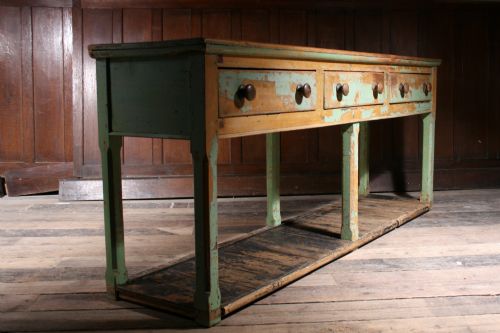
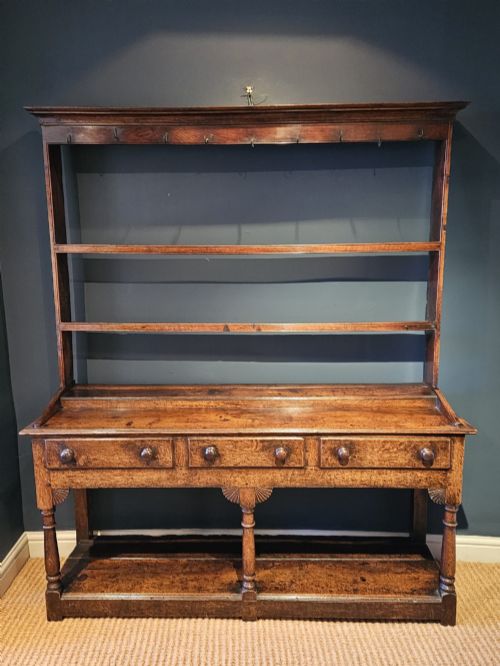
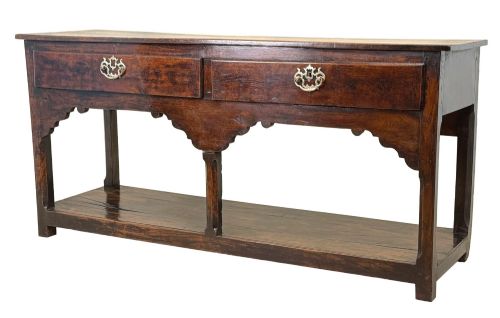
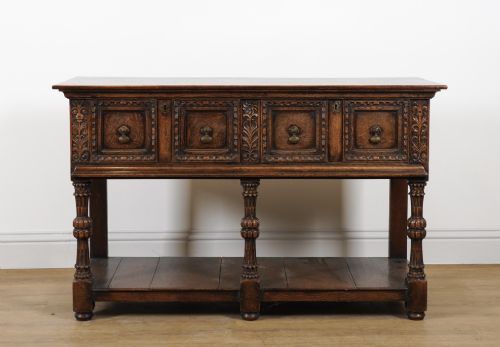
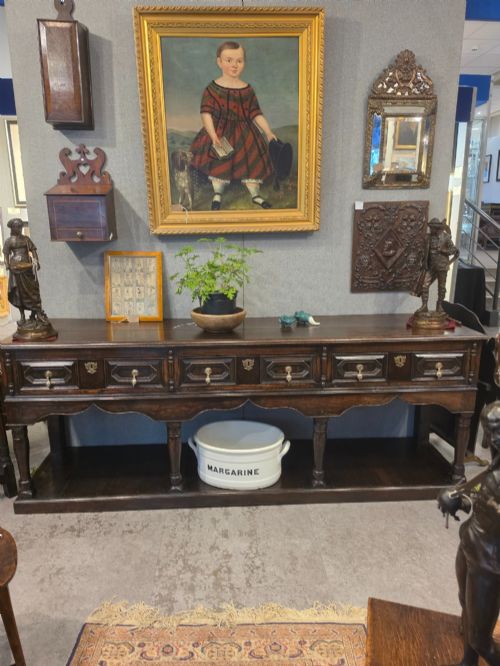
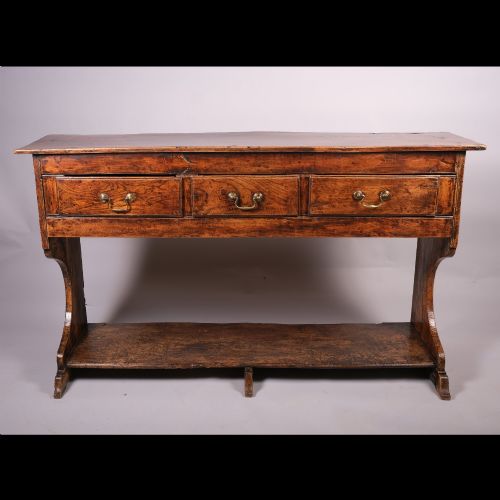
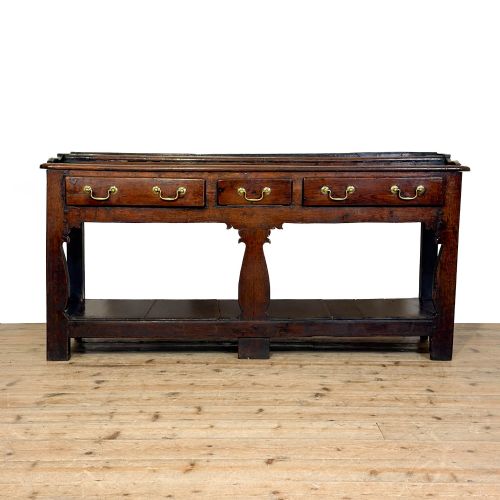
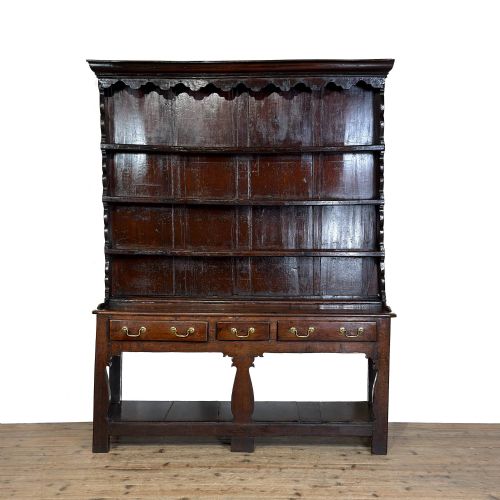
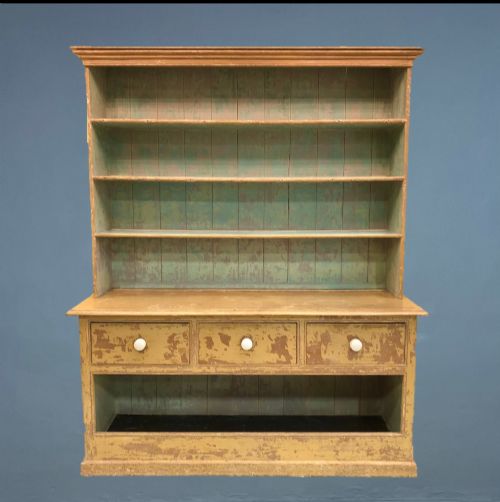
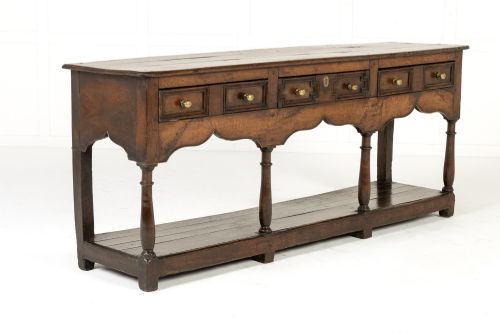
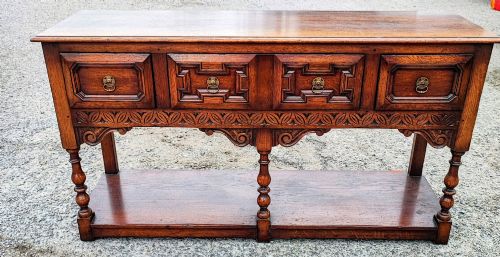
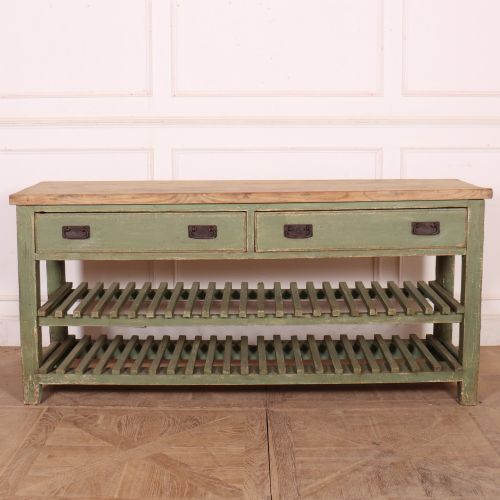
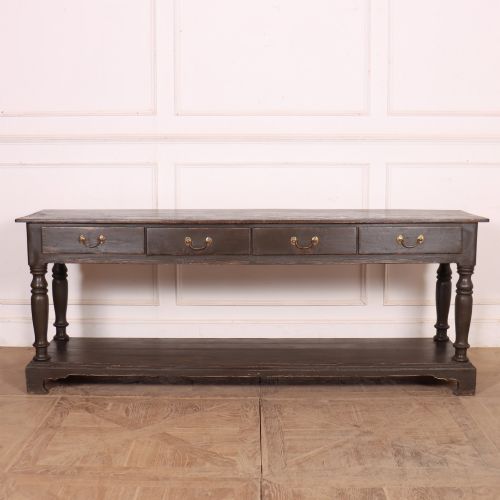
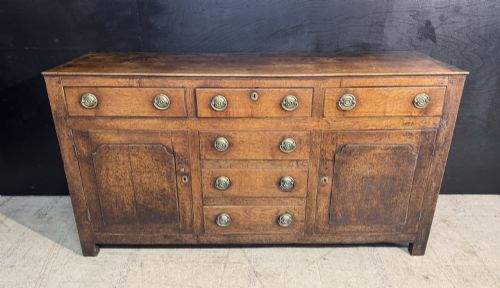
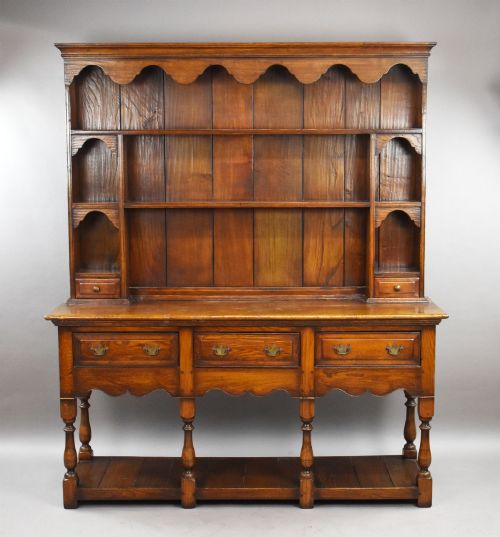
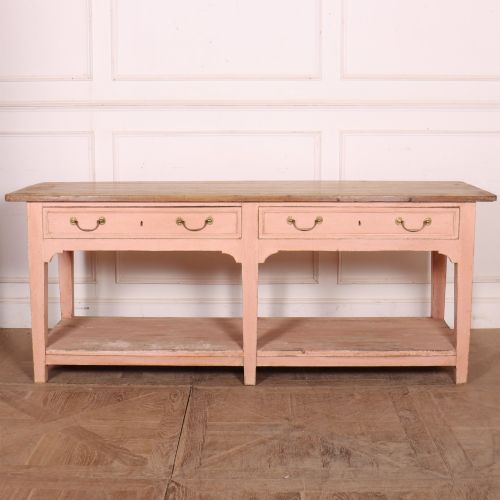
An antique dresser with potboard serves as a substantial utilitarian storage piece, typically featuring drawers above an open lower platform. Buyers encounter examples stemming primarily from the eighteenth and nineteenth centuries, often originating from Welsh and English country workshops.
The distinct lower potboard provides an open tier traditionally used for storing heavy pots and pans. These regional country pieces showcase robust vernacular designs rather than formal metropolitan refinement.
Surviving forms range from open rack dressers to low dresser bases and sideboards. Native timbers such as oak and pine dominate the selection, frequently displaying deep original patination accumulated over generations.
Materials and construction methods
Cabinetmakers relied heavily on native timbers, utilising solid oak for durable framing alongside pine for secondary sections. Selected pieces incorporate elm or burr walnut to create varied textural contrast.
Joinery methods reflect traditional country workshop practices, employing pegged mortise and tenon joints to ensure structural longevity. Iron and brass hardware, including period pull handles and hinges, fasten the structural elements.
Antique Dresser with Potboard Retail Price Guide 2026
Typical asking prices for dresser with potboard among the pieces listed under this phrase on Sellingantiques today, from the lower quarter to the upper quarter. They describe what is for sale here now, not the wider market.
Many historic potboards still bear faint ring marks left by centuries of heavy iron pots sitting directly on the bare wood.
Judging quality in country dressers
Quality rests upon the integrity of the timber and the depth of surface patination. Untouched primary surfaces with natural wear distinguish superior examples from heavily restored counterparts.
Proportion and structural balance dictate overall desirability. Pieces retaining original potboards, backboards, and unaltered drawer configurations achieve greater distinction among collectors.
The Antique Dresser with Potboard Glossary
- Potboard
- The open lower shelf fitted beneath a dresser base. It was designed originally for stacking heavy pots and culinary utensils.
- Patina
- The surface sheen and colour developed over decades of use and waxing. It indicates genuine age and handling.
- Vernacular
- Regional furniture built by local craftsmen for everyday domestic use rather than following strict London court styles.
- Dresser base
- The lower section of a kitchen dresser featuring drawers and cupboards without the upper plate rack.
Antique Dresser with Potboard: Frequently Asked Questions
What is a potboard dresser?
A potboard dresser is a traditional kitchen storage unit featuring a flat open shelf positioned near the floor beneath the main drawers.
This lower platform distinguished everyday country furniture from formal urban sideboards by offering accessible storage for heavy cookware.
How do I style a potboard dresser?
You can use the open potboard shelf to display large ceramic bowls, heavy copper pans, or stacks of heavy stoneware.
The upper surface and any accompanying plate racks suit the display of antique kitchenalia and everyday tableware.
Are these dressers English or Welsh?
These pieces emerge from both English and Welsh country traditions, sharing robust vernacular construction methods and local timber usage.
Welsh examples often exhibit specific regional proportions and distinct local cabinetry traits passed down through rural workshops.
What timber was used?
Cabinetmakers primarily constructed these pieces using native timbers such as sturdy oak, pine, and occasional elm.
Selected later variants incorporate decorative veneers like burr walnut to provide visual contrast on drawer fronts and surfaces.