


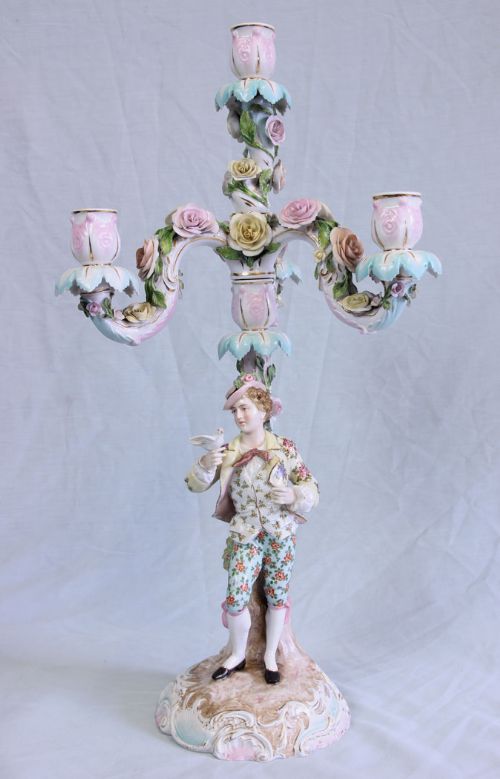


Antique Dresden Candlestick
These antique dresden candlestick pieces bring nineteenth century German porcelain artistry and figural grace to a table or mantelpiece.
Antique Dresden Candlestick
An antique dresden candlestick brings nineteenth century German porcelain craftsmanship to the home, appearing in forms such as single candlesticks and multi-arm candelabra. The selection centres on nineteenth century creations, frequently featuring figures or allegorical designs derived from German manufactories.
Makers and factories like Sitzendorf and Volkstedt shape the core of this group, often employing figural motifs such as gardeners, shepherds, or seasonal allegories. Pieces frequently date from the eighteen eighties and eighteen nineties, maintaining a distinct Rococo Revival aesthetic.
Buyers encounter both single items and matched pairs, mounted on floral bases or enriched with detailed sculptural work. These porcelain objects serve as both functional lighting supports and decorative focal points.
How they were made
Detailing often includes gold leaf, gilt, or gold gilt highlights applied to scrollwork and bases. These decorative metals catch the light and complement the white and painted porcelain surfaces underneath.
Listings feature items exclusively from the nineteenth century, encompassing periods from eighteen eighty to nineteen hundred.
What varies in quality
The refinement of the modelling separates standard production from superior work, particularly in the expression and proportion of figural elements like shepherds or allegorical figures. Finer pieces display crisp definition in moulded leaves and petals on the floral bases.
The application of enamel paint and gold gilt dictates visual depth, where skilled hand painting creates subtle gradients and precise metallic accents. The complexity of multi-arm candelabra construction also influences the overall accomplishment of the work.
Volkstedt Porcelain·Sitzendorf Porcelain·Helena Wolfsohn·Triebner ENS and Eckert
The Antique Dresden Candlestick Glossary
- Rococo Revival
- A nineteenth century design style characterised by asymmetrical scrollwork, C-scrolls, and abundant naturalistic ornamentation. This aesthetic draws inspiration from earlier eighteenth century French motifs.
- Allegorical figure
- A symbolic human or mythological representation embodying an abstract idea, season, or concept. Such figures appear frequently as sculptural supports in nineteenth century German porcelain.
- Candelabra
- A branched lighting fixture designed to hold multiple candles simultaneously. These pieces often feature three or more arms extending from a central stem.
- Porcelain
- A ceramic material made by heating raw components to high temperatures, resulting in a vitrified, translucent body. It forms the primary medium for these German decorative objects.
Antique Dresden Candlestick: Frequently Asked Questions
What periods do these pieces date from?
The listings span the nineteenth century, with specific dates clustering around eighteen eighty, eighteen ninety, and nineteen hundred. Most examples originate from German factories active during this era.
Production methods during these decades relied on traditional handmade porcelain techniques combined with revivalist design styles.
How were candelabra used originally?
These branched lighting pieces stood on dining tables, sideboards, or mantels to illuminate rooms before electric lighting became common. They held multiple candles to provide both practical illumination and a decorative display.
Over time, their role shifted primarily toward ornamental use in period interiors.
How do figural candlesticks differ from standard ones?
Figural candlesticks incorporate sculptural human forms, such as gardeners, shepherds, or allegorical representations, into the stem or base. Standard candlesticks rely instead on architectural columns, plain stems, or purely floral motifs.
The figural versions reflect the narrative and decorative ambitions of nineteenth century German porcelain manufactories.