
Antique Draw Table
An antique draw table extends smoothly at each end to seat more guests, uniting clever mechanical design with sturdy everyday dining use.
Antique Draw Table
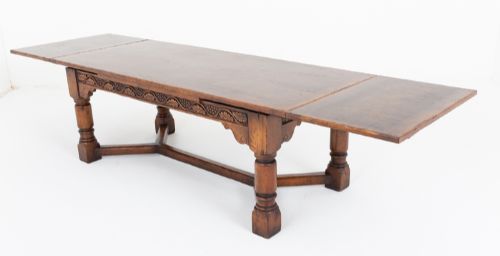
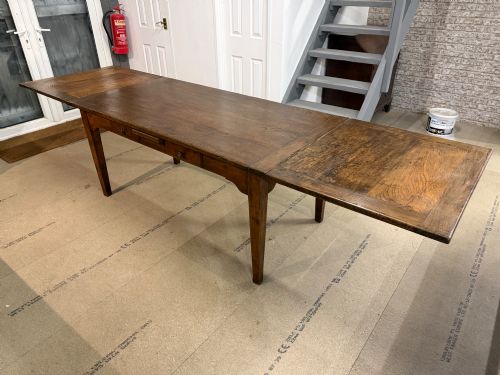
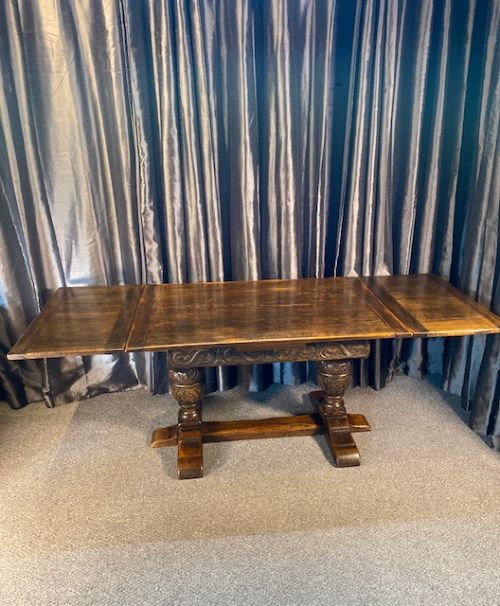
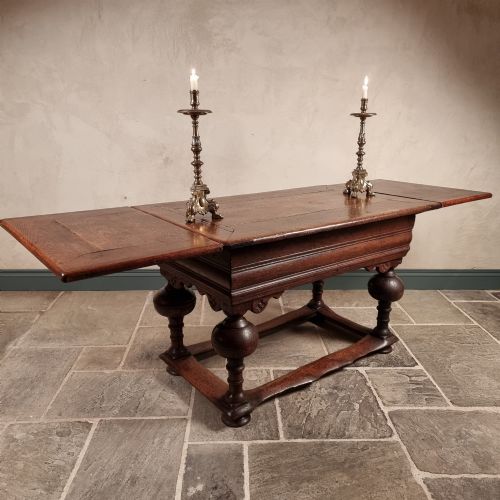
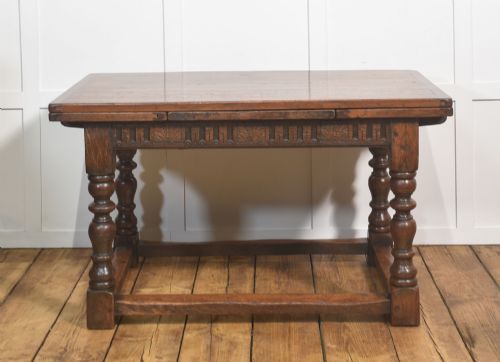
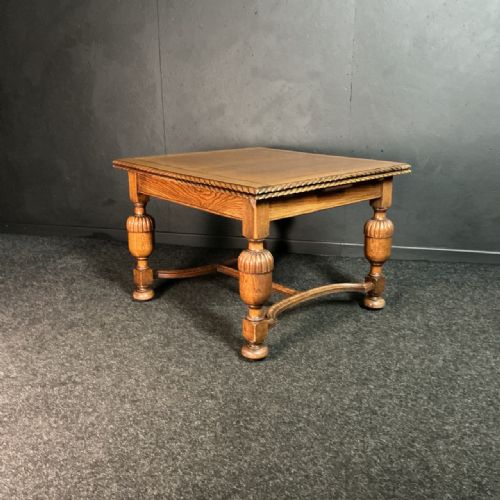
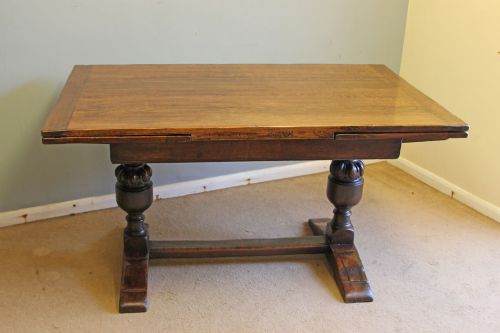
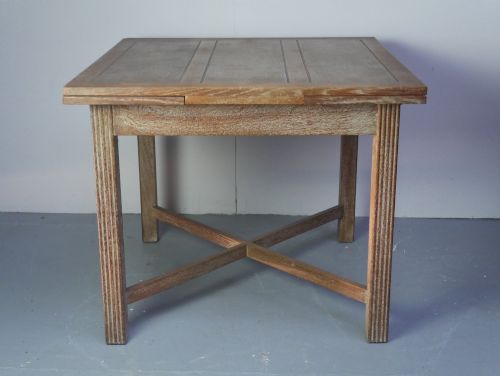
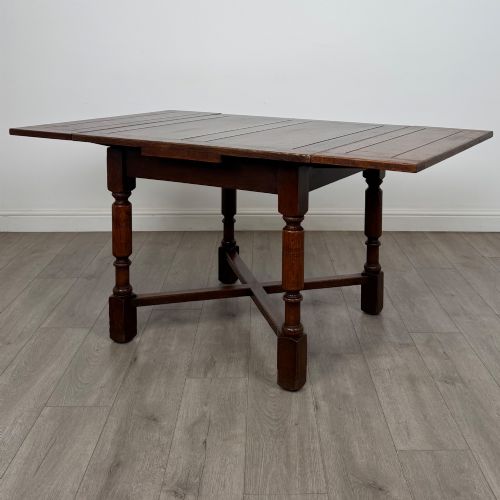
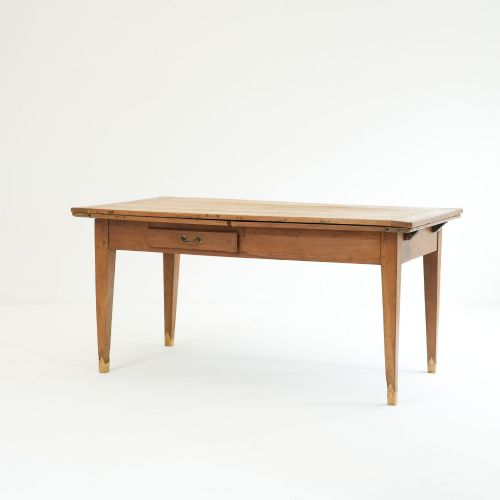
An antique draw table is a dining table designed with leaves hidden beneath the main top that pull out to extend the surface. When searching for an antique draw table, buyers encounter mostly oak examples from the early twentieth century alongside seventeenth-century prototypes and nineteenth-century continental fruitwood farmhouse pieces.
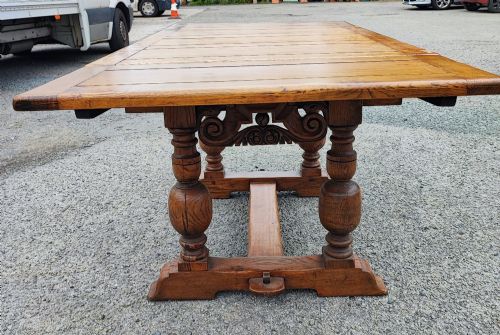
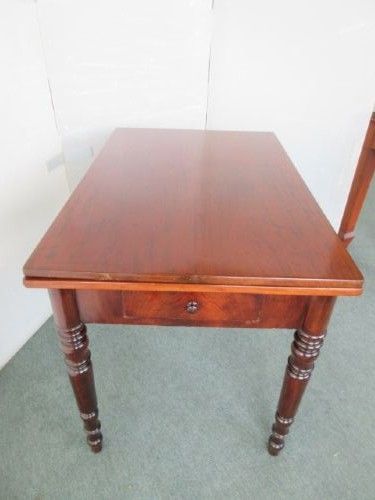
The form relies on underleaves that slide out from each end while the main top drops slightly into position to create a flush surface. Regional variations range from heavy oak Jacobean style refectory tables to French provincial fruitwood designs and occasional mahogany pieces from the Georgian and Regency periods.
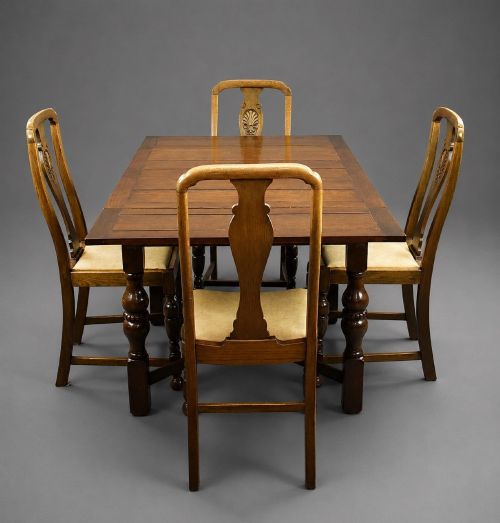
Most pieces function primarily as dining tables designed for daily household use rather than purely decorative furniture. The proportions vary from compact farmhouse tables to large extending refectory formats built to accommodate gatherings.
Materials and construction methods
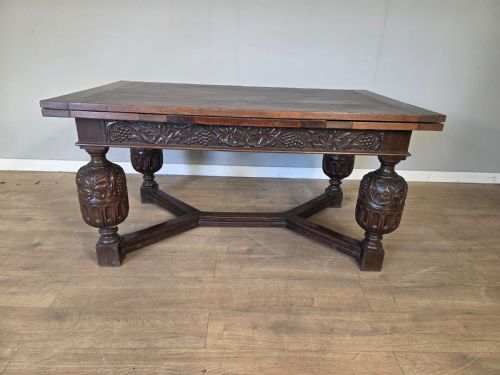
Solid oak provides the structural backbone for the majority of these extending tables, supplemented by fruitwood, cherry, mahogany, and walnut in French and English workshops. Carpenters relied on sturdy tenon joints and carved wooden framing to support the sliding mechanism beneath the top.
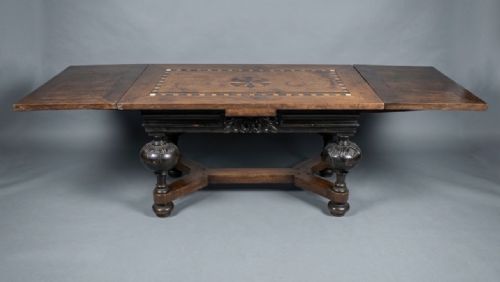
The extension mechanism uses runners fixed beneath the main surface that guide the end leaves straight and level when pulled. Cabinetmakers incorporated parquetry, wood inlay, and carved friezes to decorate the aprons and bases of finer dining tables.
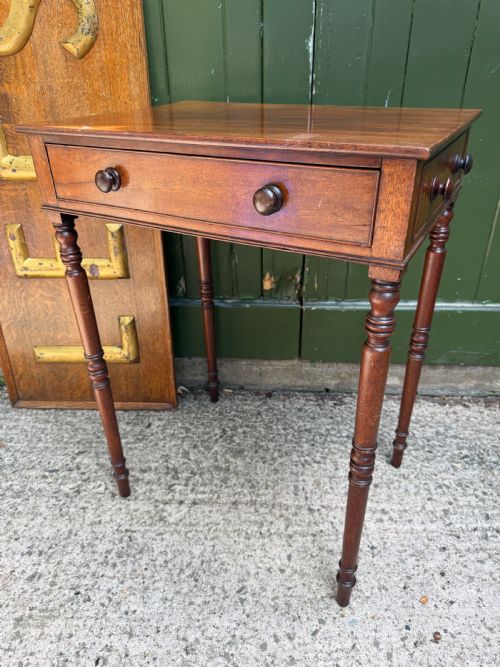
Some nineteenth-century tables include clever bread slides tucked away just beneath the timber top for impromptu slicing.
Distinctions in craftsmanship
Quality rests in the smooth operation of the extension mechanism and the alignment of the leaves with the main top. Tables constructed by established makers demonstrate precise joinery that keeps the extended surface flat and stable without sagging.
The choice of timber and the depth of carving separate standard utility tables from finer regional or revival pieces. Well-balanced proportions and sound structural integrity in the undercarriage determine the lasting utility of the table.
Heals·Maple and Co·Gillows
The Antique Draw Table Glossary
- Draw leaf
- An extending table leaf stored beneath the main top that slides outward to lengthen the surface. This mechanism allows the table to double its seating capacity quickly.
- Refectory table
- A long, narrow dining table traditionally used in communal halls and later adopted for domestic kitchens. These heavy wooden tables often feature sturdy stretcher bases.
- Parquetry
- Geometric wood inlay work arranged in patterns across the table top. Cabinetmakers used contrasting timbers to create decorative surface designs.
- Bread slide
- A pull-out wooden shelf positioned beneath the main surface of a table or desk. Historically used for slicing bread or holding papers near the workspace.
Antique Draw Table: Frequently Asked Questions
How do draw leaves work?
The main top remains stationary while two lower leaves slide out from beneath each end. As the leaves pull fully outward, the central top drops down to create one flat surface.
This simple sliding action extends the table length without requiring loose leaves stored separately in a cupboard.
Where were these tables used?
These tables served primarily in country houses, farmhouses, and town dining rooms where flexible seating matters. Kitchens and dining parlours utilised the extending function for daily meals and larger gatherings.
Today they function equally well in modern open-plan dining spaces and traditional homes.
How do I date an oak draw table?
Early seventeenth-century examples display hand-cut joinery, pegged framing, and heavy timber patination developed over centuries. Revival pieces from the early twentieth century often employ machine-sawn components while imitating earlier Jacobean styles.
Examining the underside mechanics and nail types helps clarify the manufacturing period.
Can I use an antique draw table daily?
Solid oak and fruitwood construction makes these tables robust enough for regular family dining and heavy kitchen use. The sliding wooden runners tolerate frequent extension when handled with reasonable care.
Routine maintenance involves treating the timber surface with appropriate wax or oil to protect against spills.