




Antique Dragon Jar
An antique dragon jar carries centuries of myth in porcelain, bronze, and enamel, offering a striking centrepiece for any serious collector of Asian and Victorian decorative arts.
Antique Dragon Jar
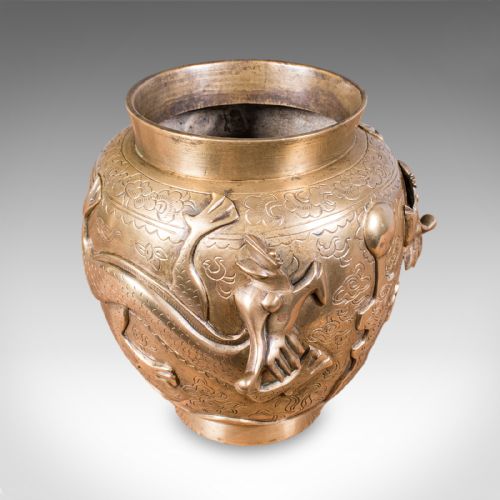
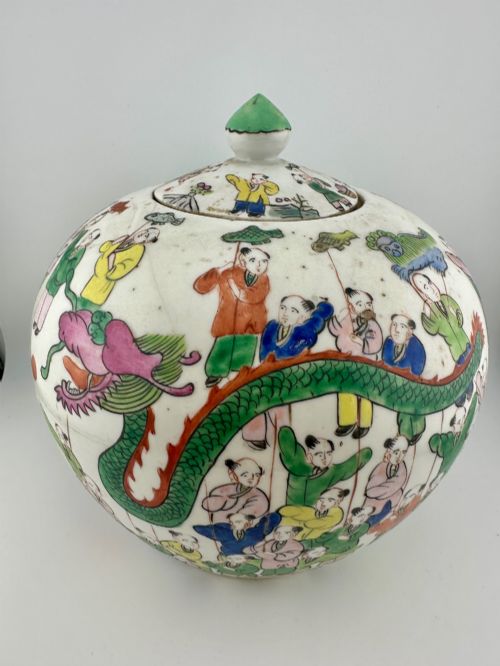
When you search for an antique dragon jar, you encounter a fascinating cross-section of nineteenth-century export wares, Victorian adaptations, and traditional East Asian vessels. These pieces range from classic lidded ginger jars bearing imperial motifs to European biscuit barrels finished with heraldic dragon finials.
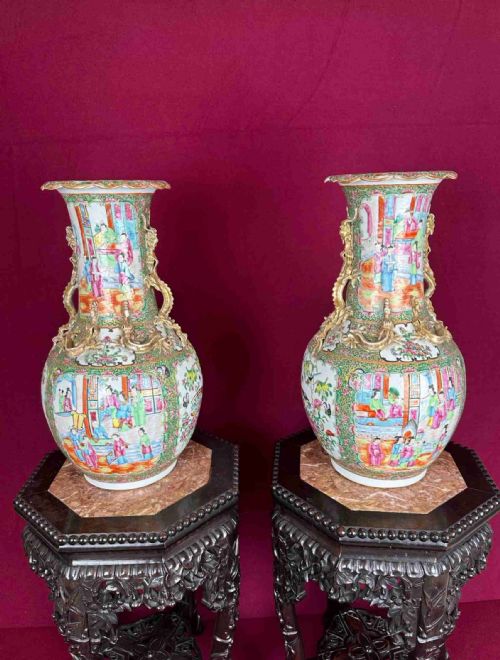
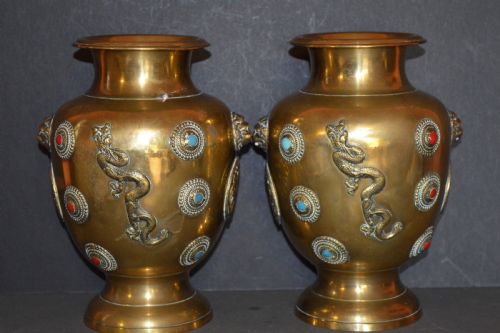
The selection on this page centres heavily on nineteenth-century creations, drawing from Qing Dynasty traditions, Meiji period Japanese works, and Victorian interpretations of orientalism. Buyers most frequently meet ceramic and bronze forms, including famille rose jars, blue and white porcelain vases, and cloisonne sugar bowls.
Beyond standard jars with covers, the grouping includes associated vessel types such as Hu vases, flower urns, and trinket boxes incorporating the same mythical beast. Each object reflects the Victorian fascination with exotic ornamentation alongside authentic Chinese and Japanese craftsmanship.
Materials and Construction
These items rely on durable ceramic bodies, notably porcelain and earthenware, shaped and fired before receiving intricate glaze work or enamel decoration. Artisans applied cobalt underglazes, doucai palettes, and iron-red pigments to render detailed scales and writhing serpentine bodies across the curved surfaces.
Metalwork pieces utilise cast bronze, brass, and silver plate, often enhanced with gold leaf and applied enamel cloisonne. Japanese totai shippo techniques integrated cloisonne directly onto alternative substrates like tree bark, while European manufacturers fashioned ceramic bodies with cast metal finials.
Antique Dragon Jar Retail Price Guide 2026
Typical asking prices for dragon jar among the pieces listed under this phrase on Sellingantiques today, from the lower quarter to the upper quarter. They describe what is for sale here now, not the wider market.
Listings feature items spanning the nineteenth century, including Victorian adaptations, Meiji period Japanese works, and Qing Dynasty productions in porcelain, bronze, and enamel.
Judging Quality and Execution
Superior examples display crispness in the hand-painted motifs, where every claw of the dragon and detail of the surrounding cloud scrolls shows precise control rather than hasty brushwork. In bronze and cloisonne pieces, the neatness of the wirework and the evenness of the enamel fill distinguish master workshops from commercial output.
The weight and balance of the vessel, the integrity of any included cover, and the clarity of cyclical marks or signatures contribute significantly to a piece's standing. Finer ceramics exhibit smooth glazes free from major firing blemishes, while metalwares retain their original gilding and structural tightness without excessive wear.
The Antique Dragon Jar Glossary
- Famille Rose
- A palette of opaque enamel colours introduced in Chinese porcelain during the Qing dynasty, dominated by pink and rose hues. It allowed painters to achieve delicate shading and botanical detail.
- Doucai
- A technique combining underglaze blue outlines with overglaze enamels in Chinese ceramic decoration. The blue elements are painted first, fired, and then filled with coloured enamels before a second lower-temperature firing.
- Cloisonne
- An ancient metalworking technique where thin metal wires are soldered to a base to form compartments, which are then filled with coloured enamel paste and fired. The surface is subsequently ground smooth and polished.
- Hu
- An ancient Chinese vessel form characterised by a pear-shaped body, a wide neck, and loop handles, frequently reinterpreted in bronze and ceramic during the nineteenth century. These forms often served ritual or display purposes.
- Totai Shippo
- A Japanese cloisonne technique where the enamel is applied directly onto an organic substrate such as ceramic, porcelain, or in some instances treated wood or tree bark, rather than traditional metal.
Antique Dragon Jar: Frequently Asked Questions
What is a dragon jar?
A dragon jar is a lidded ceramic or metal vessel decorated with depictions of the Chinese dragon, a traditional symbol of power, strength, and good fortune. These pieces were produced in various sizes for storage, display, or ceremonial use.
Over the nineteenth century, European makers also adopted the motif for decorative biscuit barrels and urns, blending Eastern iconography with Western domestic forms.
How do I date a nineteenth-century jar?
Dating relies on examining the characteristics of the glaze, the style of the painted motifs, and any reign marks or stamps present on the base. Nineteenth-century pieces often reflect the aesthetic shifts of the late Qing Dynasty or the Meiji period in Japan.
Associated metal mounts, such as Victorian brass or silver plate, provide further chronological clues regarding when the piece was finished or imported to Europe.
Are these jars waterproof?
While many ceramic and bronze vessels were originally designed to hold liquids or flowers, age and historic repair can affect their structural integrity. It is advisable to inspect the interior for hairline cracks or old restorations before using them for fresh water and stems.
Many collectors prefer to use inner glass liners or display these pieces dry to preserve their delicate interior glazes and historic patina.
How should I clean my antique jar?
Dusting with a soft, dry microfibre cloth is generally sufficient for regular maintenance of both glazed porcelain and patinated bronze surfaces. Avoid commercial chemical cleaners, abrasive sponges, or submerging antique metalwork in water.
If the piece requires deeper cleaning, use a damp cloth with mild soap on glazed ceramic areas only, ensuring you dry the surface immediately afterwards.