
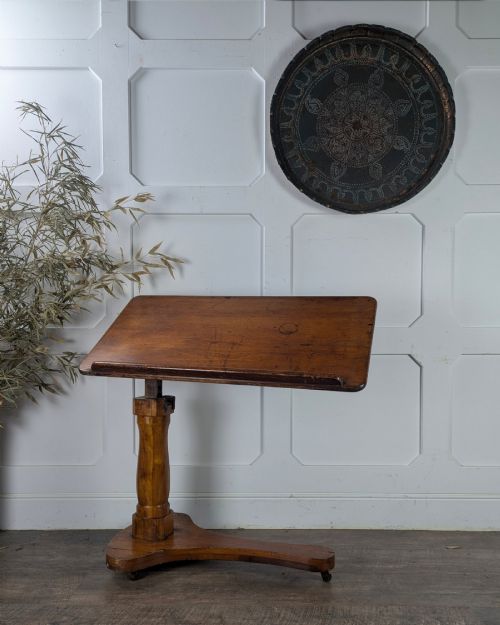
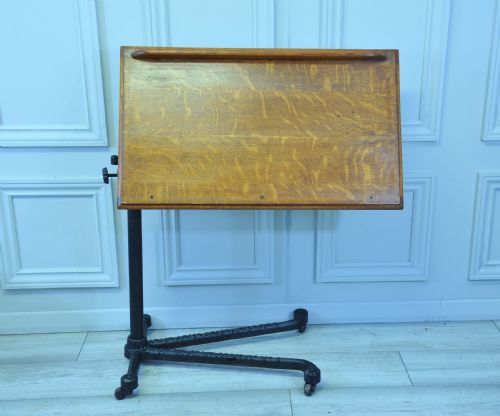


Antique Drafting Stand
These antique drafting stand examples combine practical engineering with period cabinet-making, offering adjustable surfaces built for serious work.
Antique Drafting Stand
When you search for an antique drafting stand, you are looking at practical furniture designed to hold drawings, maps, or books at working angles. The pieces available span from the Georgian and Regency periods through to the Edwardian era and the early twentieth century.
The selection includes adjustable reading tables, metamorphic riser desks, and heavy cast-iron and oak work tables. Forms range from simple pine reading lecterns to sophisticated mahogany architect desks and decorative screens.
Most items you will meet on this page lean towards sturdy oak, figured mahogany, or pine constructions fitted with mechanical adjustments. They originate from English workshops and include specific maker-stamped pieces alongside vernacular drafting furniture.
How they were made
Carpenters and cabinet-makers built these stands using robust timbers such as mahogany, oak, and pine. Structural elements often incorporated iron, brass, and cast iron to provide the necessary weight and mechanical movement for adjustable tops.
Workshops utilised traditional joinery combined with metal ratchets, screws, and folding mechanisms to allow height and tilt regulation. Finer examples feature inlaid mahogany and lacquer finishes, whilst utilitarian models rely on exposed grain and durable iron hardware.
Listings feature pieces spanning the Georgian, Regency, Victorian, and Edwardian periods, constructed from mahogany, oak, pine, brass, and cast iron.
What varies in quality
The sophistication of the mechanical adjustment mechanism dictates much of the standing value, separating simple fixed pieces from complex metamorphic desks. Smooth operation of brass ratchets and iron risers shows the care taken in the original engineering.
Timber selection and surface finish mark the division between standard utility pieces and high-end cabinet-maker output. Figured mahogany and signed maker attribution elevate certain stands above plain pine or utilitarian workshop variants.
Carters Of London·Edwards & Roberts
The Antique Drafting Stand Glossary
- Metamorphic furniture
- Pieces designed to transform from one form of furniture into another, such as a desk converting into a drafting stand. This clever engineering allowed single items to serve multiple functions in a study.
- Pole screen
- A vertical decorative screen mounted on a tall wooden pole with an adjustable panel to shield a person from fireplace heat. They often share mechanical upright shafts with reading stands.
- Lectern
- A slanted reading desk designed to hold books or papers at a comfortable angle for standing or seated study. They form a core part of the adjustable table family.
- Chinoiserie
- European decorative style inspired by Chinese artistic traditions, featuring painted or lacquered motifs on furniture. This finish appears on specialised screens and tables from the Regency period.
Antique Drafting Stand: Frequently Asked Questions
What is an antique drafting stand?
An antique drafting stand is an adjustable piece of furniture designed to hold maps, drawings, or books at a workable angle for an architect, writer, or draughtsman. These items utilise wooden frames paired with mechanical metal ratchets and risers.
They reflect the functional needs of past studies and offices, combining sturdy timbers like oak and mahogany with practical height and tilt controls.
How do you adjust the height?
Adjustment mechanisms typically involve brass or iron ratchets, screws, or sliding wooden shafts fitted within the central column. These allow the top surface to tilt or raise according to the user's requirements.
Operating them requires understanding the specific iron or brass hardware fitted by the maker during the Regency or Victorian periods.
Where were they used?
These stands served in private libraries, architect offices, studios, and studies where maps, large folios, or reading materials required stable slanted surfaces. Wealthy households also placed reading tables in drawing rooms.
Their robust construction in oak, pine, or cast iron suited daily professional use by cartographers and scholars.
How do I date a drafting stand?
Dating relies on identifying the prevailing style, timber choice, and mechanical engineering characteristic of periods such as the Georgian, Regency, or Edwardian eras. Cabinet-making techniques and hardware types provide clear chronological clues.
Maker signatures or stamps, when present, offer definitive attribution to firms operating in nineteenth or early twentieth-century London.