





Antique Dolphin Tables
Antique dolphin tables bring mythological marine motifs into domestic interiors through carved pedestals, giltwood frames and marble surfaces.
Antique Dolphin Tables
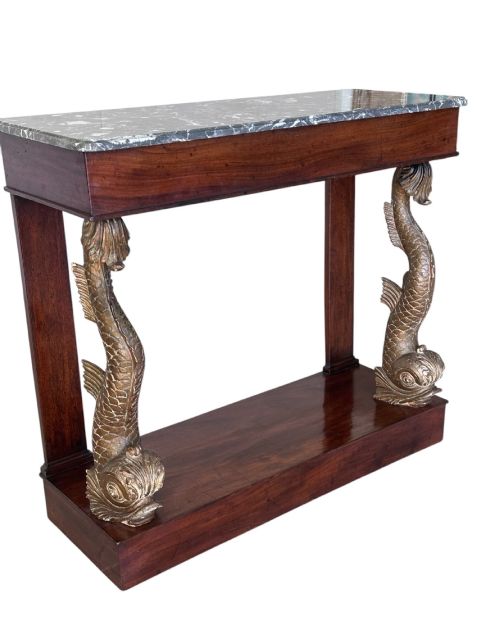
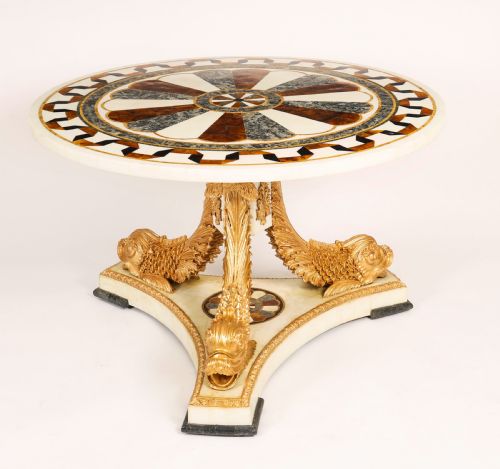
These antique dolphin tables combine marine mythology with functional furniture design, featuring carved aquatic creatures supporting centre, console, games and coffee tables. The marine motif draws heavily on classical antiquity, where dolphins symbolised swift passage and safety upon the sea.
Most examples encountered on this page originate from the nineteenth century into the mid-twentieth century, embracing revivals from Regency to Art Deco. Buyers typically find substantial centre tables with heavy pedestals or console tables positioned against interior walls.
The form stretches across various domestic uses beyond standard tables, including occasional surfaces and games tables with folding tops. Makers utilised the sweeping tails and arched bodies of dolphins to form sturdy structural bases for heavy stone and timber tops.
How they were made
Craftsmen carved these sculptural supports from timbers such as rosewood, walnut, flame mahogany and bleached oak, often applying giltwood or ormolu finishes to highlight the marine details. The natural grain of the wood contrasts with gilded surfaces to accentuate the muscular curves of the carved sea creatures.
Table tops frequently feature inset slabs of white onyx, alabaster or specimen marble, supported by bronze, brass or gilt metal mounts. These dense stone surfaces require precise joinery and reinforced subframes to distribute the weight across the carved wooden dolphin pedestals.
Antique Dolphin Tables Retail Price Guide 2026
Typical asking prices for dolphin tables among the pieces listed under this phrase on Sellingantiques today, from the lower quarter to the upper quarter. They describe what is for sale here now, not the wider market.
Listings feature items spanning the nineteenth century to nineteen-fifty, executed in materials including giltwood, rosewood, marble, onyx, and bronze.
What varies in quality
The selection of materials dictates the standing of the piece, particularly the integration of fine marbles, alabaster or figured rosewood veneers. Superior examples display harmonious proportions between the heavy top and the supporting marine base without awkward structural compromises.
The Antique Dolphin Tables Glossary
- Console table
- A table designed to stand against a wall, typically secured to the vertical surface with brackets or supported at the front by carved legs or pedestals such as dolphins.
- Giltwood
- Wood that has been coated with a thin layer of gold leaf or gold powder over a prepared ground. This finish catches the light and emphasises carved details.
- Games table
- A folding or pivoting table constructed for card playing and board games, often featuring a lined playing surface and internal storage compartments.
- Specimen marble
- A decorative mosaic technique utilising various types of polished coloured marbles arranged in geometric patterns or tabletops.
- Ormolu
- Finely chased and gilt bronze used for decorative mounts and hardware on nineteenth-century furniture and decorative objects.
Antique Dolphin Tables: Frequently Asked Questions
What periods do antique dolphin tables come from?
These tables span the nineteenth century and the early twentieth century, encompassing Regency, Victorian, and Art Deco design movements. The revival styles draw upon classical motifs first popularised in ancient Greece and Rome.
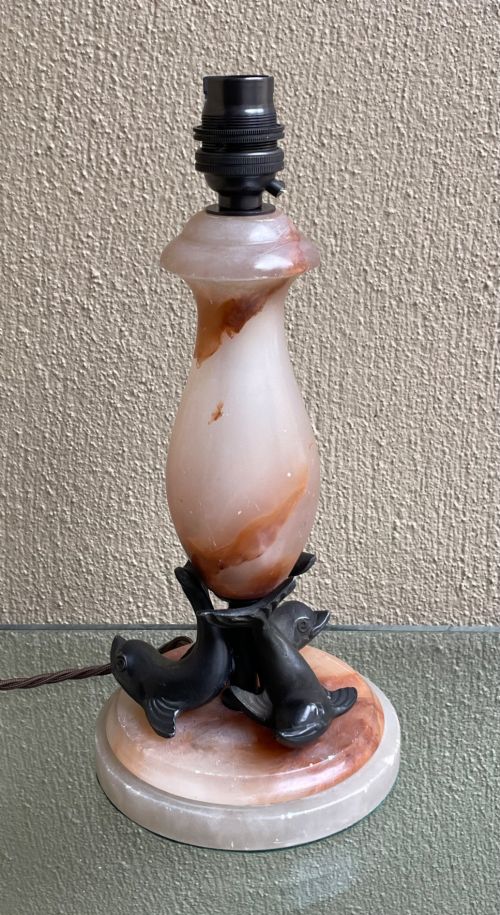
Later interpretations from the twentieth century incorporate materials like alabaster and gilt metal while retaining the traditional marine symbolism.
How were dolphin tables used in historic homes?
Centre tables served as prominent statement pieces in the middle of principal reception rooms, holding lamps, books or decorative inkstands. Console tables stood against perimeter walls beneath mirrors or artwork to display ornamental objects.
Smaller games tables provided functional surfaces for evening entertainment before folding away to save space when not in use.
What materials are typical for these tables?
Construction relies heavily on dense hardwoods such as rosewood, walnut, and flame mahogany, frequently embellished with gold leaf or ormolu. Table surfaces often showcase contrasting white onyx, alabaster, or polished marble.
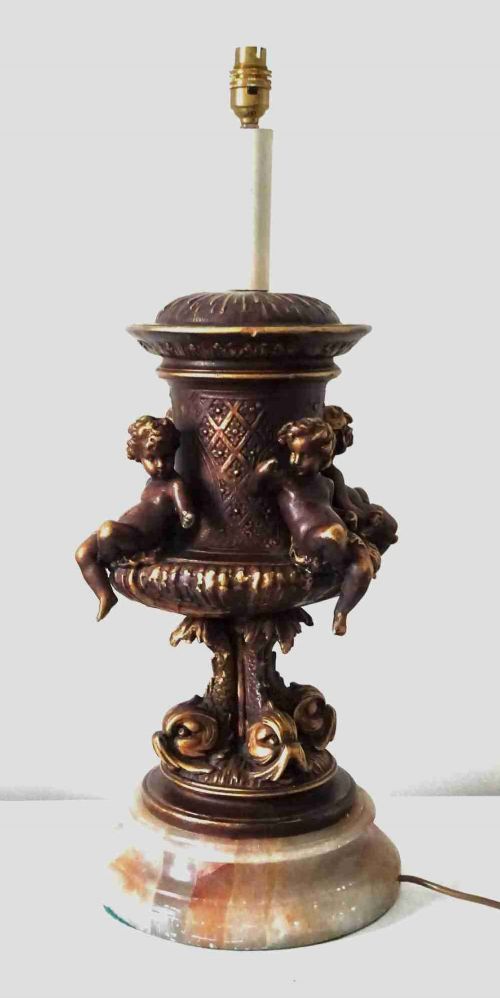
Bronze and brass components frequently appear in the mounts and smaller related lighting or accessory pieces.
How do I identify different revival styles?
Regency and nineteenth-century pieces tend to feature rich dark timbers, intricate wood carving, and classical proportions inspired by ancient marine iconography. Art Deco and later twentieth-century examples favour streamlined alabaster forms and simplified metal structures.
Examining the underlying construction methods and the treatment of the gilt finish helps distinguish early interpretations from later revivals.