
Antique Dining Room Seats
These antique dining room seats bring substance to the table, uniting period timber with enduring craftsmanship.
Antique Dining Room Seats
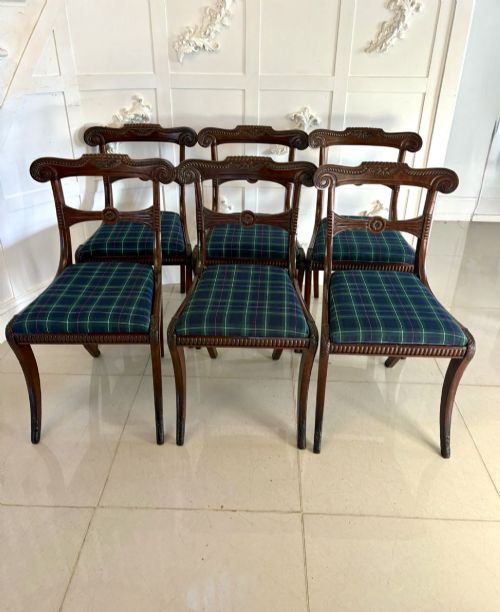
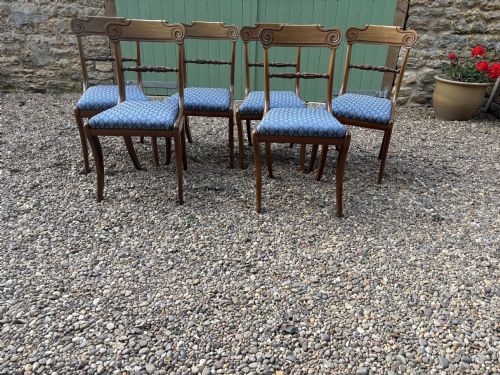
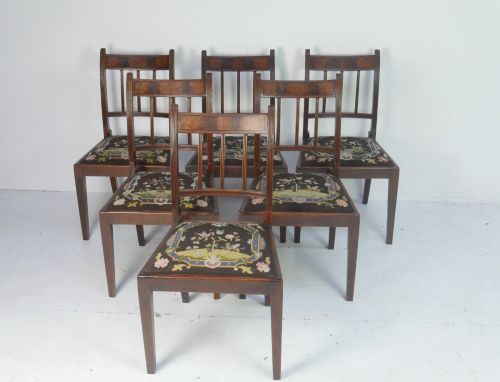
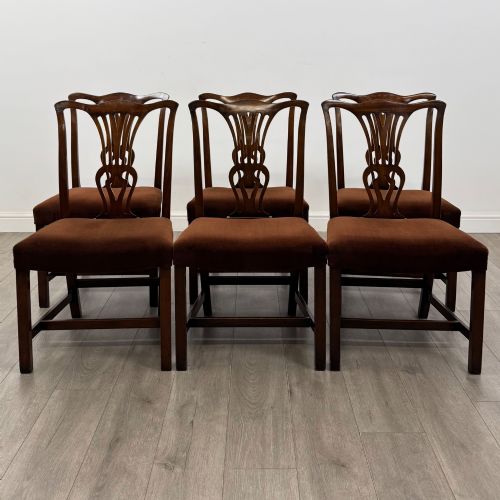
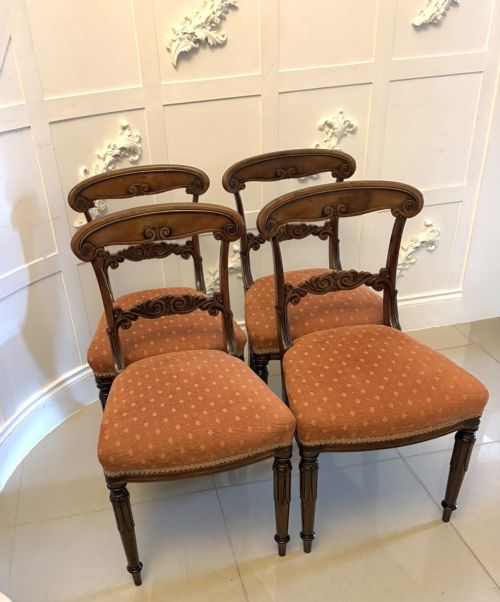
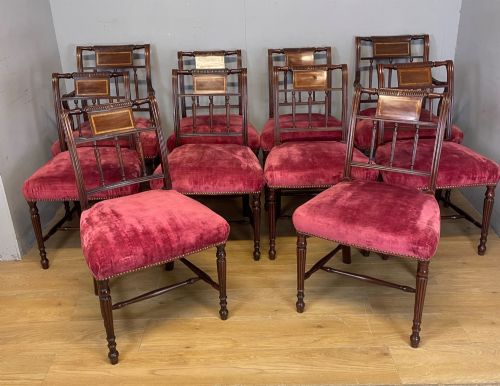
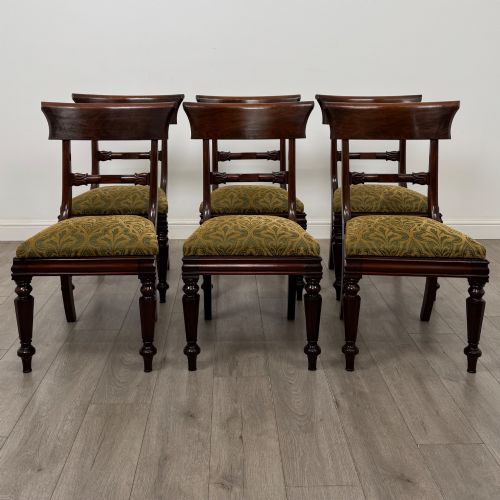
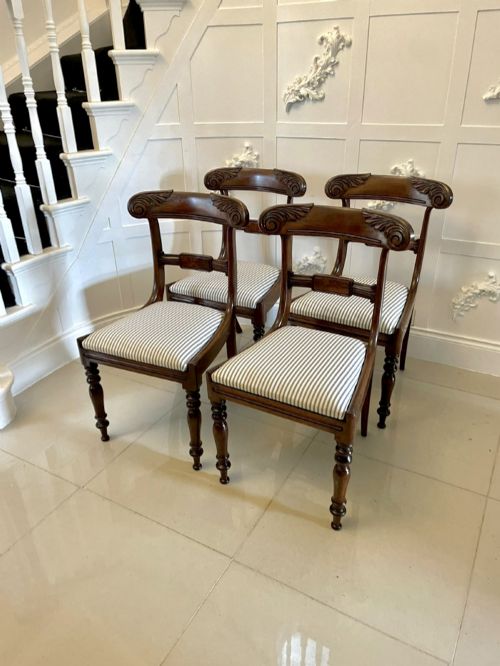
When searching for antique dining room seats, buyers encounter substantial sets of wooden chairs originating from the Georgian, Regency, and Victorian eras. These pieces typically present in solid mahogany or oak, often arranged in matching groups ranging from four to twenty chairs.
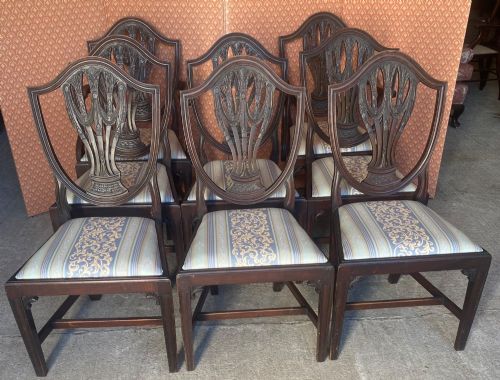
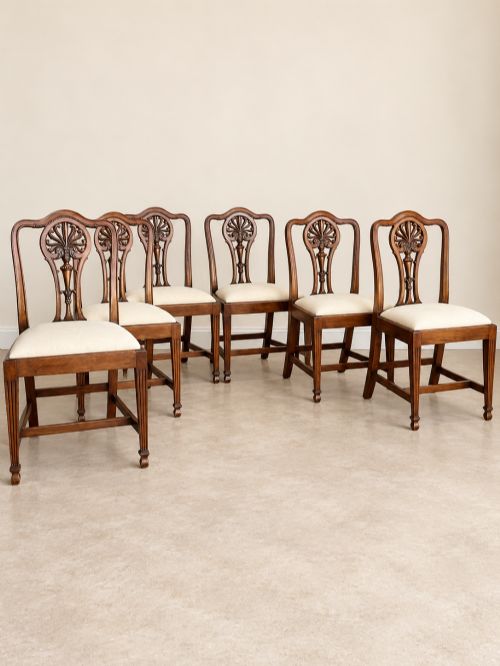
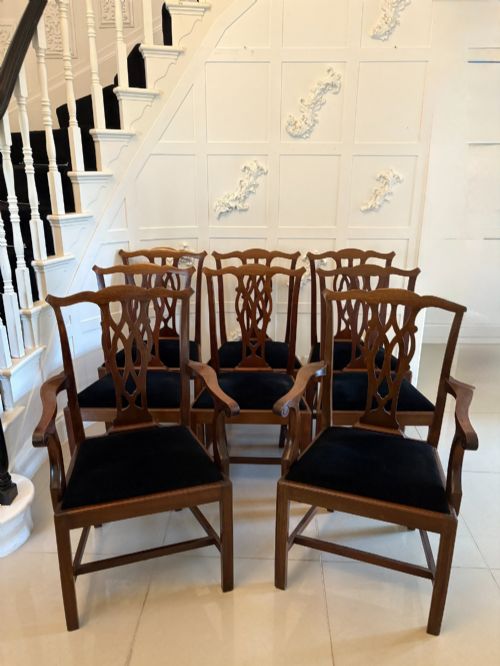
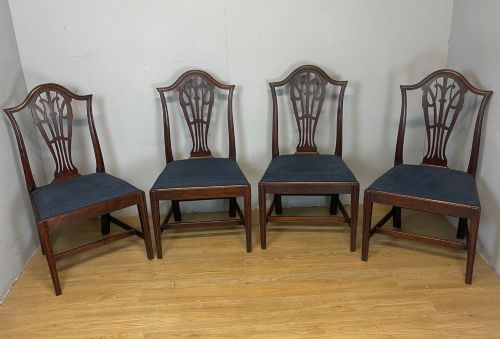
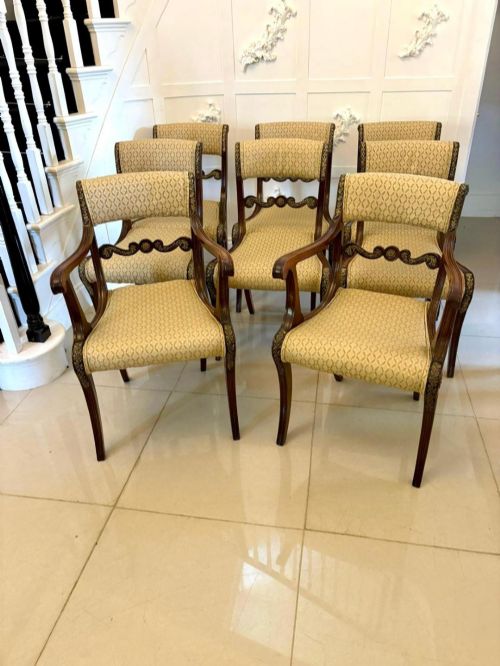
The most common forms on this page are standard dining chairs and accompanying carvers or armchairs, designed around traditional domestic layouts. Sets frequently reflect specific historical revivals, including Hepplewhite and Queen Anne styles.
Origins span English workshops and Scottish houses, capturing formal dining room seating from the nineteenth and early twentieth centuries. Side chairs and reception seats also appear alongside larger formal sets.
Materials and construction methods
Makers relied heavily on dense hardwoods like mahogany and oak, supplemented by beech, maple, and walnut for specific structural or decorative requirements. Brass details and hand-carved elements frequently accent the frames.
Upholstery relies on traditional textiles, incorporating leather, velvet, and various woven upholstery fabrics fixed directly to the seat frames. Joinery methods prioritise rigid tenon and mortise construction to withstand daily use.
Listings feature dining seats spanning the eighteenth, nineteenth, and twentieth centuries, executed primarily in mahogany and oak.
Distinguishing grades of craftsmanship
Quality separates through the crispness of hand-carved details on shield backs and balloon backs, alongside the uniformity of timber grain across large sets. Superior examples maintain original finish surfaces and tight, stable joinery.
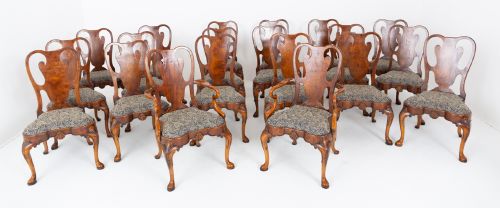
The scale and completeness of matching sets dictate distinction, particularly when groupings include paired carvers alongside numerous single chairs. Dense, well-figured mahogany and robust structural timber elevate certain groups above standard production pieces.
Maple and Co·Gillows
The Antique Dining Room Seats Glossary
- Carver
- An armchair designed to match a set of single dining chairs, typically positioned at the head of a table.
- Shield back
- A chair back shaped like a heraldic shield, popularized by eighteenth-century designers and later revivalists.
- Balloon back
- A rounded, continuous chair back popular during the Victorian period, offering ergonomic support.
- Regency style
- A design period drawing inspiration from classical Greek and Roman forms, characterised by clean lines and dark timbers.
- Hepplewhite style
- A refined furniture style recognised by slender tapered legs and delicate shield or heart-shaped backs.
Antique Dining Room Seats: Frequently Asked Questions
How many chairs come in a typical set?
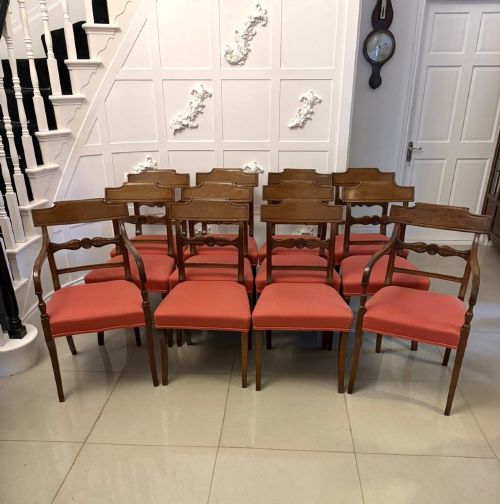
Sets vary widely, commonly appearing in groups of four, six, eight, or ten chairs. Larger gatherings of twelve or more pieces often incorporate matching carver armchairs.
Buyers find both complete matched sets and smaller pairs suited to specific room layouts or extended dining tables.
What is the difference between single chairs and carvers?
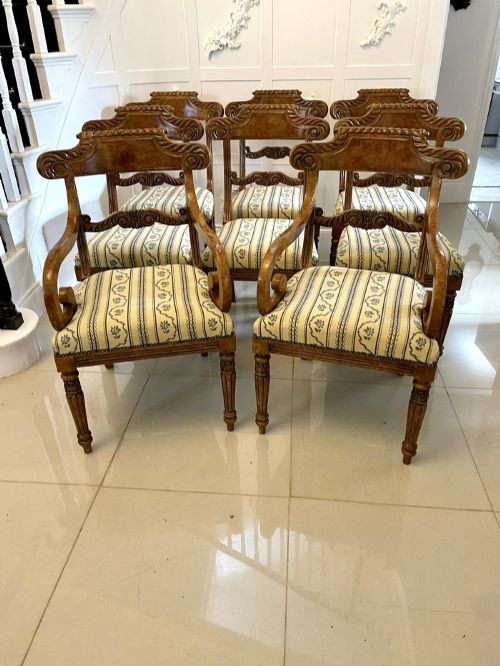
Single chairs feature a standard seat base and narrow frame designed to line the sides of a dining table efficiently. Carvers include integrated armrests for added comfort.
传统 sets usually place two carvers at the head and foot of the table while single chairs occupy the flanks.
Which woods are most common?
Mahogany and oak dominate the available seating, reflecting the preferred materials of the Georgian, Regency, and Victorian eras. Walnut, beech, and maple appear occasionally in specific styles.
Timber choice generally dictates the visual weight and historical character of the dining set.
How do I identify a Victorian set?
Victorian dining chairs frequently display characteristic balloon backs, heavier proportions, and rich mahogany or walnut construction. Carved details tend to be more pronounced than in earlier Georgian examples.
Upholstery options from this period often include buttoned leather or patterned velvet.
Are replacement upholstery fabrics acceptable?
Many period chairs feature updated upholstery fabrics that suit modern domestic interiors while preserving the antique wooden frame. Original leather surfaces also survive on selected pieces.
Re-covering does not detract from the historical value of the structural woodwork.