


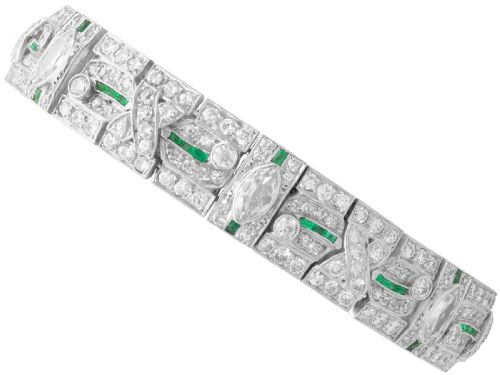


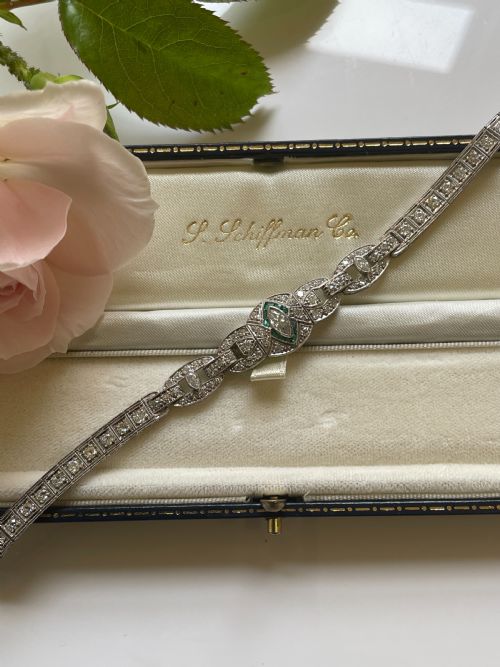
Antique Diamond Strap Bracelet
An antique diamond strap bracelet brings fluid geometric brilliance to the wrist, offering the unmistakable tactile elegance of twentieth-century design.
Antique Diamond Strap Bracelet
When you search for an antique diamond strap bracelet, you encounter articulated wristwear primarily rooted in the Art Deco period, alongside select Victorian precursors. These pieces span the late nineteenth century through the mid-twentieth century, featuring linear profiles designed to drape smoothly over the arm. Platinum settings dominate the form, frequently paired with diamonds, emeralds, and sapphires.
The most common iteration on this page is the platinum and diamond bracelet from the 1920s and 1930s, defined by intricate geometric openwork. Alongside traditional link bracelets, the category includes convertible pieces and ladies cocktail watches integrated into strap mountings. Gold variants in eighteen-carat yellow, fourteen-carat white, and sixteen-carat rose gold also appear within the selection.
Victorian examples introduce alternative materials such as enamel, pearl, and yellow gold, showing earlier manufacturing techniques before platinum became the preferred metal for fine diamond mounting. These diverse periods demonstrate how the strap bracelet evolved from heavier nineteenth-century ribbon designs into the streamlined, stone-intensive layouts of the Art Deco era.
Materials and construction
Platinum serves as the primary structural metal for the majority of these jewels, chosen for its strength which allowed workshops to create delicate, knife-edge wirework securely holding numerous stones. Gold appears in various formulations, including eighteen-carat yellow, fourteen-carat white, and sixteen-carat rose gold, particularly in pieces incorporating leather or specific period clasps. The integration of metals directly dictates the visual rhythm of each piece.
Diamonds form the optical core of the strap bracelet, complemented by calibre-cut emeralds and sapphires that introduce precise blocks of colour. Master jewellers set these stones flush or within millegrain borders, where tiny raised beads of metal soften the edges and secure the gems. Pearls and enamel feature in nineteenth-century variants, expanding the decorative vocabulary beyond stones alone.
The listings span from 1880 through the 1950s, demonstrating a dominant concentration of Art Deco platinum and diamond pieces from the 1920s and 1930s.
What separates fine examples
The sophistication of the articulation determines how fluidly the bracelet conforms to the wrist, distinguishing rigid assemblies from masterwork hinges that move as a single fabric. Superior pieces maintain alignment across every single link, ensuring the geometric pattern remains uninterrupted during wear. The underside finish reveals the standard of construction, with top-tier workshops applying as much care to the reverse gallery as to the front display.
Stone selection and matching dictate the overall brilliance of the piece, requiring uniform cut, colour, and clarity across dozens of individual diamonds and coloured gems. Subtle variations in the hand-cutting of accent emeralds and sapphires show the bespoke nature of these items, where lapidaries shaped each stone precisely to fit its platinum cell.
Bucherer
The Antique Diamond Strap Bracelet Glossary
- Art Deco
- A design style prevalent in the 1920s and 1930s characterised by symmetry, geometric abstraction, and streamlined shapes. It influences the linear framework of most strap bracelets.
- Millegrain
- A decorative technique involving a row of tiny raised metal beads along the edge of a setting. This method softens the transition between metal and stone.
- Calibre-cut
- Small gemstones cut into precise geometric shapes specifically to fit flush against one another within a channel or bezel. This technique creates continuous lines of colour without visible prongs.
- Platinum
- A dense, strong white metal widely adopted in fine jewellery during the early twentieth century. Its durability permits delicate piercing and secure claw settings for diamonds.
Antique Diamond Strap Bracelet: Frequently Asked Questions
How do I wear a strap bracelet?
These bracelets are designed to sit flat against the wrist, moving naturally with the arm throughout the day. Their articulated construction allows them to drape comfortably without catching on clothing.
For evening wear, they pair well with sleeveless attire where the geometric platinum and diamond work remains fully visible. Daily wear requires mindfulness of the delicate hinge points and precious stones, particularly when paired with other wristwear.
How do I date a diamond strap bracelet?
Dating relies on stylistic markers such as geometric symmetry, platinum usage, and specific stone cuts like old European or single cuts. The presence of platinum frames and calibre-cut emeralds or sapphires typically points to the Art Deco era between the 1910s and 1930s.
Earlier nineteenth-century pieces, by contrast, frequently utilise yellow gold, pearls, and enamel alongside varied clasp mechanisms. Maker signatures or hallmarks stamped on the clasp or edge can also narrow down the exact decade of production.
What is a cocktail watch?
A cocktail watch is a timepiece disguised as fine jewellery, featuring a small dial concealed beneath a decorative, gem-set cover. These pieces functioned primarily as formal accessories during the 1920s and 1930s.
The strap portion integrates mechanical timekeeping seamlessly into a diamond and platinum bracelet design, allowing the wearer to tell time discreetly. They represent the intersection of horology and high jewellery craftsmanship.
Are these bracelets fragile?
While platinum provides robust structural integrity, the intricate openwork and numerous tiny stones require thoughtful handling. The flexibility that makes them comfortable also means hinges experience stress over decades of use.
Routine inspection by a specialist helps ensure that millegrain settings and individual stone claws remain secure. Storing the bracelet flat in a dedicated box prevents undue pressure on the articulated joints.