

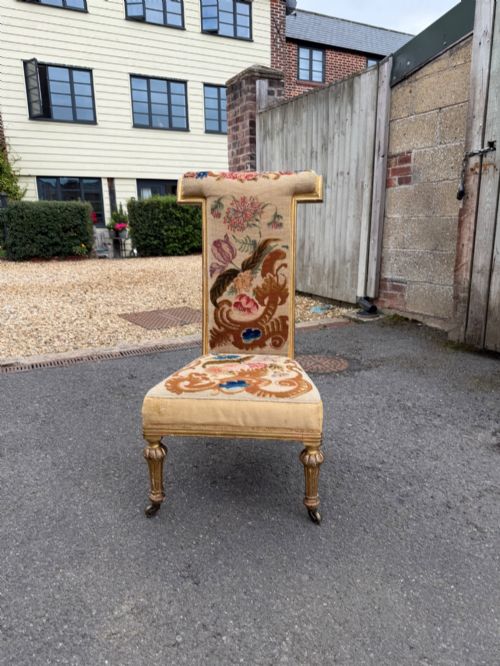


Antique Devotional Seat
An antique devotional seat is a private sanctuary for reflection, joining practical kneeling forms with period craftsmanship.
Antique Devotional Seat
An antique devotional seat takes the form of specialised prayer chairs, often known as prie-dieu chairs, designed for quiet contemplation and private worship. These pieces emerge predominantly from the Victorian era and the nineteenth century, reflecting the devout domestic habits of the period.
The most common version met on this page is the Victorian prayer chair, distinguished by its low seat and tall, slender back designed to support kneeling posture. Examples range from simple rustic church seating to elaborate Gothic Revival designs.
Beyond standard prayer chairs, the selection incorporates specific regional and stylistic variations such as Black Forest carvings, Flemish oak hall church chairs, and Southeast Asian stone and gold leaf statues.
How they were made
Cabinet makers utilised dense native and imported timbers, shaping mahogany, walnut, rosewood, and oak into rigid chair frames. Woodwork often featured deep carving influenced by Gothic Revival aesthetics.
Upholstery formed an essential element of construction, employing textiles such as velvet and woven fabric padded over the low seats and narrow back rests. Ebonised finishes and giltwood accents frequently enhanced the timber surfaces.
Antique Devotional Seat Retail Price Guide 2026
Typical asking prices for devotional seat among the pieces listed under this phrase on Sellingantiques today, from the lower quarter to the upper quarter. They describe what is for sale here now, not the wider market.
Several chairs include secret kneeling ledges designed to keep knees firmly off cold nineteenth-century floorboards during lengthy bouts of nocturnal soul-searching.
What varies in quality
Quality rests primarily in the ambition of the timber carving and the architectural integrity of the frame. Deeply carved oak and rosewood command attention above plain structural timbers.
The choice of original textile upholstery and the preservation of decorative treatments like gold leaf or ebonisation distinguish standard domestic seating from finer examples.
The Antique Devotional Seat Glossary
- Gothic Revival
- An architectural and decorative style popular during the nineteenth century, drawing inspiration from medieval pointed arches, trefoils, and heavy carved tracery.
- Ebonised
- Wood treated with a dark stain or chemical finish to imitate the dense, black appearance of ebony. This finish was common on Victorian furniture.
- Giltwood
- Timber coated with a thin layer of gold leaf or gold paint. It accentuates carved details on church and devotional furniture.
Antique Devotional Seat: Frequently Asked Questions
What is a prie dieu chair?
A prie-dieu chair is a specialised devotional seat featuring a low seat and an elevated backrest that incorporates a small shelf for prayer books. These pieces were designed to accommodate a kneeling posture during private daily worship.
Originating mostly in the nineteenth century, they combined comfortable domestic upholstery with ecclesiastical styles such as the Gothic Revival.
Where were these chairs placed?
These devotional seats were intended for domestic domestic prayer spaces, bedrooms, or private home chapels rather than large public sanctuaries. Their compact footprints allowed them to fit neatly into domestic corners.
They served as functional furniture for personal reflection, keeping prayer books close at hand on the integrated upper shelf.
How do I care for antique upholstery?
Preserving antique fabric and velvet upholstery requires gentle maintenance and protection from direct sunlight to prevent fading. Regular light dusting helps keep the delicate textiles intact.
Avoid harsh chemical cleaners on the surrounding wood and fabric to maintain the original nineteenth century materials.