



Antique Deuddarn
An antique deuddarn is a traditional Welsh two-part press cupboard offering robust rural storage and rich historic character for the home.
Antique Deuddarn
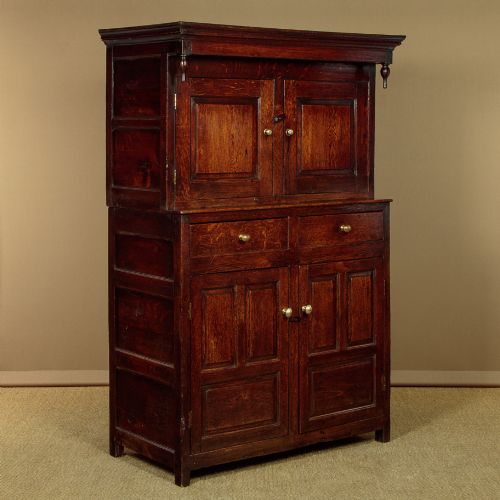
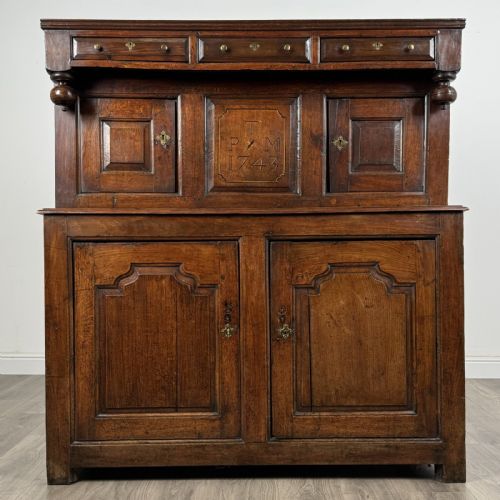
When you search for an antique deuddarn, you are looking at a traditional Welsh two-part press cupboard rooted in domestic history. These imposing pieces typically feature a recessed upper stage supported by turned or panelled posts above a capacious base section fitted with doors or drawers.
The versions you are most likely to meet on this page hail primarily from the eighteenth century, alongside occasional examples stretching back into the late seventeenth century. They stand as robust architectural statements of Welsh country craftsmanship, designed to store linen, food or household provisions.
Most surviving examples emerge in solid oak, often displaying the warm patination and rich grain developed over centuries of domestic use. Regional variations appear across styles ranging from plain vernacular forms to more structured Georgian or earlier Jacobean interpretations.
How they were made
Makers constructed each antique deuddarn from solid local timber, relying principally on sturdy oak for the frame, panels and structural members. Carpenters shaped and joined the heavy boards using traditional peg and mortise techniques to ensure lasting stability.
Working by hand, artisans fitted functional hardware including brass escutcheons, hinges and iron mounts to secure the heavy doors. The structural joinery reflects a pragmatic rural approach where durability took precedence over superfluous ornamentation.
Antique Deuddarn Retail Price Guide 2026
Typical asking prices for deuddarn among the pieces listed under this phrase on Sellingantiques today, from the lower quarter to the upper quarter. They describe what is for sale here now, not the wider market.
Listings feature pieces spanning from the seventeenth century through the Georgian era, constructed predominantly in solid oak with brass and iron hardware.
What varies in quality
The distinction between ordinary and exceptional pieces rests primarily on the depth of patination, timber selection and proportion. Finely figured oak grain and undisturbed original surfaces elevate an example far above timber that has been heavily stripped or altered.
Proportion and scale dictate desirability, with smaller cabinets commanding particular attention alongside larger architectural statements. The crispness of carved detailing, turned columns and fielded panels further separates standard utilitarian pieces from masterworks of regional carpentry.
The Antique Deuddarn Glossary
- Deuddarn
- A traditional Welsh two-part cupboard featuring a recessed upper section above a lower cabinet base. This distinctive regional form evolved to store household linens and provisions.
- Press Cupboard
- A large enclosed storage piece divided horizontally into two stages. The upper section is often recessed and supported by posts.
- Court Cupboard
- An early form of two-tiered cupboard similar in construction to the deuddarn. These pieces often incorporate turned pendants and strapwork decoration.
- Vernacular
- Architecture and furniture built by local craftsmen using traditional regional materials and methods. These items prioritize utility and local style over grand metropolitan fashions.
- Escutcheon
- A protective plate surrounding a keyhole. On these cupboards, they are typically cast in brass or wrought iron.
Antique Deuddarn: Frequently Asked Questions
What is a deuddarn?
A deuddarn is a traditional Welsh two-part cupboard with a recessed upper section over a lower base. These pieces served as major storage furniture in rural homes.
They offer deep storage capacity combined with striking architectural presence. Their multi-tiered form makes them practical for modern living areas.
How old are these cupboards?
Most surviving examples date from the seventeenth and eighteenth centuries, with Georgian periods well represented. Their age is visible in the construction methods and timber patination.
Craftsmen built them entirely by hand using solid regional oak. This makes each surviving cabinet a unique historical artefact.
Where were they made?
These cupboards originated in rural Wales, where local carpenters built them for domestic use. The designs reflect distinct regional traditions rather than urban workshop styles.
Local timber yards provided the heavy oak used in their construction. This regional origin gives them their characteristic vernacular appeal.
How do I care for antique oak?
Maintain antique oak by keeping it away from direct heat sources and sudden humidity changes. Feeding the wood with appropriate wax preserves the historic finish.
Avoid harsh chemical cleaners that strip the natural patination. Gentle dusting keeps the surface stable for years to come.