





Antique Dessert Servers
These antique dessert servers comprise tiered mahogany stands and silver or silver-plated fruit knives, pastry trowels, and strawberry sets designed for formal dining.
Antique Dessert Servers
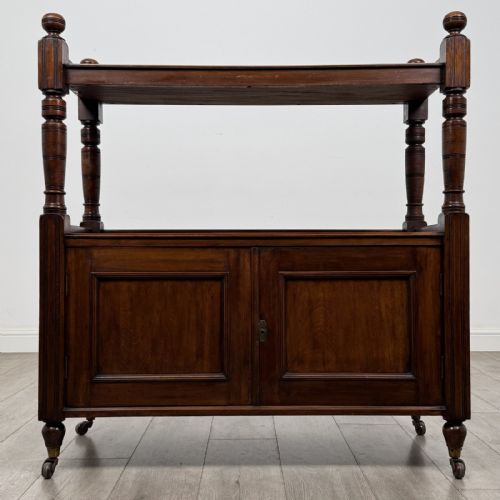
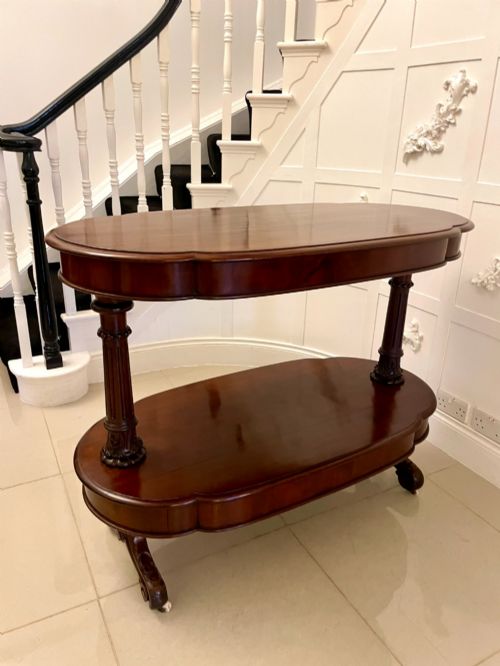
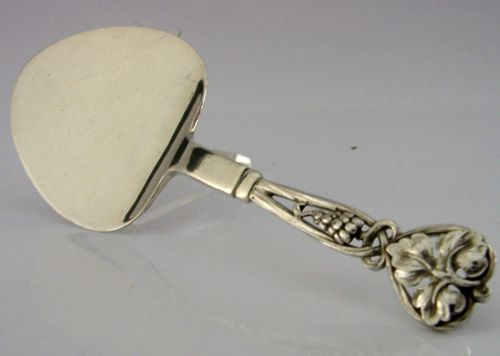
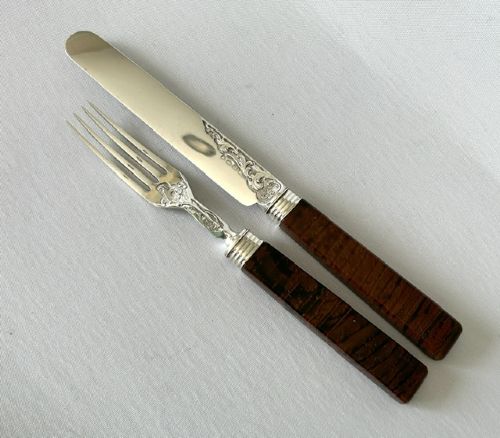
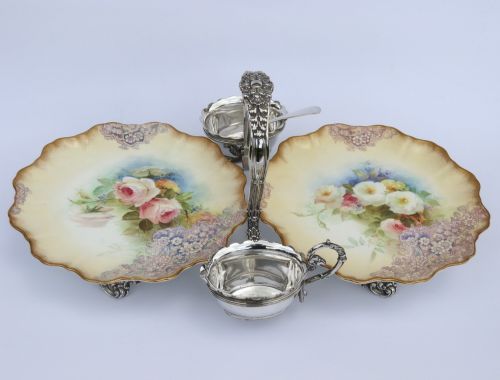
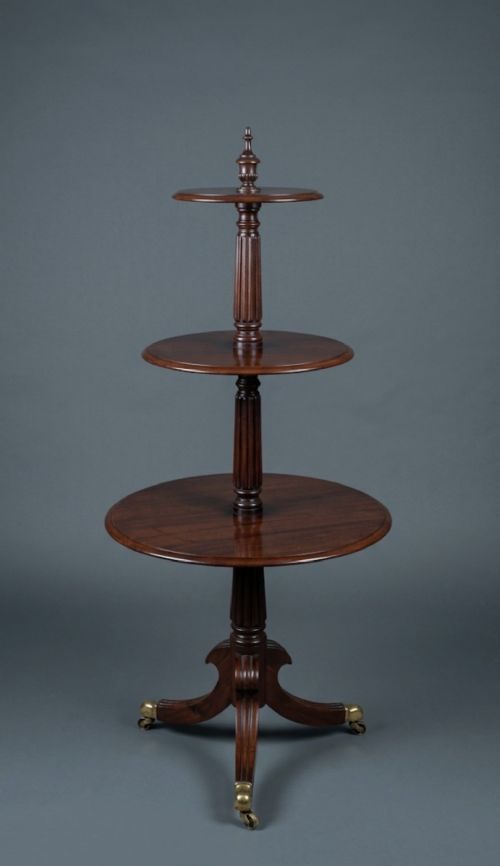
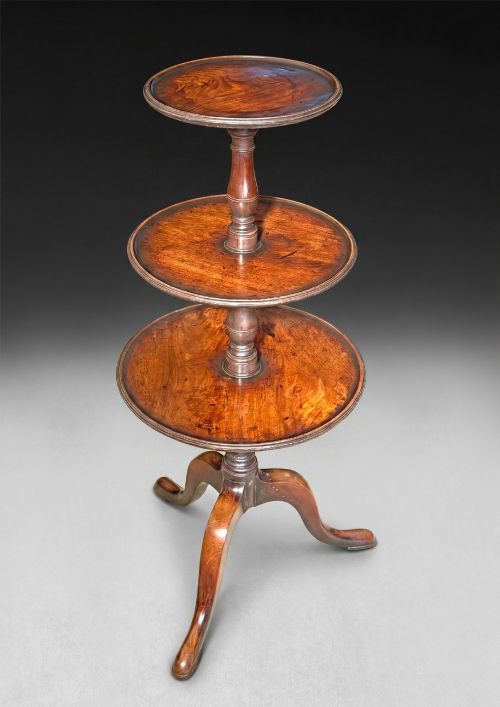
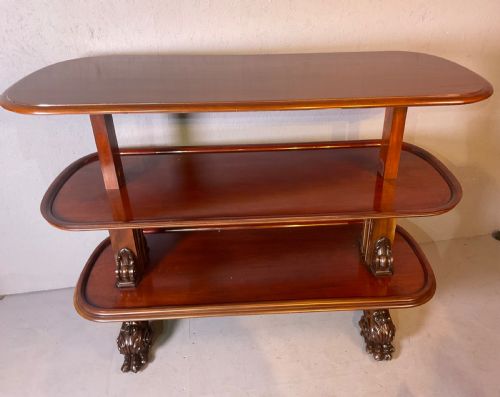
When buyers search for antique dessert servers, they encounter a diverse group of objects spanning larger dining room furniture like dumb waiters and smaller handheld cutlery pieces. The tiered mahogany stands, often featuring two or three revolving circular trays or drop leaves, dominate the furniture category from the Georgian and Victorian periods. Alongside these stands, specialised silver and silver-plated flatware appears, including pastry trowels, ice cream servers, and fruit sets paired with porcelain plates or agate handles.
The material forms range from substantial mahogany and walnut buffets on castors to delicate sterling silver blades and silver-plated strawberry sets from the late nineteenth and early twentieth centuries. Makers such as Liberty & Co, Martin Hall & Co, Walker and Hall, Roberts and Belk, and Maple & Co represent the manufactured items, while many pieces remain attributable to regional workshops in the manner of Gillows. Buyers are most likely to meet mahogany dumb waiters and silver-plated dessert sets dating between the eighteenth and early twentieth centuries on this page.
How they were made
The wooden dumb waiters and tiered stands rely heavily on solid mahogany and walnut, turned pedestals, tripod bases, and brass castors. Cabinetmakers constructed these multi-level pieces using traditional joinery, turning, and occasional drop-leaf mechanisms, ensuring stability across revolving tiers.
Antique Dessert Servers Retail Price Guide 2026
Typical asking prices for dessert servers among the pieces listed under this phrase on Sellingantiques today, from the lower quarter to the upper quarter. They describe what is for sale here now, not the wider market.
Listings feature mahogany, walnut, brass, sterling silver, silver plate, porcelain, velvet, and agate across the Georgian, Regency, and Victorian periods.
What varies in quality
The standard of craftsmanship is evident in the selection of timber grain, the precision of turned central columns, and the smoothness of the revolving tier mechanism on wooden stands. Superior examples exhibit fine secondary timbers, robust castors, and well-executed edge mouldings rather than utilitarian construction.
For silver and plated cutlery, quality depends on the weight and purity of the metal, the clarity of cast or engraved ornamentation on blades, and the secure fitting of handles made from materials like agate. Matched sets featuring intact hand-painted porcelain plates demonstrate higher compositional integrity than isolated implements.
Liberty & Co·Martin Hall & Co·Walker and Hall·Roberts and Belk·Maple & Co
The Antique Dessert Servers Glossary
- Dumb Waiter
- A multi-tiered freestanding serving piece used to hold food and utensils near a dining table without requiring servants. These stands often feature rotating circular trays supported on a central pillar.
- Silver Plate
- A base metal substrate coated with a thin layer of silver through electroplating or older processes. This technique provided the appearance of solid silver at a lower production cost.
- Agate
- A form of chalcedony used frequently for decorative knife and fork handles. Its natural banded patterns added colour and tactile variety to dessert cutlery.
- Castor
- A small wheel attached to the legs of furniture to permit easy movement across a floor. Original castors indicate that a piece retains its intended height and mobility.
- Tripod Base
- A three-legged support structure commonly found beneath the central pedestals of circular tables and dumb waiters. This design ensured stability on uneven floors.
Antique Dessert Servers: Frequently Asked Questions
What is a dumb waiter?
A dumb waiter is a tiered wooden stand designed to hold dishes, glasses, or dessert courses during meals. It allowed diners to serve themselves without domestic staff present in the room.
These pieces typically feature two or three circular rotating trays mounted on a central pedestal with tripod legs. They functioned as portable sideboards in Georgian and Victorian dining rooms.
How were dessert servers used?
Dessert servers handled specialised foods like pastry, fruit, ice cream, and strawberries at the conclusion of a formal meal. Each specific implement suited the consistency of the sweet course.
Cutlery sets often included dedicated knives and forks with silver blades and decorative handles made of agate or silver. Larger serving trowels lifted pastries and cakes onto individual plates.
How do I identify a Georgian dumb waiter?
Georgian dumb waiters generally date from the eighteenth or early nineteenth century and feature solid mahogany timber. They rely on hand-turned columns and tripod bases with pad or spade feet.
Earlier examples often incorporate tilting or revolving trays joined with pegged timber construction rather than modern metal screws. The patination on the mahogany surface tends to show deep warmth and wear consistent with age.
Are silver plated sets collectible?
Silver plated dessert and strawberry sets produced by notable nineteenth-century firms are widely collected for their decorative appeal. Makers often paired plated cutlery with hand-painted ceramic plates.
Complete matched sets housed in their original fitted presentation boxes hold particular interest for collectors. The quality of the plating and the preservation of the painted ceramic details determine their desirability.