




Antique Dessert Knife
An antique dessert knife sits at the table for fruit and cheese, bringing polished silver, mother of pearl, and steel to the place setting.
Antique Dessert Knife
An antique dessert knife is part of specialised cutlery designed for the end of a meal, appearing singly or in fitted cased sets. The examples on this page span the Georgian, Victorian, Edwardian, and Art Deco periods, stretching from the nineteenth century into the twentieth.
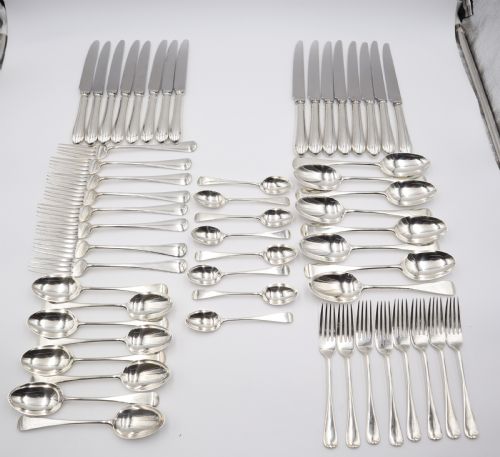
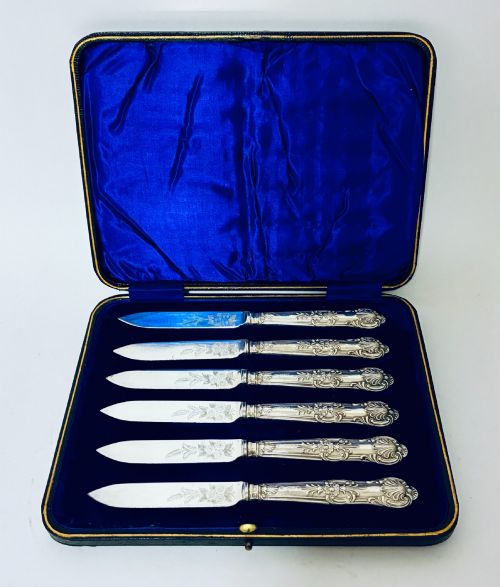
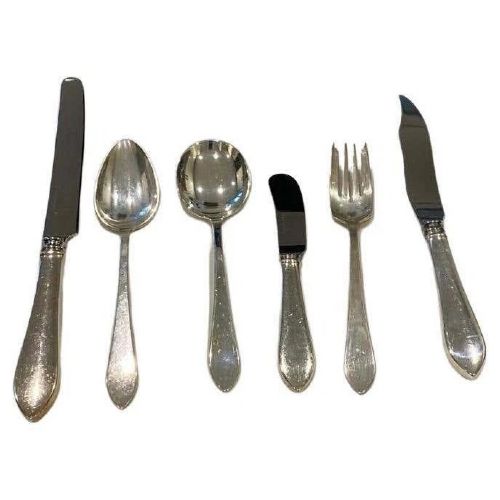
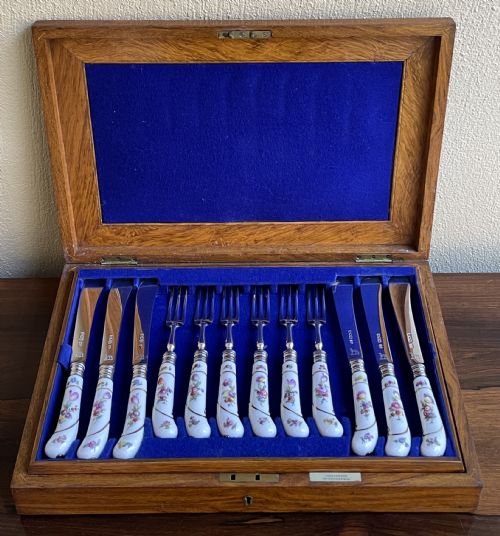
Most pieces combine metal blades with decorative handles, often paired with matching forks or presented within oak canteens and fitted boxes. Forms range from individual fruit knives to boxed serving sets and larger cutlery services.
Origins include British workshops alongside continental European pieces from the Netherlands and France. Buyers encounter both solid sterling silver and silver plate, frequently alongside organic materials like mother of pearl, agate, and porcelain.
How they were made
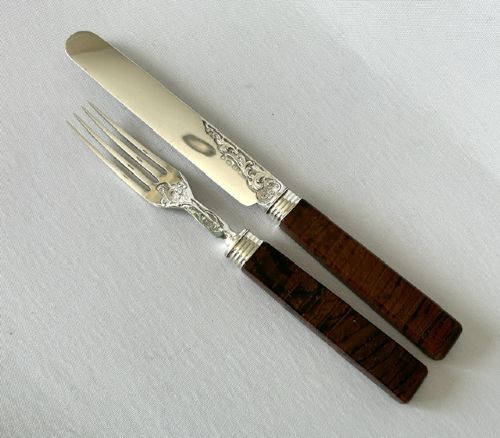
Blades are forged from steel or cast in silver and silver plate, sometimes finished with silver gilt. Handles employ traditional materials such as mother of pearl, wood, and porcelain, shaped and pinned securely to the tang.
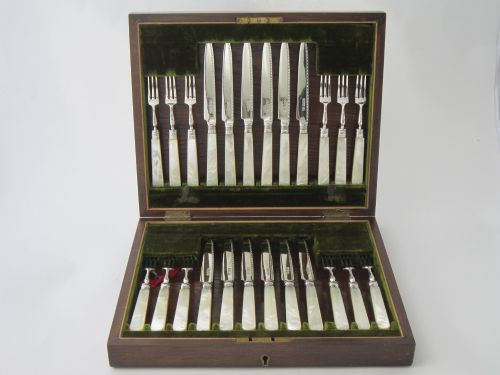
Cased sets rely on fitted wooden boxes, occasionally lined with velvet, to protect the cutlery. Metal components show period hallmarks and detailed engraving, while handles demonstrate careful shaping of natural materials.
Listings feature items from the Georgian, Victorian, Edwardian, and Art Deco periods, utilising silver, silver plate, steel, mother of pearl, and oak.
What varies in quality
The distinction between standard production and finer work rests on the harmony of the materials and the crispness of the decoration. Cast blades and matched handles display a higher level of maker execution than simpler plated alternatives.
Complete cased sets with intact velvet linings and matching wooden boxes hold greater cohesion than scattered individual implements. The choice of handle material, from plain wood to carved mother of pearl or agate, defines the standing of the piece.
Tiffany·Carrington
The Antique Dessert Knife Glossary
- Sterling silver
- A silver alloy containing a specific proportion of pure silver and other metals to ensure durability in cutlery. This standard is frequently recorded by official assay office hallmarks.
- Silver plate
- A base metal coated with a thin layer of silver through electroplating or older techniques. It offers the appearance of solid silver at a different tier of production.
- Mother of pearl
- The iridescent internal layer of mollusc shells, carved into smooth scales for knife handles. It provides a luminous surface that catches the light at the table.
- Silver gilt
- Silver that has been coated with a thin layer of gold on its surface. This technique adds a warm tone to blades and serving implements.
- Canteen
- A fitted box or chest designed to hold a complete set of cutlery securely in individual slots. These wooden cases often feature compartments lined with velvet.
Antique Dessert Knife: Frequently Asked Questions
What is an antique dessert knife used for?
These knives were made for slicing fruit, soft cheeses, and pastries at the conclusion of a formal meal. They accompanied specialised dessert forks and serving pieces.
Today, they bring period detail to modern dining tables and are frequently collected as complete cased sets.
How do I care for mother of pearl handles?
Mother of pearl requires gentle hand washing in warm, soapy water without soaking in liquid for extended periods. Sudden temperature changes can damage the natural shell material.
Store them carefully in lined boxes or canteens to prevent scratching against other metal items.
Are these knives made of solid silver?
Materials vary across the pieces, with some items fashioned from sterling silver or silver gilt, while others utilise silver plate over a base metal. Blades are frequently made of steel or cast silver.
Examining the metal surfaces and any visible hallmarks reveals whether a piece is solid silver or plated.
What periods do these dessert sets come from?
The listings include examples from the Georgian, Victorian, Edwardian, and Art Deco eras, spanning the nineteenth and early twentieth centuries. Each period introduces distinct handle materials and decorative styles.
Victorian and Edwardian pieces often feature mother of pearl and engraved blades, while later twentieth-century items reflect Art Deco design.