




Antique Deskware
These antique deskware pieces bring character to a study, offering everything from heavy brass inkstands to delicate silver letter openers.
Antique Deskware
When you search for antique deskware, you encounter functional items designed for correspondence and writing desks from past centuries. These pieces range from inkwells and pounce pots to desk clips, blotters, and letter openers.
The items here span the Georgian, Victorian, Edwardian, and Art Deco periods, capturing shifts in domestic writing habits. You are most likely to meet silver, brass, and ceramic inkwells alongside desk accessories produced by makers such as Asprey and William Hutton.
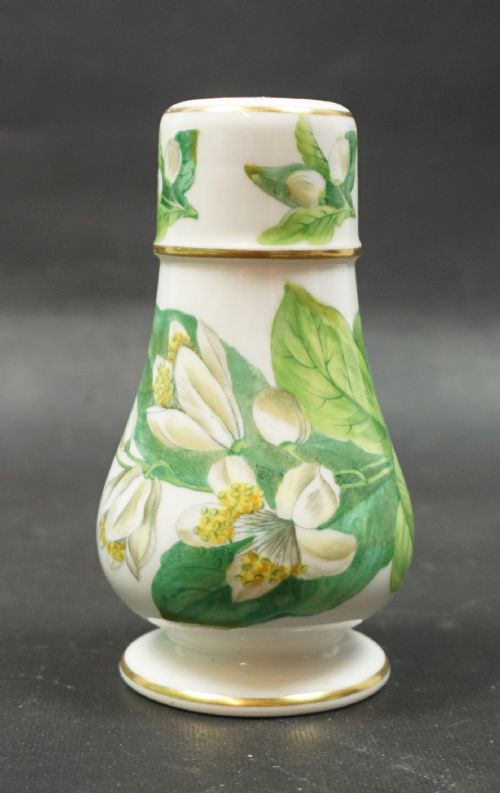
Early examples include wooden pounce pots and pearl ware vessels used for scattering sand over wet ink, while later pieces feature novelty designs, glass glue pots, and guilloche enamel work.
Materials and construction
Metals such as sterling silver, brass, and pewter form the structural backbone of many items, shaped through casting, hammering, and silversmithing techniques. Silver-mounted glass and cut glass provide heavy reservoirs for ink and glue pots.
Ceramics and earthenware appear in glazed Staffordshire pottery and pearl ware, often hand-painted with botanical motifs or fitted with cabochons. Organic materials like fruitwood, tortoiseshell, onyx, lapis lazuli, and agate add contrasting textures and colour to desk sets.
Antique Deskware Retail Price Guide 2026
Typical asking prices for deskware among the pieces listed under this phrase on Sellingantiques today, from the lower quarter to the upper quarter. They describe what is for sale here now, not the wider market.
Listings span the Georgian, Victorian, Edwardian, and Art Deco periods, utilising materials from sterling silver and brass to glass, earthenware, and tortoiseshell.
Quality variations
Quality rests on the integrity of the materials and the precision of the metalwork or ceramic body. Heavy gauge silver mounts, well-fitted hinged lids on inkwells, and crisp casting in novelty figural pieces distinguish finer workshop output from standard production.
The addition of decorative elements, such as Ruskin pottery cabochons, guilloche enamel, or imported semi-precious stones, elevates a standard utilitarian desk accessory into a piece of decorative art.
William Hutton·Asprey·Loetz
The Antique Deskware Glossary
- Pounce pot
- A small shaker container used in the eighteenth and early nineteenth centuries to sprinkle powdered sand or cuttlefish bone over wet ink to speed up drying. This prevented smudging before blotting paper came into general use.
- Capstan inkwell
- An inkwell shaped like a ship's capstan, featuring a wide base that tapers upwards to a small opening. This design prevents the inkwell from tipping over easily on a busy desk.
- Cabochon
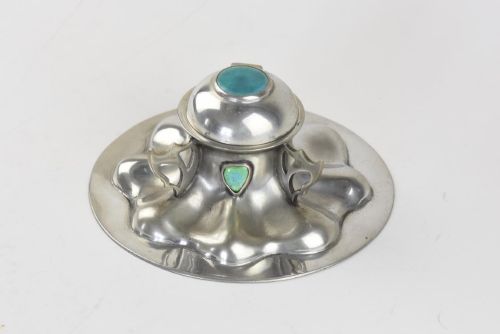
- A gemstone or piece of pottery shaped and polished flat on the bottom with a domed, rounded top. They are frequently set into the metal frames of Arts and Crafts deskware.
- Guilloche enamel
- A decorative technique where a precise geometric pattern is mechanically engraved into a metal surface beneath a translucent layer of coloured enamel. It appears frequently on Edwardian and Art Deco desk pieces.
Antique Deskware: Frequently Asked Questions
What is an antique inkwell used for?
An inkwell held liquid ink on a writing desk before the invention of the fountain pen. Writers dipped quill pens or steel-nib pens directly into the reservoir.
Today, they serve as decorative accessories or small storage containers for modern studies, retaining the craftsmanship of past writing habits.
How do I date an antique desk set?
Dating relies on hallmarks, material composition, and stylistic clues. Styles shifted from Georgian simplicity through ornate Victorian figural designs to clean-lined Art Deco forms.
Silver components often feature hallmarks that record the city of assay and the exact year of manufacture, while ceramics and woods reveal their period through glaze styles and turning techniques.
What is a pounce pot?
Before blotting paper became common, a pounce pot dispensed fine powder over freshly written text. The powder absorbed excess ink to prevent smearing.
These ceramic or wooden shakers sit alongside inkwells on older desks and often feature pierced lids for sprinkling.
Are antique desk items made of solid silver?
Some pieces are cast from solid sterling silver, while others use silver plating over base metals or silver mounts attached to glass and stone. Hallmarks on the metal parts indicate the silver standard used.
Items described as silver-mounted feature functional glass or ceramic bodies with protective or decorative silver rims, collars, and lids.