

Antique Desktop Storage
Antique desktop storage pieces are compact wooden and metal chests, cabinets, and boxes designed to organise papers and small valuables within arm's reach.
Antique Desktop Storage
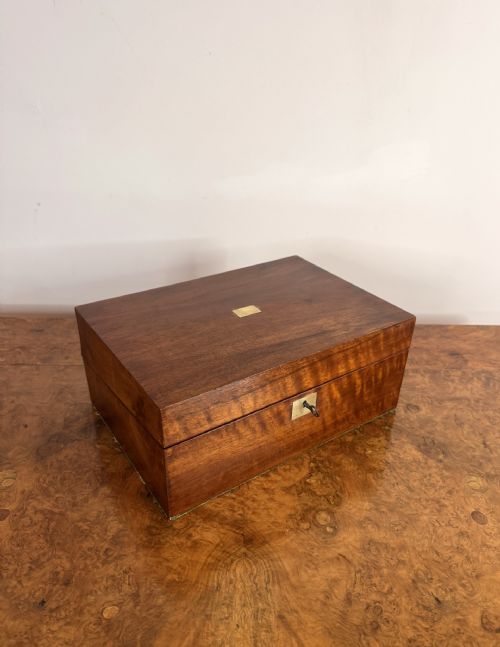
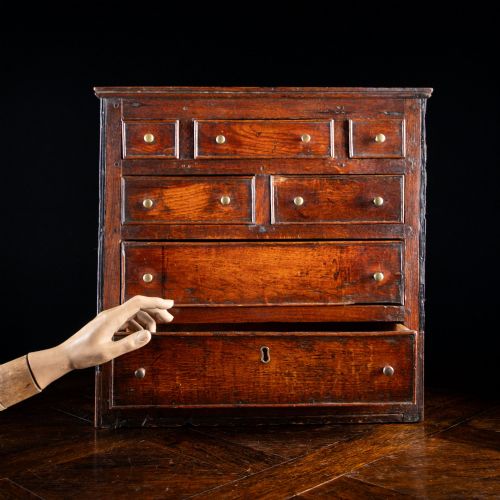
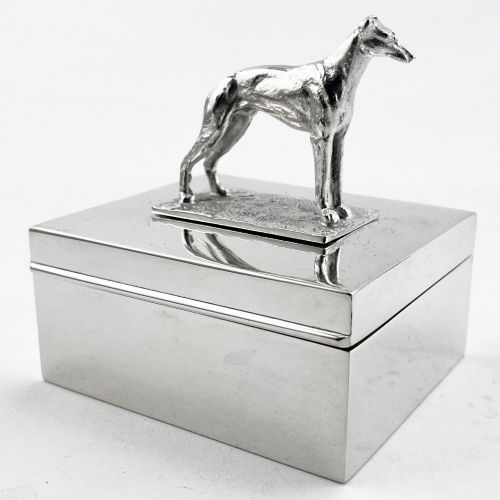
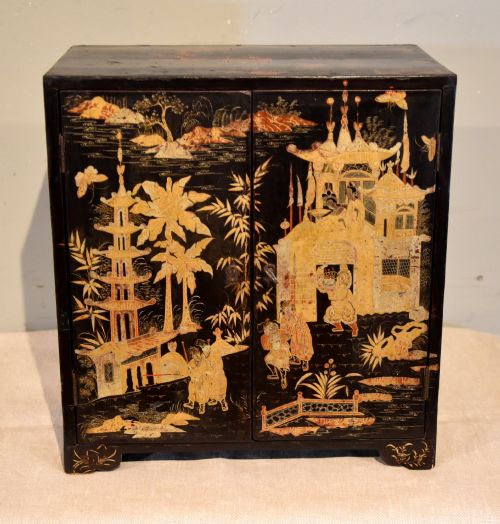
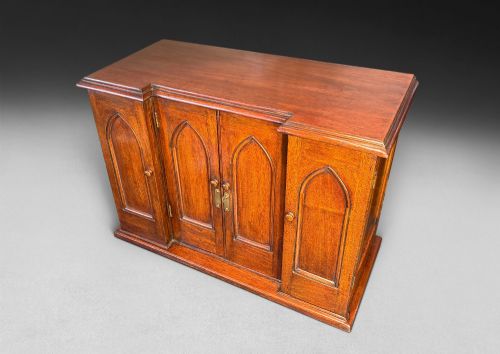
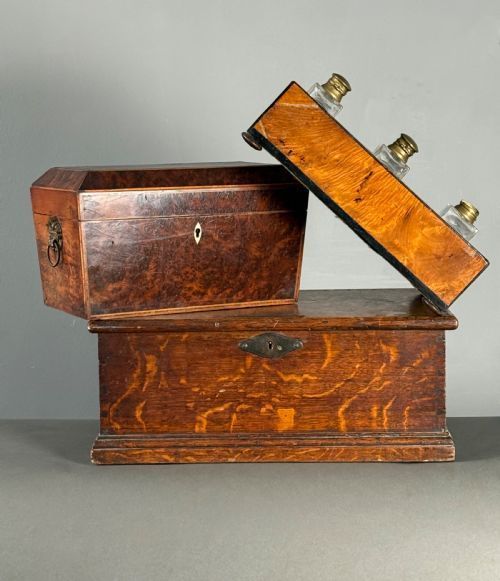
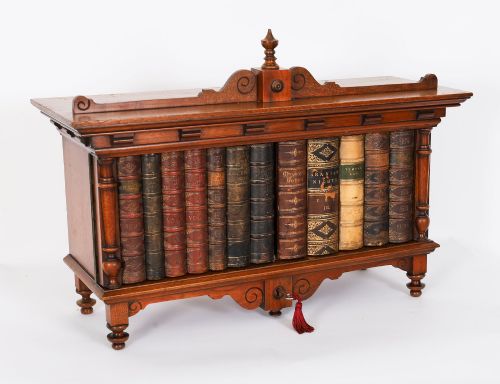
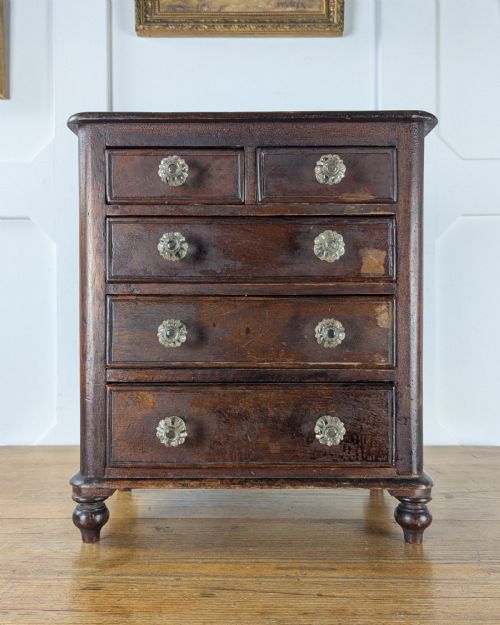
These items comprise small-scale furniture built for the working surface, spanning tabletop cabinets, miniature chests of drawers, cigar humidors, and stationery boxes. Buyers searching for antique desktop storage encounter compact forms intended to manage correspondence, collections, and daily necessities on desks and counters.
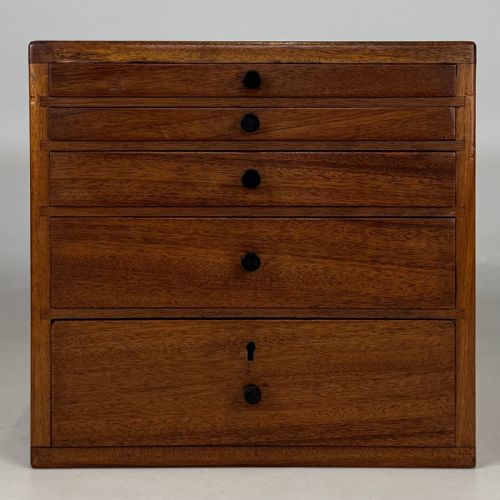
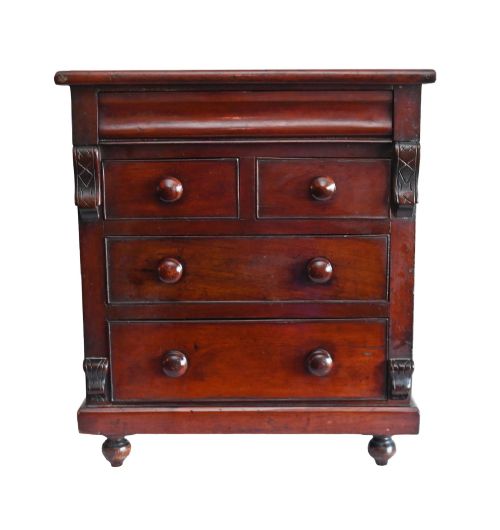
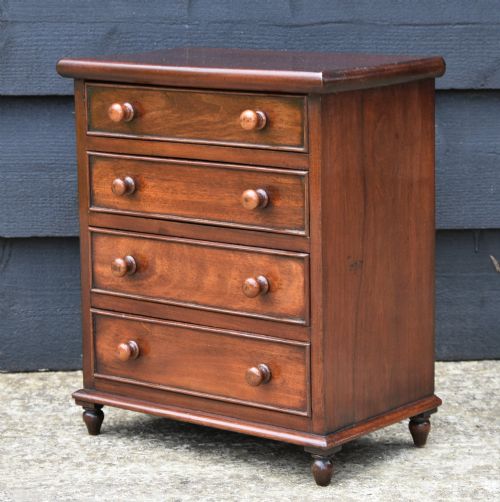
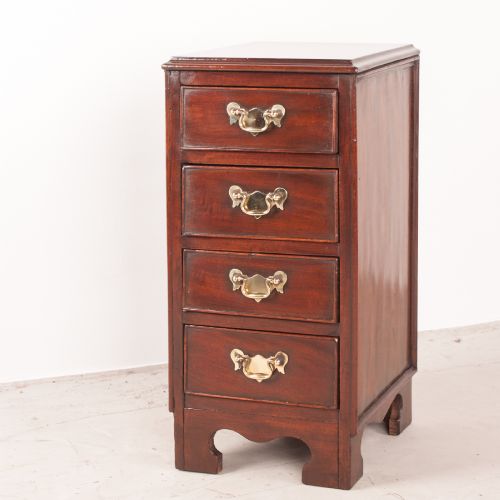
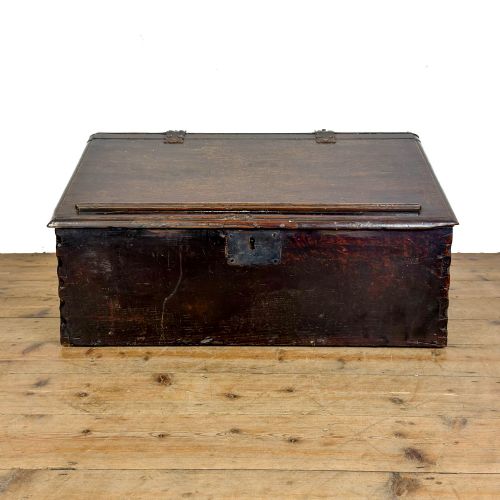
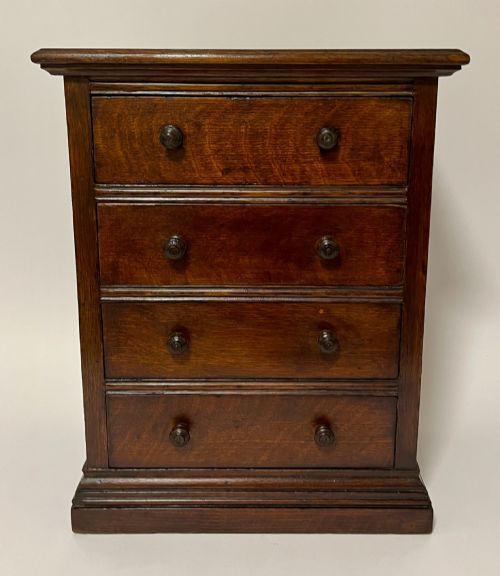
The selection ranges from Georgian and Victorian specimens in mahogany, oak, and walnut to Edwardian and later twentieth-century variants in pine and fruitwood. Miniature apprentice chests, specimen cabinets, and tabletop repositories dominate the physical evidence, often featuring multiple small drawers or fitted internal compartments.
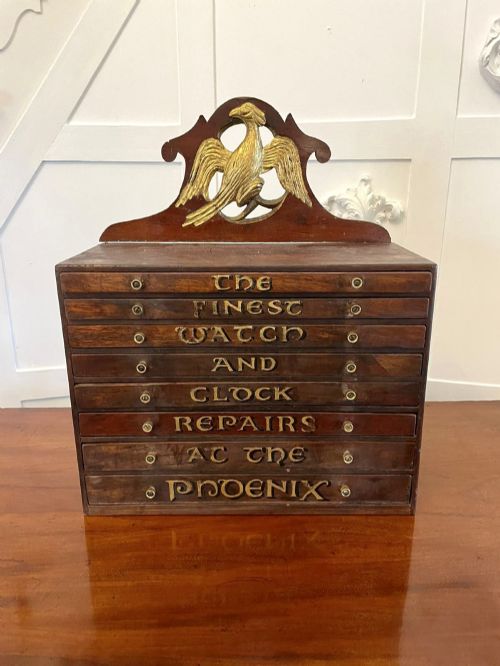
Period pieces cross multiple stylistic boundaries, including Gothic Revival, Regency, and Georgian interpretations alongside utilitarian shop fittings like draper's needle drawer cabinets and watchmaker's chests. Each survivor serves a distinct organising function, from holding cigars and stationery to housing natural history specimens.
Materials and construction methods
Makers utilised solid timbers such as mahogany, oak, walnut, elm, and pine, frequently applying veneers of burr walnut, satinwood, or kingwood to visible exterior surfaces. Brass hardware, including drop handles, escutcheons, and hinges, provides structural contrast and operational durability.
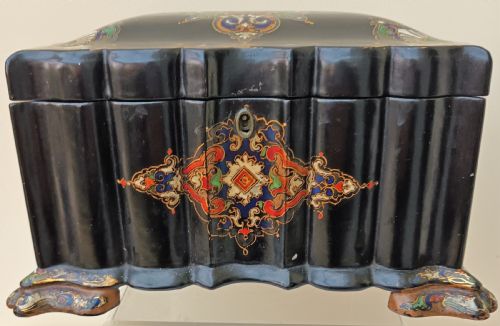
Joinery methods rely on traditional dovetailing for small drawers and carcass construction, ensuring stability across miniature scales where seasonal timber movement presents a constant risk. Papier-mâché, tooled leather, glass, and iron appear in specific functional categories like pen boxes, tea caddies, and filing shelves.
Antique Desktop Storage Retail Price Guide 2026
Typical asking prices for desktop storage among the pieces listed under this phrase on Sellingantiques today, from the lower quarter to the upper quarter. They describe what is for sale here now, not the wider market.
Materials recorded across the inventory include fruitwood, elm, iron, glass, and brass alongside standard cabinet timbers.
Assessment of quality
Superior examples demonstrate precision in timber selection, matching grain patterns across drawer fronts and carcass exteriors to create a cohesive visual balance. The crispness of carved details, the integrity of inlaid decoration, and the retention of original brass fittings distinguish superior pieces from utilitarian workshop output.
Internal execution separates fine cabinetwork from basic utility storage, visible in closely fitted drawer dividers, clean lining materials, and smoothly operating runners. The preservation of original surface finishes, whether polished lacquer, French polish, or aged patinated wax, governs the desirability of each piece.
D Napier & Sons·Manoah Rhodes & Sons Ltd·Alfred Dunhill
The Antique Desktop Storage Glossary
- Apprentice chest
- A small-scale chest of drawers traditionally made by a joiner to demonstrate competency to a guild. These pieces replicate full-size furniture proportions precisely.
- Specimen cabinet
- A miniature cabinet housing shallow drawers designed for the storage of natural history collections, fossils, or small artefacts. Interiors often feature glass-topped or lined trays.
- Humidor
- A specialised moisture-controlled box or cabinet built to store cigars. Inside fittings commonly include Spanish cedar linings and dedicated humidification elements.
- Escutcheon
- A decorative and protective plate surrounding a keyhole. It shields the surrounding wood from wear caused by the insertion of the key.
- Tabletop repository
- A portable desk accessory or small cabinet designed to hold writing materials, correspondence, and documents. These pieces sit directly upon a desk or table surface.
Antique Desktop Storage: Frequently Asked Questions
What were antique desktop storage cabinets used for?
These small cabinets served specific organizational duties in studies, offices, and shops, holding letters, writing instruments, or business papers. Specialised versions housed botanical specimens, watchmaker tools, or cigars.
Owners kept them within arm's reach on writing tables, drapery counters, and office desks to maintain order among valuable or frequently used items.
How do I identify a Victorian desktop cabinet?
Victorian pieces frequently feature dense timbers like mahogany and walnut, occasionally enhanced with burr veneers, papier-mâché, or tooled leather accents. Design influences span from plain utilitarian construction to Gothic Revival and heavily figured display formats.
Examining the internal drawer construction, dovetailing methods, and brass hardware helps confirm the nineteenth-century production period.
Are tabletop chests of drawers actually apprentice pieces?
Apprentice chests represent miniature versions of full-scale furniture, historically constructed to prove a woodworker's mastery over joints and proportions. Many small chests serve as domestic trinket storage or jewellery boxes rather than formal guild test pieces.
Distinguishing true apprentice work requires looking for the same meticulous construction standards found in larger period furniture.
How should I care for a wooden desktop cabinet?
Maintain stable indoor humidity levels to prevent the solid timbers and delicate wood veneers from splitting or warping over time. Keep the piece away from direct sunlight and heat sources that dry out antique finishes.
Apply a microcrystalline wax periodically to nourish the wood surface and preserve the historic patina.