

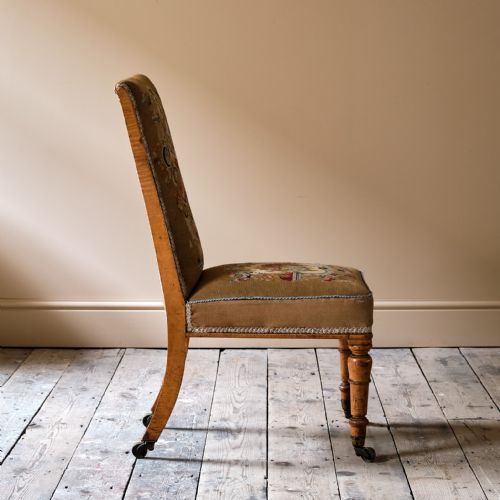
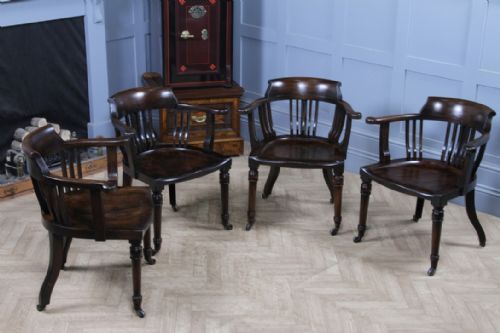
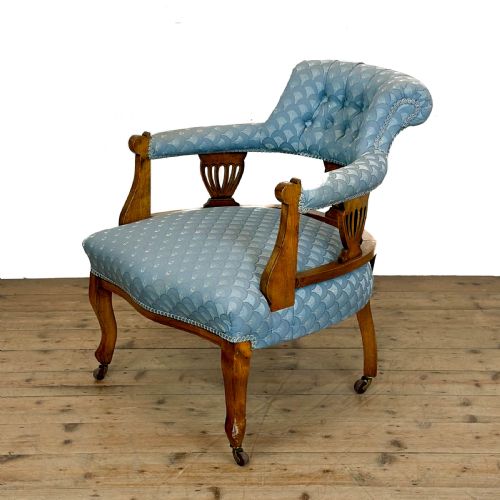


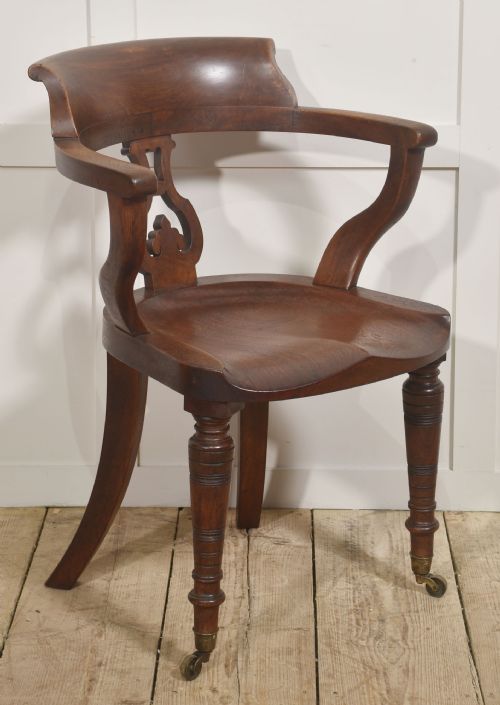
Antique Desk Chair Castors
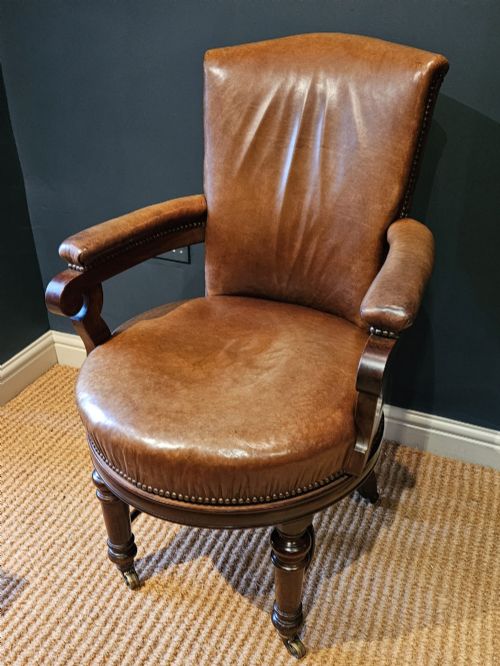
Antique desk chair castors support seating designed for work, from heavy mahogany library armchairs to oak captain's chairs and revolving office seats.
Antique Desk Chair Castors
These metal and wooden components support seating designed for study and administration, appearing beneath heavy library armchairs, captain's chairs and revolving office seats. The listings here centre on structural supports found on seating from the Regency, Victorian and Edwardian periods.
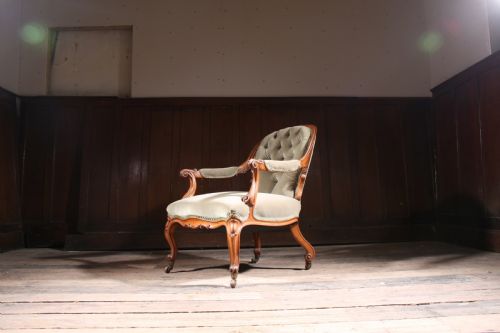
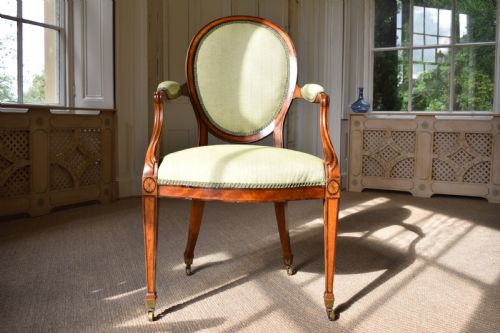
Buyers will most frequently encounter these fittings attached to mahogany, oak and walnut armchairs featuring leather or caned seats. The forms range from George III open armchairs to late Victorian revolving desk chairs and Edwardian swivel seats.
Materials and construction
The hardware itself utilises cast brass and metal, secured to the timber legs of mahogany, oak, walnut and satinwood frames. These mounts often support heavy library chairs and swivelling office furniture.
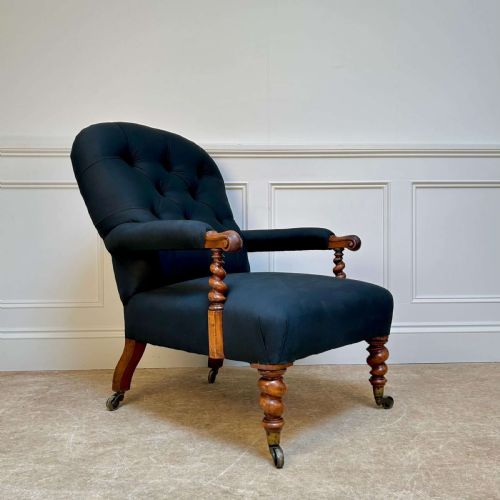
Timber frames are joined with traditional methods, while upholstery materials such as green leather, dark red leather, tapestry fabric and velvet are integrated into the seating structure.
Listings feature mahogany, oak, walnut and satinwood across the Regency, Victorian and Edwardian eras.
Judging quality in the fittings and frames
Quality rests in the weight and proportion of the brass hardware relative to the timber frame it supports. Solid oak, figured mahogany and well-turned walnut indicate superior workshop output.
Attention to detail in the carving, the crispness of the reeding, and the integrity of the swivel or castor mechanism distinguish standard production from exceptional library seating.
Hindley And Sons·W Williamson And Sons·Gillows·Kendrick And Jefferson·Daws
The Antique Desk Chair Castors Glossary
- Castor
- A small wheel mounted on a swivel, fitted to the base of chair legs to allow smooth movement across a floor. They appear frequently on heavy library and desk armchairs.
- Bergère
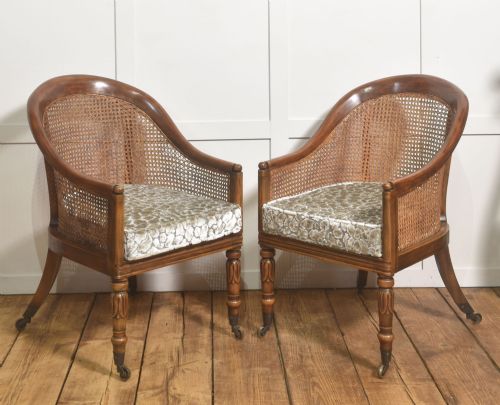
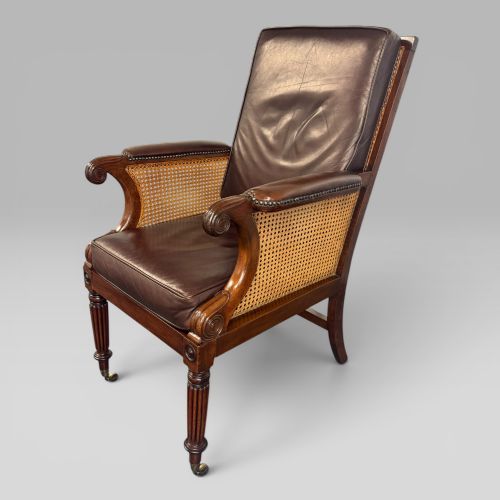
- An enclosed armchair with a wooden frame and woven cane panels on the back and sides. These often date from the Regency period.
- Captain's chair
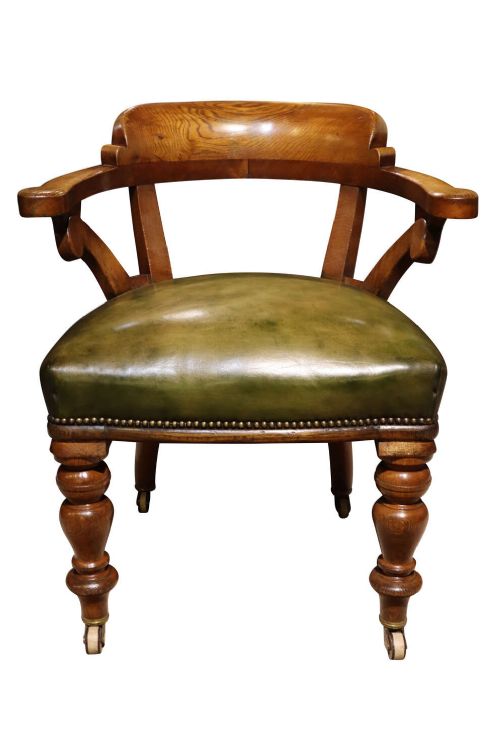
- A sturdy wooden armchair with a rounded steam-bent back rail supported by spindles, designed for office or library use.
- Reed
- A narrow convex moulding applied in parallel vertical strips to chair legs or frames. It is a decorative feature seen on nineteenth century mahogany pieces.
- Library chair
- A substantial armchair, frequently upholstered in leather, designed for comfort during extended periods of reading and writing.
Antique Desk Chair Castors: Frequently Asked Questions
What woods are common on these chairs?
Mahogany, oak and walnut dominate the structural frames across the nineteenth and early twentieth centuries. Satinwood and rosewood appear on select Regency and Georgian library armchairs.
The timber choice generally reflects the period of manufacture, with oak favouring Gothic revival and captain's chairs, while mahogany spans the Regency and Victorian eras.
Are swivel mechanisms period correct?
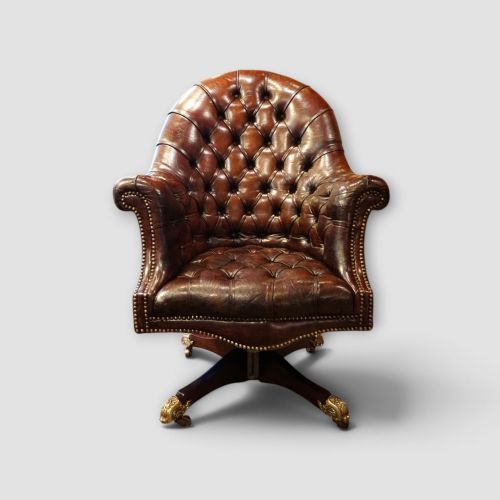
Swivel and revolving mechanisms appear on Edwardian office armchairs and late nineteenth century desk chairs. They utilise metal spindles and cast iron alongside timber frames.
Earlier pieces rely on fixed legs with brass castors rather than revolving mechanisms.
How do I spot a Regency library chair?
Regency library chairs typically display clean classical lines, generous proportions, and materials such as mahogany, rosewood or caned panels. Makers like Gillows and Daws produced notable examples.
They often incorporate brass castors beneath sabre or turned legs to facilitate movement around a study.
What is a captain's chair?
A captain's chair is a sturdy wooden armchair featuring a low, curved backrest supported by small spindles. Examples in golden oak or elm often include saddled wooden seats.
They frequently feature turned front legs fitted with brass castors for mobility in an office or study.