

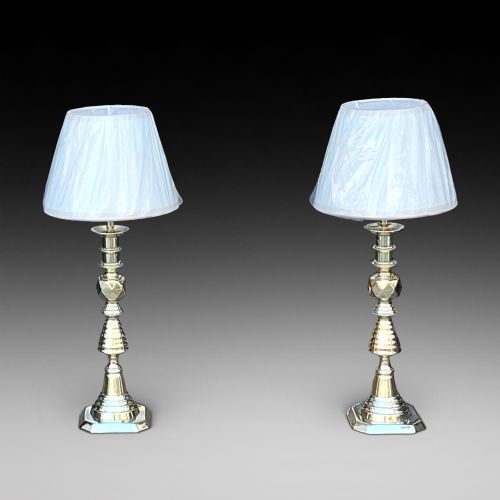
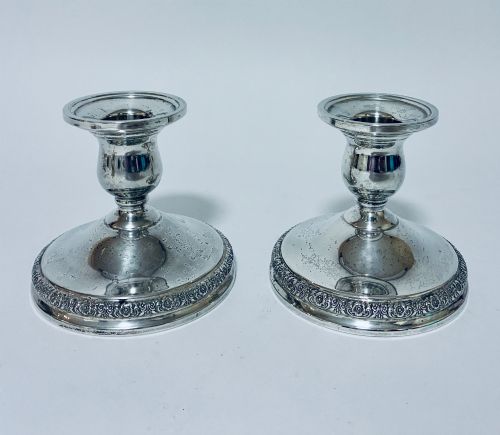
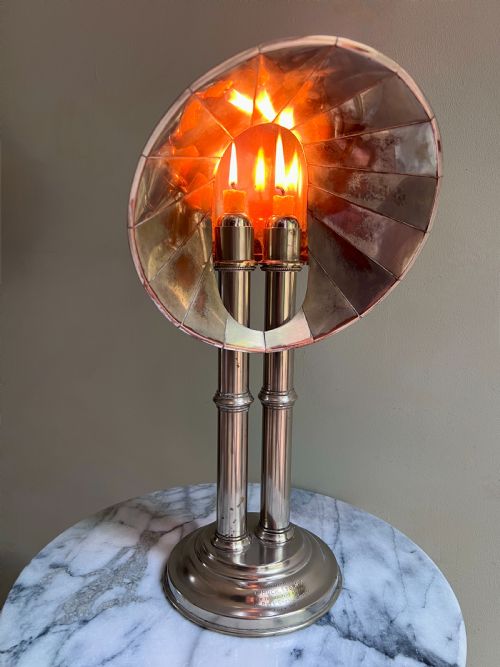


Antique Desk Candle Holder
These antique desk candle holder pieces bring period illumination and refined metalwork to a writing surface.
Antique Desk Candle Holder
When searching for an antique desk candle holder, you encounter works designed for writing tables and reading desks rather than large dining spaces. These desk accessories appear in forms ranging from single chambersticks to telescopic shafts and adjustable lamps.
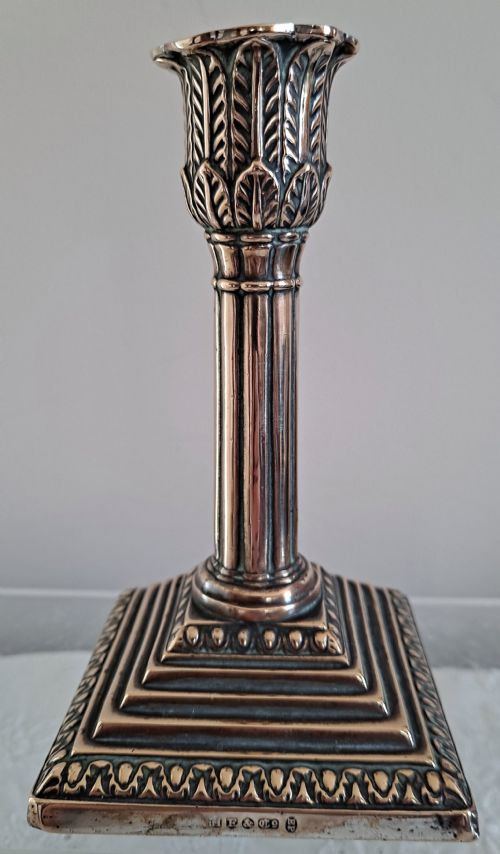
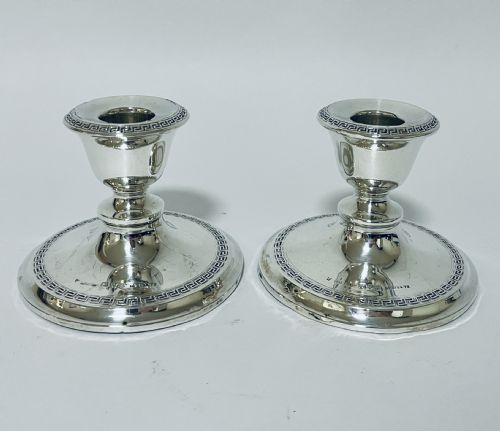
The most common versions met on this page date from the Georgian, Victorian, and Edwardian periods, frequently executed in brass, silver plate, or sterling silver. Many integrate practical desk accompaniments such as inkstands, trays, and shields.
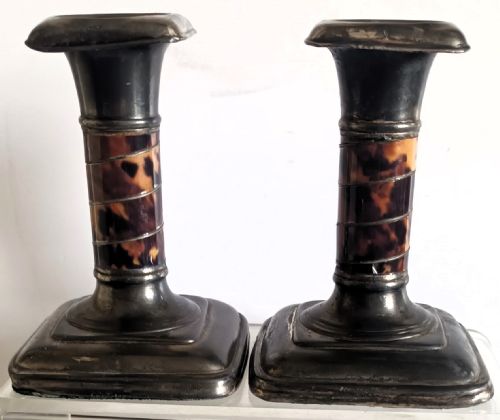
Makers often combined metals with organic materials like mahogany, horn, treen walnut, and tortoiseshell to suit the refined study. Such pieces reflect the specific writing habits and lighting needs of their eras.
Materials and construction methods
Foundry work dominates the construction, utilising cast brass, bronze, patinated bronze, and ormolu to create sturdy bases and uprights. Silversmiths employed sterling silver and silver plate over base metals, whileSheffield plating appears on telescopic examples.
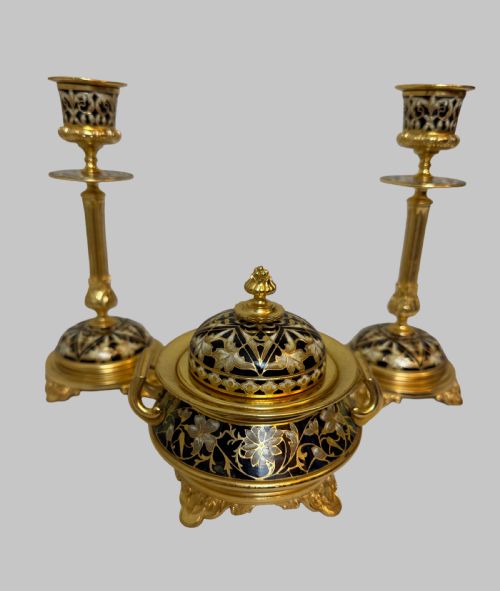
Turned hardwoods like mahogany and walnut form wooden stems and bases, often mounted with brass fittings, horn, or tortoiseshell. Specialised items incorporate champleve enamelling, nickel plating, and fabric shades.
Assembly methods rely on threaded components, pins, and soldering to join weighted bases to candle sockets and associated inkwells or shields.
Antique Desk Candle Holder Retail Price Guide 2026
Typical asking prices for desk candle holder among the pieces listed under this phrase on Sellingantiques today, from the lower quarter to the upper quarter. They describe what is for sale here now, not the wider market.
Listings feature 19th-century, Victorian, Edwardian, and Regency periods, utilising brass, silver plate, sterling silver, mahogany, bronze, fabric, copper, and tortoiseshell.
Evaluating the standard of workmanship
The distinction between ordinary and superior pieces rests on the crispness of the casting and the weight of the metal. Heavier bronze, brass, and solid silver examples maintain stability during adjustment, whereas lighter items feel insubstantial.
Detailing in ornamentation dictates the grade of the work, seen in the hand-chiselling of ormolu mounts and the precision of turned wood components. Integrated elements like functioning telescopic mechanisms or matched inkstand sets elevate the execution.
Original surface patination and crisp hallmarks or inscriptions indicate better preservation and higher workshop provenance.
Barker Ellis·AFC
The Antique Desk Candle Holder Glossary
- Chamberstick
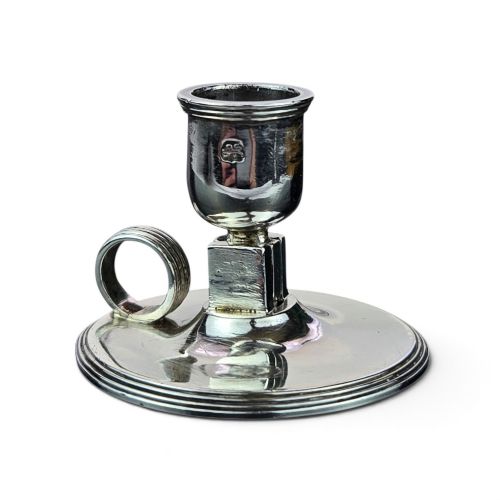
- A low candlestick featuring a wide drip pan and a loop handle for carrying from room to room or placing on a desk. They often include a small conical snuffer resting in the tray.
- Telescopic candlestick
- An extendable lighting device that uses a sliding mechanism to raise or lower the height of the candle. These were particularly useful at a writing desk to direct light precisely.
- Treen
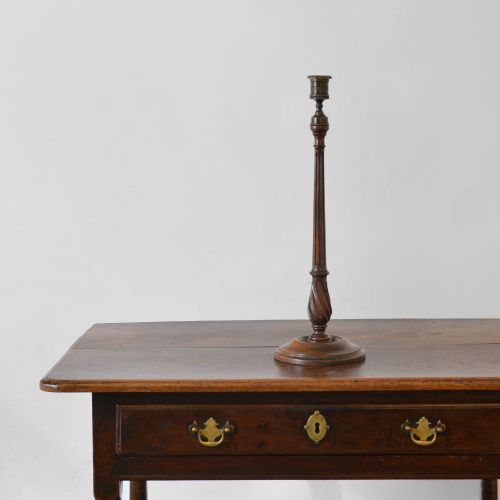
- Small household objects made of wood, turned or carved by hand. On desks, this includes small taper candlesticks and holders fashioned from walnut or mahogany.
- Ormolu
- Gilded bronze used widely during the Regency and French Empire periods. The technique involves applying a finely ground gold-mercury amalgam to bronze.
- Lustre
- A candlestick or candelabrum hung with cut glass pendants that reflect candle flame. Regency examples frequently pair bronze with these glass drops.
Antique Desk Candle Holder: Frequently Asked Questions
What is an antique desk candle holder?
An antique desk candle holder is a portable lighting device designed specifically for writing tables, featuring stable bases and sometimes integrated trays or inkwells.
These items range from simple chambersticks to telescopic and adjustable lamp forms made of brass, silver, or bronze.
How do I date an antique desk candle holder?
Dating relies on stylistic clues, manufacturing techniques, and any accompanying hallmarks or inscriptions found on the metalwork.
Georgian and Regency pieces show neoclassical or ormolu mounts, while Victorian and Edwardian examples utilise varied plating methods and mixed organic materials.
How do I care for brass and silver holders?
Maintenance involves gentle cleaning suitable for the specific metal surface, avoiding harsh abrasives that destroy historic patina.
Silver plate and sterling silver require occasional polishing, while patinated bronze and brass are best kept with dry cloths to preserve their age.