






Antique Deer Head
An antique deer head brings the atmosphere of the nineteenth century country house into a modern room.
Antique Deer Head
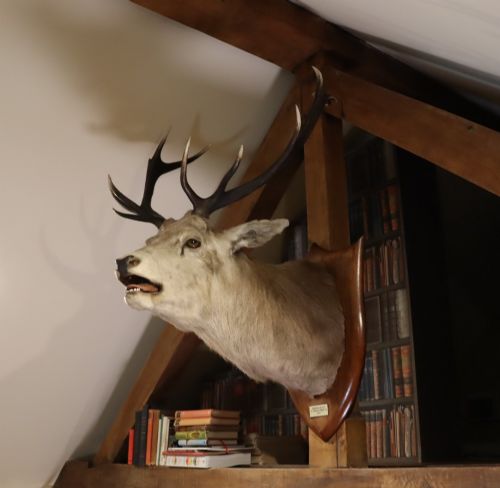
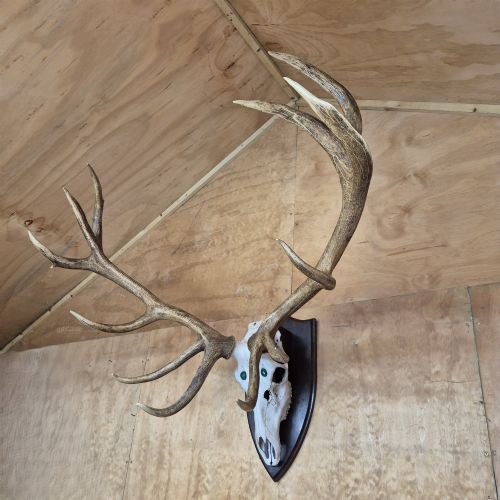
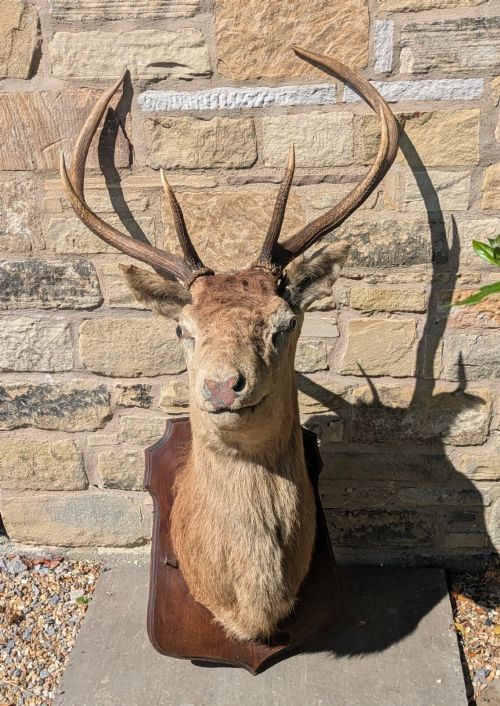
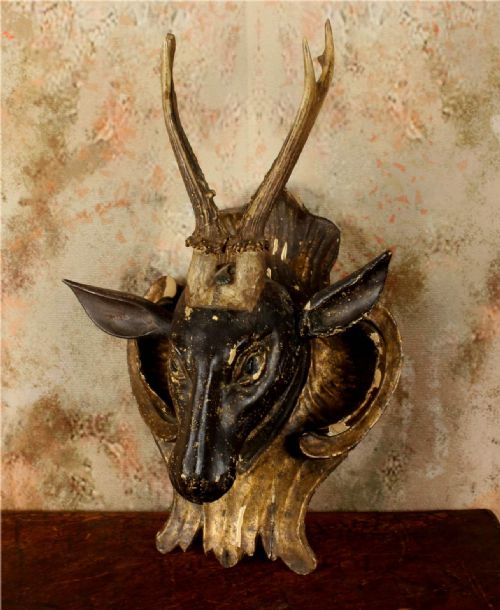
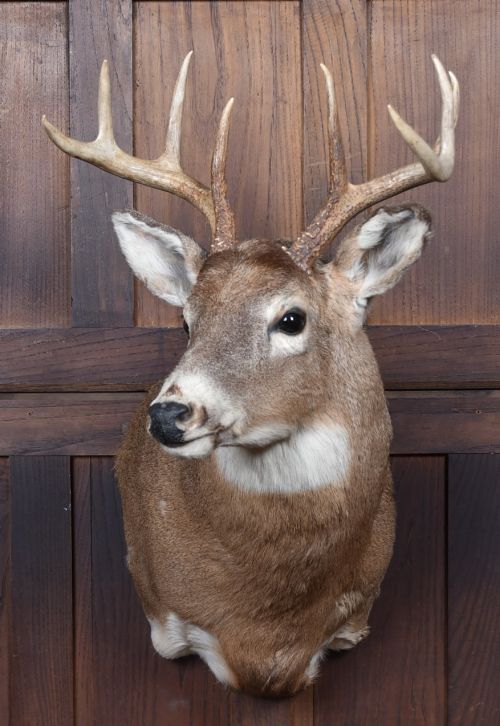
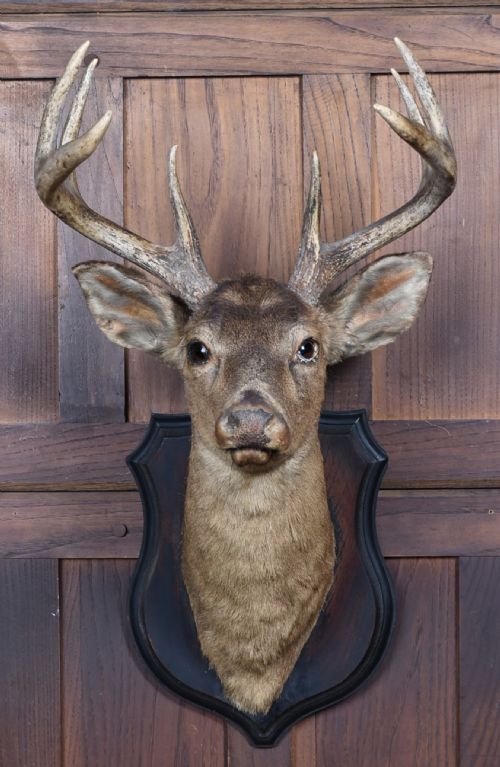
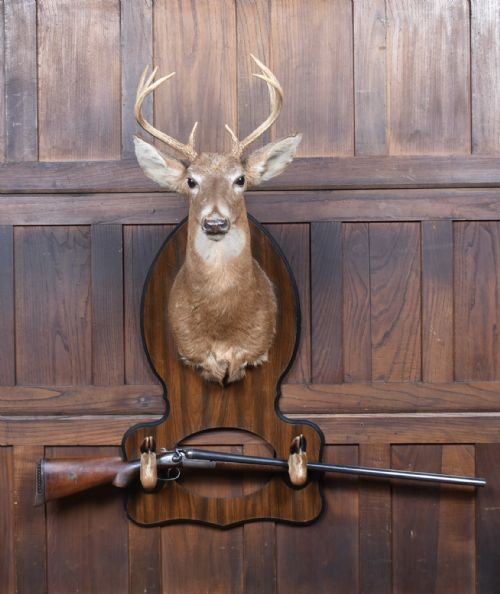
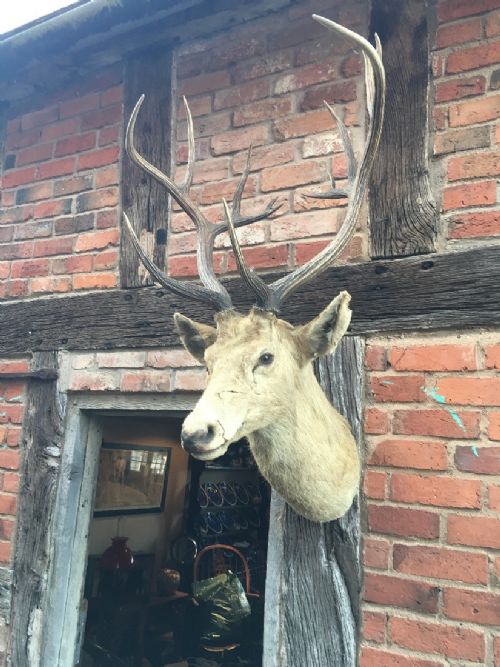
When you search for an antique deer head, you are looking at preserved taxidermy mounts and carved wooden sculptures that capture the nineteenth and early twentieth century fascination with natural history. These pieces range from grand Scottish red deer stags to smaller roebucks and white-tailed deer mounted on wooden shields.
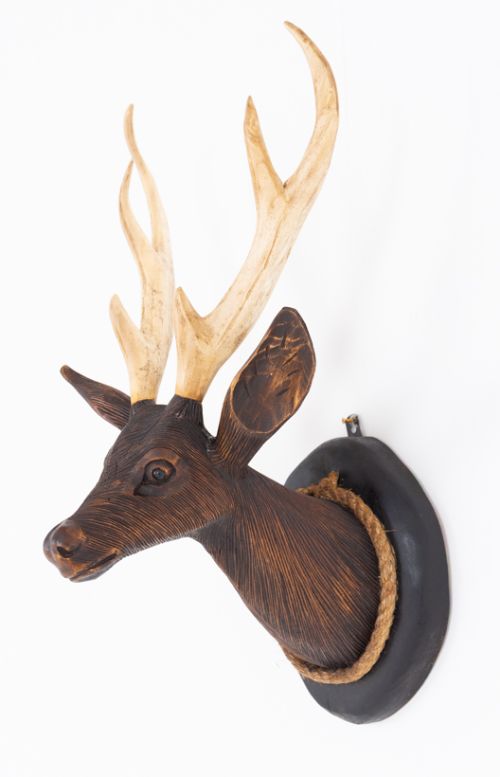
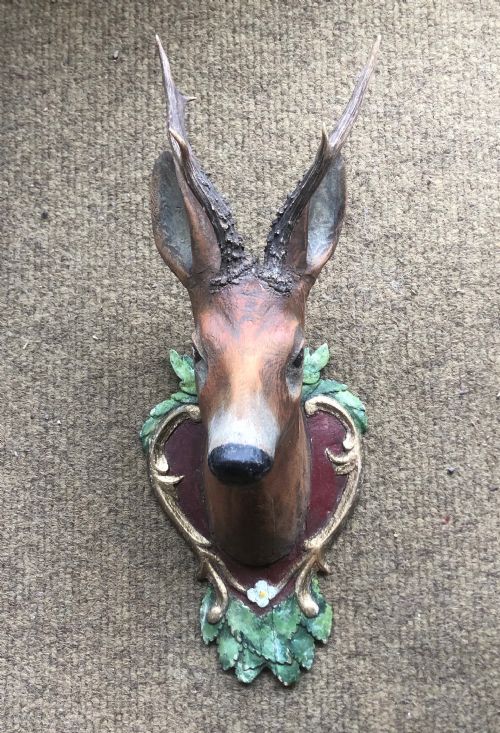
The versions you are most likely to meet on this page include taxidermy wall mounts from the Victorian and Edwardian periods, alongside carved wooden folk art interpretations and Black Forest style trophies. Many feature natural antlers paired with glass eyes and mounted on oak or carved wooden backings.
Beyond wall decor, the selection extends to functional items such as figural bronze inkwells and Scottish double inkstands that incorporate antlers and deer forms. Each piece reflects the aesthetic of the highland hunting lodge and British country house traditions.
Materials and construction methods
Taxidermy mounts utilise real deer hide and natural antlers secured to carved wooden shields or backing boards made from oak and other timbers. The preservation of the hide and the setting of glass eyes required specialised taxidermy skills common in workshops of the nineteenth and early twentieth centuries.
Carved pieces rely on traditional woodworking techniques, shaping solid wood to replicate the contours of the animal and its antlers. Painted folk art examples incorporate pigments applied to wood or hide, reflecting regional styles from Sweden and Britain.
Listings feature taxidermy and carved wood from the nineteenth century through the 1930s, including Edwardian examples.
Assessing quality and craftsmanship
The realism and anatomical accuracy of the taxidermy work separate the finer mounts from simpler items, particularly in the expression captured by the glass eyes and the natural set of the hide. Renowned taxidermy firms brought a level of sculptural precision to the mounting process that elevates certain stags above standard domestic trophies.
The execution of the carved wooden shields and secondary materials dictates the overall refinement of the piece. Crisp detail in carved oak shields and well-preserved antlers without excessive repair show greater original craftsmanship.
Peter Spicer & Sons
The Antique Deer Head Glossary
- Taxidermy mount
- The art of preserving and displaying an animal skin over a form to create a lifelike representation. These wall mounts served as traditional trophies in country houses.
- Black Forest style
- A distinctive style of wood carving originating from the German region, known for realistic representations of animals and foliage. Pieces often feature deeply carved oak shields and foliage surrounding the subject.
- Antler points
- The individual branches or tines on a deer's antler used to describe the size and maturity of the rack. Terms like royal denote specific configurations of points.
- Folk art
- Utilitarian or decorative items created by self-taught or traditional craftsmen using local materials. These interpretations often depart from strict anatomical realism in favour of charm and character.
- Inkwell
- A small pot or reservoir for holding ink, often incorporated into desk accessories. Figural examples frequently utilise bronze or carved wood depicting animals.
Antique Deer Head: Frequently Asked Questions
How do I hang a heavy deer head securely?
Large taxidermy mounts and carved wooden shields require robust wall anchors capable of supporting substantial weight, ideally fixed directly into wooden studs or solid masonry. Using heavy-duty picture wire or steel brackets attached to the backboard ensures the piece hangs safely.
Position the mount at a height where the head is viewed level or slightly upward, mimicking its natural stance in the room.
What is a royal deer head?
A royal designation typically refers to a red deer stag antler set featuring twelve distinct points on the rack. This traditional classification denotes a mature animal of significant size and status.
Collectors look for these specific point counts as indicators of age and impressive antler development.
How do I care for antique taxidermy?
Keep mounted specimens away from direct sunlight and strong heat sources to prevent the hide and fur from drying out or fading. Gentle dusting with a soft brush helps maintain the surface without damaging delicate hairs.
Stable room temperatures and moderate humidity protect the organic materials from deterioration over time.
How do I tell Victorian mounts from later pieces?
Victorian and nineteenth century pieces often feature denser taxidermy stuffing methods and specific construction details on the wooden backing boards. Examining the mounting nails, paper labels, and the style of the carved shield helps determine the period.
Later twentieth century examples tend to use refined preservation techniques and standardised wooden shields.