






Antique Decorative Timepiece
An antique decorative timepiece brings brass, marble, and gilt bronze into a room, measuring the hours with distinct nineteenth-century craft.
Antique Decorative Timepiece
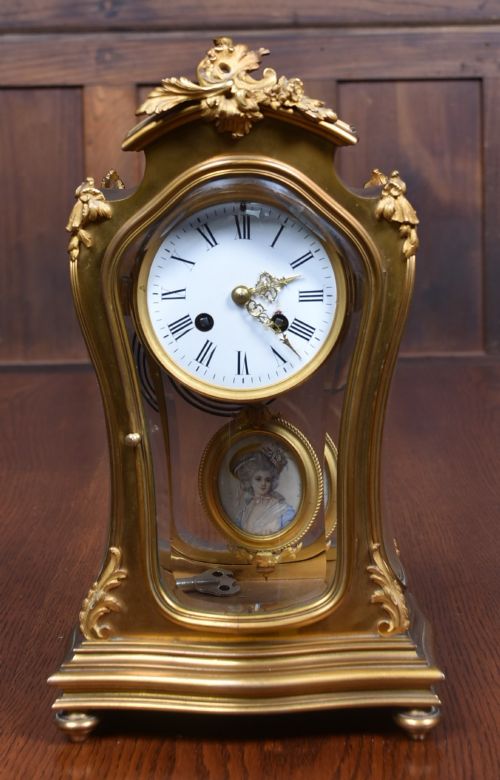
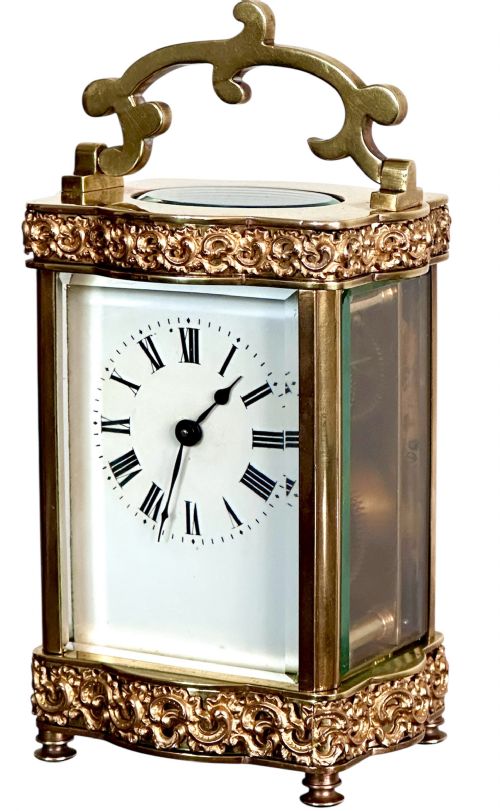
Every antique decorative timepiece on this page serves as both an instrument for telling time and an ornamental object for a mantelpiece, desk, or wall. You will encounter carriage clocks, porcelain mantel clocks, and wall clocks spanning the Victorian era through the early twentieth century.
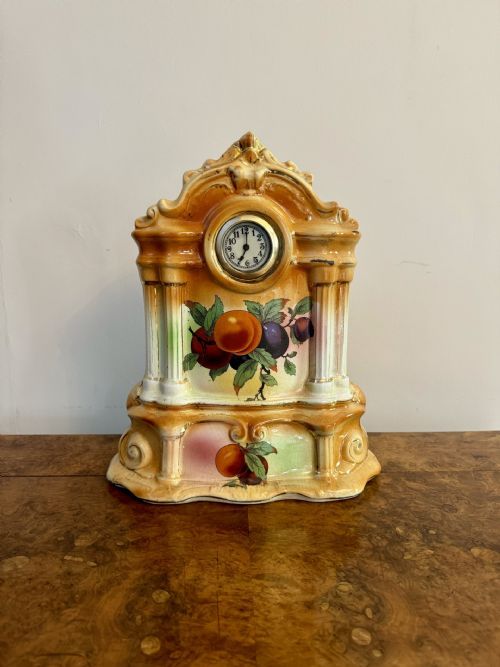
French workshops dominate the selection, offering gilt bronze, ormolu, and champlevé enamel alongside British fusee timepieces and Staffordshire models. Mantel clocks and portable carriage clocks form the majority of the objects listed here.
Dated examples stretch from the mid-nineteenth century up to the 1920s, showing styles from French Empire and Rococo Revival to Louis XIV and Art Deco. Buyers looking for specific housing materials like mahogany, marble, or brass will find distinct regional variations.
Materials and construction
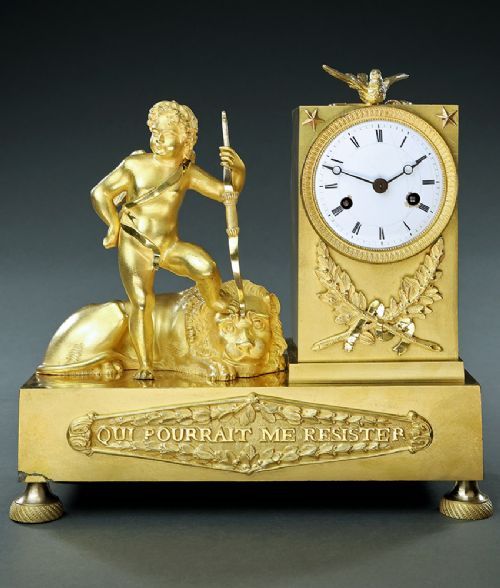
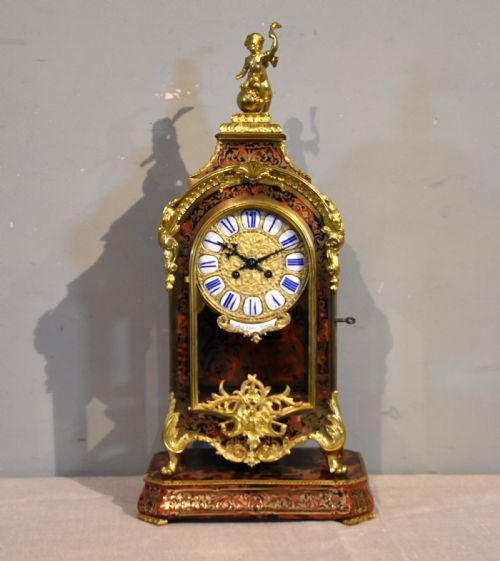
Clockmakers utilised cast brass, bronze, and ormolu to build sturdy frames, frequently applying fire gilding to achieve lasting metallic lustre. Cases combine these metals with carved marble, mahogany, and glazed glass panels.
Dials and decorative accents incorporate hand-painted porcelain panels and delicate champlevé enamel work. Specialised makers integrated miniature paintings and brass movements requiring precise mechanical assembly.
Listings feature clocks from the Victorian period, 1850, 1860, 1880, 1890, 1900, 1910, and 1920.
Distinctions in craftsmanship
The distinction between standard production and top-tier work rests in the crispness of the bronze casting and the depth of the gilding. Finer pieces exhibit hand-chased surface details rather than smoothed, mass-produced mouldings.
Signed movements by known makers elevate an object above unsigned equivalents. The integration of specialised complications like repeating strikes or enamel paintings further separates ordinary clocks from exceptional examples.
Le Roy·Duverdrey and Bloquel·Tiffany·Wetterstrands·Hessen Paris·Henri Jacot
The Antique Decorative Timepiece Glossary
- Ormolu
- Gilded bronze produced by applying a mercury and gold amalgam to a bronze base and heating it. This technique creates a durable, warm metallic finish seen on many nineteenth-century French pieces.
- Champlevé
- An enamelling technique where troughs are dug into a metal surface and filled with coloured glass paste before firing. It creates vibrant patterns across dial surrounds and clock cases.
- Cartel clock
- A wall clock housed within an ornate frame, usually made of giltwood or metal. These pieces mount directly onto wall surfaces.
- Fusee
- A conical pulley used in mechanical clocks to maintain even tension on the gear train as the mainspring unwinds. This mechanism improves timekeeping accuracy.
- Capucine
- An early type of spring-driven brass carriage clock featuring a bell mounted on top. They originated in France and offer portable timekeeping with striking capabilities.
Antique Decorative Timepiece: Frequently Asked Questions
How do I wind a mechanical timepiece?
Insert the matching key into the winding square on the dial and turn it gently until you feel resistance. Do not overwind the mainspring, as this can snap the internal steel.
Most spring-driven clocks require winding once a week, while fusee models may need attention at similar intervals depending on the gear train.
Where should I place a mantel clock?
Select a stable, level surface away from direct sunlight, central heating vents, and damp exterior walls. Wooden mantelpieces and sideboards support the weight of marble and bronze cases effectively.
Ensure the clock sits flat so the pendulum or balance wheel beats evenly, which keeps the movement running reliably.
How do I identify a carriage clock?
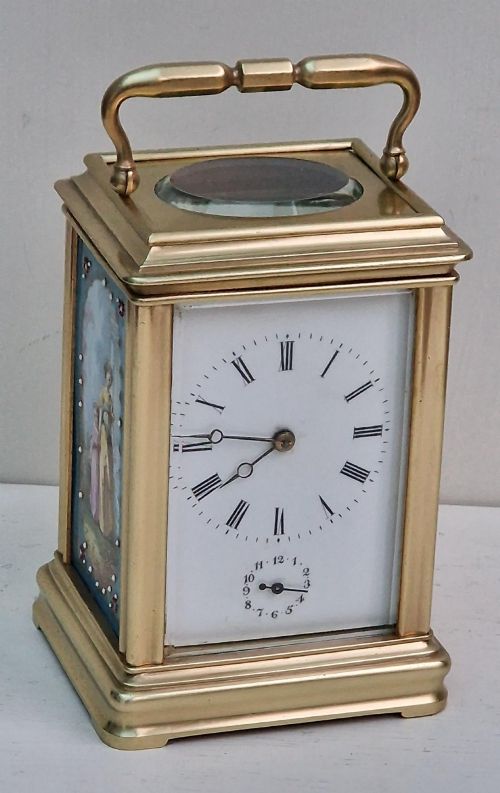
Look for a portable brass-framed clock featuring bevelled glass panels on all sides and a folding carrying handle on top. Many include leather travel cases.
These pieces were designed for officers travelling during the nineteenth century, housing spring-driven movements that function without a pendulum.
What is a mystery clock?
A mystery clock conceals its mechanical connection between the movement and the hands, making the time appear to float on a transparent dial. These inventive pieces date to the early twentieth century.
They rely on clever gearing hidden within the bezel or frame to drive the hands without visible wheels.